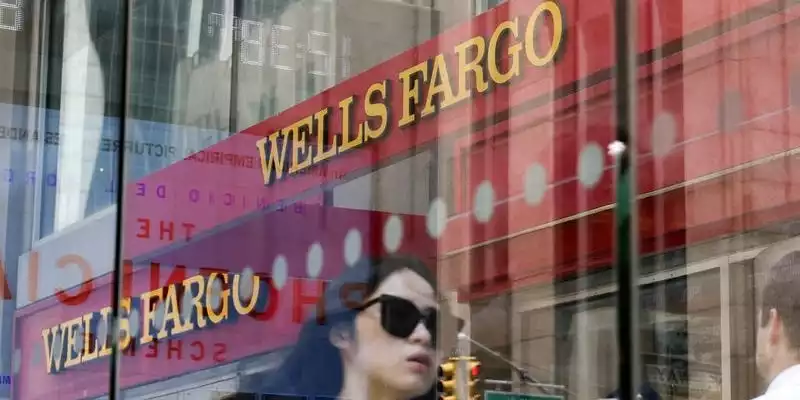

Wells Fargo’s High-Stakes Reinvention: From Main Street to M&A Powerhouse
Wells Fargo, long synonymous with the staid rhythms of U.S. retail and commercial banking, is orchestrating a transformation that reverberates across Wall Street and beyond. In a move both audacious and calculated, the bank has unleashed a hiring spree of nearly 100 senior dealmakers and several hundred sector specialists, catapulting itself from 17th to 9th in the fiercely contested global M&A league tables. This is not mere empire-building—it’s a wholesale re-engineering of the franchise, one that signals a pivot from balance-sheet-heavy lending to the rarefied, fee-rich world of advisory services.
The “Lend-to-Advice” Model: Wells Fargo’s Strategic Playbook
The contours of this transformation are unmistakable. By poaching top-tier talent from the likes of JPMorgan and Morgan Stanley, Wells Fargo is emulating the integrated “lend-to-advice” model that underpins the bulge-bracket elite. The bank’s willingness to deploy its formidable balance sheet—epitomized by a $29.5 billion bridge loan backing Netflix’s $82.7 billion pursuit of Warner Bros. Discovery—demonstrates a new appetite for risk and a deft understanding of the leverage that capital confers in winning marquee mandates.
Key elements of the strategy include:
- Capital Redeployment: With $431 billion in announced deal volume, Wells Fargo is shifting assets away from lower-yield consumer lending toward capital-light, advisory-driven revenue streams.
- Sectoral Focus: Concentrated hiring in healthcare and technology reflects a shrewd reading of market momentum, positioning the bank to capitalize on biotech consolidation and the surging demand for AI-driven infrastructure.
- Operational Efficiency: The bank’s net reduction of approximately 70,000 roles since 2020—offset by targeted, high-impact hires—underscores a commitment to cost discipline even as it chases new growth.
This recalibration is not simply about bulking up; it’s about recalibrating the very DNA of the institution. The move comes as the M&A cycle shows signs of reawakening, with interest rates stabilizing and deal pipelines swelling. By staking an early claim, Wells Fargo is poised to capture a disproportionate share of the fee pool before the market fully normalizes.
Technology, Talent, and the Automation Paradox
No modern banking transformation is complete without a nod to technology—and here, Wells Fargo’s messaging is nuanced. CFO Mike Santomassimo downplays AI’s immediate impact, emphasizing the enduring importance of human relationships in high-stakes dealmaking. Yet CEO Charlie Scharf is more candid, framing workforce reductions through the lens of automation and digital transformation. The subtext is clear:
- Short-Term: Senior hires are essential for relationship-driven banking, where trust and expertise remain irreplaceable.
- Medium-Term: Middle- and back-office functions are ripe for algorithmic substitution, freeing up resources for revenue-generating rainmakers.
The bank’s expanding roster of corporate clients also yields a trove of proprietary data—fuel for AI-driven underwriting and predictive analytics that can unlock new cross-sell opportunities. The interplay between human capital and machine intelligence is set to define the next chapter of Wells Fargo’s evolution, as the institution seeks to balance the art of the deal with the science of automation.
Regulatory Headwinds and Market Opportunity
Wells Fargo’s ambitions are not without constraints. The bank remains hemmed in by a $1.95 trillion asset cap imposed by the Federal Reserve in the wake of past compliance failures. Yet this very limitation has spurred creative thinking: by leaning into fee-based investment banking, Wells Fargo can grow revenue without expanding its balance sheet—a deft workaround that sidesteps regulatory friction.
The looming implementation of Basel III “Endgame” rules, which will tighten risk-weighted asset calculations, further incentivizes the shift toward advisory income. Meanwhile, the absorption of Credit Suisse by UBS and the retrenchment of European rivals have opened a window for a U.S. player to ascend the global ranks. Wells Fargo’s leap from 17th to 9th in M&A advisory is more than symbolic; it’s a validation of the thesis that the market is ripe for disruption.
Signals to Watch: The Path Ahead
For decision-makers and industry observers, several metrics will illuminate the success—or limitations—of Wells Fargo’s gambit:
- League-Table Trajectory: Continued momentum toward top-five status will be the clearest sign of sustained franchise elevation.
- Revenue Mix: A rising share of non-interest income will confirm the transition from balance-sheet lending to advisory primacy.
- Cultural Integration: Retention rates among newly hired senior bankers will reveal whether the Wall Street infusion can harmonize with Wells Fargo’s legacy ethos.
- AI-Driven Efficiency: Trends in operating expenses will indicate how effectively automation is being harnessed to support front-line growth.
As the tectonic plates of global banking shift, Wells Fargo’s recalibration offers a potent case study in strategic adaptation. The bank’s willingness to trade commoditized retail roles for scarce advisory talent—while hedging future costs through AI—positions it as a formidable contender in a market where leadership is suddenly up for grabs. For rivals and regulators alike, the message is unmistakable: the era of passive incumbency is over.

 By
By
 By
By
 By
By
 By
By
 By
By

 By
By