
Austin’s Robotaxi Showdown: Where LiDAR Precision Meets Vision-Driven Scale
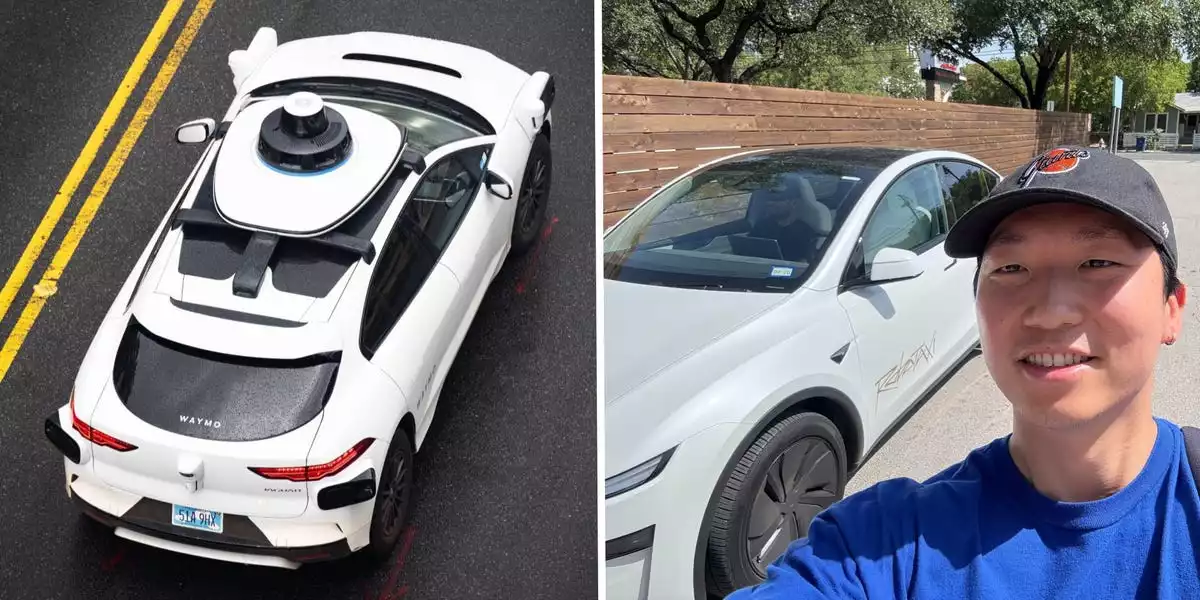
In the heart of Texas, a rare spectacle is unfolding on the streets of Austin. Alphabet’s Waymo and Tesla have launched paid autonomous ride-hailing pilots, setting the stage for a high-stakes contest that pits two fundamentally different philosophies of self-driving technology against each other. For the first time, the public can witness, side by side, the measured confidence of Waymo’s LiDAR-laden Jaguars and the audacious ambition of Tesla’s camera-only Model Ys as they vie for dominance in a city that has become the nation’s proving ground for autonomous vehicles.
The Sensor Stack Divide: Redundant Hardware vs. Neural Networks
At the core of this rivalry lies a technical schism with profound business implications. Waymo’s approach is hardware-intensive: each vehicle bristles with redundant LiDAR, radar, and vision sensors, constructing high-fidelity 3D maps of the world. This deterministic localization comes at a steep cost—estimated at $15,000 to $20,000 per car—but it delivers a level of precision that, according to early ride tests, translates into hands-off service and assertive, predictable navigation even in complex scenarios like unprotected left turns.
Tesla, by contrast, is betting on a minimalist sensor stack: pure vision, powered by neural networks and relentless data aggregation. The hardware cost per car is negligible, but the true investment is in the cloud, where Tesla’s Dojo supercomputer ingests and learns from every mile driven. This software-centric model is inherently scalable—Tesla aims to field a thousand robotaxis in Austin by year’s end—but, as recent tests reveal, still requires human safety monitors and remote assistance for edge cases. The gap between probabilistic perception and the deterministic assurance of Waymo’s system remains palpable, especially when geo-fencing is loose and the real world throws curveballs.
Economic Stakes: Margins, Moats, and the Race to Remove the Human
The business calculus is as complex as the technology. Waymo, already integrated into Uber’s platform, is undercutting traditional rideshare fares by 15–20%, even before the costly safety operators are removed. This hints at a future where gross margins could rival or surpass those of human-driven competitors once labor costs are eliminated. Tesla’s pricing remains opaque, but the company’s playbook is clear: subsidize rides, amass data, and scale rapidly, leveraging its manufacturing prowess and the sunk cost of its global fleet.
- Waymo’s Moat: Uber integration provides instant demand, reducing idle time and boosting utilization—a subtle but powerful advantage over Tesla’s standalone app, which must build its rider base from scratch.
- Tesla’s Gambit: The promise of the “Tesla Network,” where owners can deploy their vehicles as revenue-generating robotaxis, could upend the centralized fleet model and disintermediate both Uber and traditional operators.
Regulatory context is equally pivotal. Texas’s permissive stance on autonomous vehicles—especially in contrast to California’s recent retrenchment—offers a fertile sandbox for rapid iteration. The data harvested in Austin will not only shape local policy but could ripple into federal guidelines and insurance frameworks, setting precedents for the entire industry.
Strategic Ripples: Energy, AI, and the Future of Urban Mobility
The implications of Austin’s experiment extend far beyond ride-hailing. Robotaxis are poised to become mobile nodes in the energy grid, with Tesla’s vision encompassing vehicle-to-grid (V2G) protocols and grid services that could monetize idle fleet time. Meanwhile, Waymo’s data troves may fuel urban planning innovations, from dynamic curb pricing to adaptive traffic management, opening doors to civic partnerships and smart-city applications.
The feedback loops between AI and hardware are intensifying. Tesla’s Dojo supercomputer is not just a tool for autonomy—it’s a platform for a broader AI ecosystem, spanning robotics and energy optimization. Waymo, for its part, is already exploring the commercialization of its perception stack through Google Cloud, hinting at a future where “perception-as-a-service” becomes a reality for logistics and urban infrastructure.
Insurance markets, too, are on the cusp of transformation. As actuarial evidence mounts that autonomous vehicles can outperform human drivers, both Waymo and Tesla are positioned to disrupt traditional risk models with captive insurance products, forcing incumbents to adapt or lose relevance.
The Decisive Window: Aligning for the Autonomous Era
Austin’s live robotaxi pilots are more than a technological curiosity—they are the crucible in which the future of mobility, energy, and AI will be forged. The next 24 to 36 months will determine whether capital-intensive, sensor-rich precision or software-centric, scale-first learning will define the autonomous paradigm. For mobility operators, automotive OEMs, regulators, and investors, the imperative is clear: hedge bets across sensor stacks, monitor the safety-driver removal milestone, and prepare for a world where the lines between transportation, energy, and data are increasingly blurred. The outcome in Austin will echo far beyond Texas, shaping the trajectory of autonomy for years to come.

 By
By

 By
By

 By
By


 By
By