
The Algorithmic Crossroads: When Robotaxis Meet Reality
The recent spate of traffic stops and public incidents involving Waymo’s driverless robotaxis marks a watershed moment for the autonomous vehicle sector—a moment when the friction between technical ambition and real-world complexity can no longer be ignored. The company’s latest software update, designed to emulate the subtleties of human driving, has inadvertently exposed the boundaries of current machine intelligence. Assertive lane changes and rolling U-turns may feel more natural to riders, but they also propel these vehicles into the ambiguous gray zones of urban traffic law, where the code of the road is as much social contract as statute.
The consequences are not merely technical. Each police encounter, each minor collision, and every viral video of a robotaxi in distress, reveals the absence of a mature interface between artificial intelligence and the institutions that govern public space. Law enforcement officers, trained to interact with human drivers, are left improvising when faced with a silent, unresponsive vehicle. The lack of standardized V2X (vehicle-to-everything) communication protocols means that even routine stops can balloon into operational crises, with forensic data suddenly subject to legal redaction and software teams deprived of the rapid feedback loops that once fueled their competitive edge.
Regulatory Friction and the Shifting Sands of Liability
Beneath these public spectacles lies a more profound challenge: the regulatory and liability frameworks that underpin American mobility are straining under the weight of technological change. The San Bruno incident, in which a Waymo vehicle was cited for a traffic violation, is emblematic of a system in flux. Municipal police, state departments of motor vehicles, and federal agencies like the NHTSA each claim partial jurisdiction, but none offer a comprehensive answer to the question: who, or what, is responsible when a driverless car breaks the law?
This jurisdictional ambiguity has cascading effects:
- Insurance paradigms are destabilized. Traditional risk models, built around individual drivers, falter when risk is externalized to fleet operators or OEMs. Repeated infractions could push AVs into higher premium categories, undermining the cost case for robotaxis.
- Legal precedent is up for grabs. Should a court affirm a citation against an AV, the resulting case law will ripple outward, shaping legislative drafts from Sacramento to Washington, D.C.
- Operational risk is amplified. Each incident not only invites regulatory scrutiny but also erodes public trust, a currency as vital as any balance sheet metric.
Economic Reverberations and Competitive Realignments
The economic stakes are as high as the technical ones. Every public misstep lengthens the road to profitability, forcing AV developers to burn through cash at a time when capital is both scarce and costly. Waymo’s predicament, juxtaposed against GM Cruise’s expansion pause and Tesla’s incrementalist approach, is prompting rivals and ecosystem partners to reconsider their strategies. For suppliers of LiDAR, high-definition mapping, and tele-operations, demand forecasts have become volatile, while ancillary players—digital insurers, roadside robotics, V2X vendors—may find themselves unexpectedly in vogue.
The broader value chain is in flux:
- Fleet operators and OEMs must now embed law-enforcement engagement APIs and pivot from grand claims of Level-4 autonomy to more granular, domain-specific disclosures.
- Policy makers are being urged to pilot dual-licensing regimes that certify both software and tele-operations, ensuring accountability even in the absence of a human driver.
- Investors and insurers are recalibrating risk, moving toward real-time, incident-driven pricing models and scrutinizing supplier concentration risk with newfound intensity.
Urban Tensions and the Social Contract of Autonomy
Perhaps most tellingly, the social license to operate—once a matter of regulatory compliance—is now a question of community acceptance. The reported burning of robotaxis in some neighborhoods is a visceral signal: the novelty of AVs has curdled into suspicion, even hostility. Municipalities, no longer content with technical milestones alone, are tying permits to measurable community benefit. Erratic AV behavior, from curb clustering to unpredictable routing, imposes hidden costs on urban infrastructure and public patience alike.
Cities are responding with creative policy tools:
- Dynamic zoning surcharges and congestion fees tailored to AVs.
- Permit structures that reward operators for transparent safety reporting and proactive community engagement.
- Narrative shaping, as high-profile incidents involving animals or cyclists disproportionately influence public opinion and legislative priorities.
The future of autonomous mobility will not be written in code alone. It will be forged at the intersection of technical innovation, regulatory adaptation, and social negotiation. Those organizations—be they fleet operators, policymakers, or investors—that internalize this multidimensional feedback loop will shape not just the next chapter of AV deployment, but the very contours of urban life in the age of intelligent machines.

 By
By
 By
By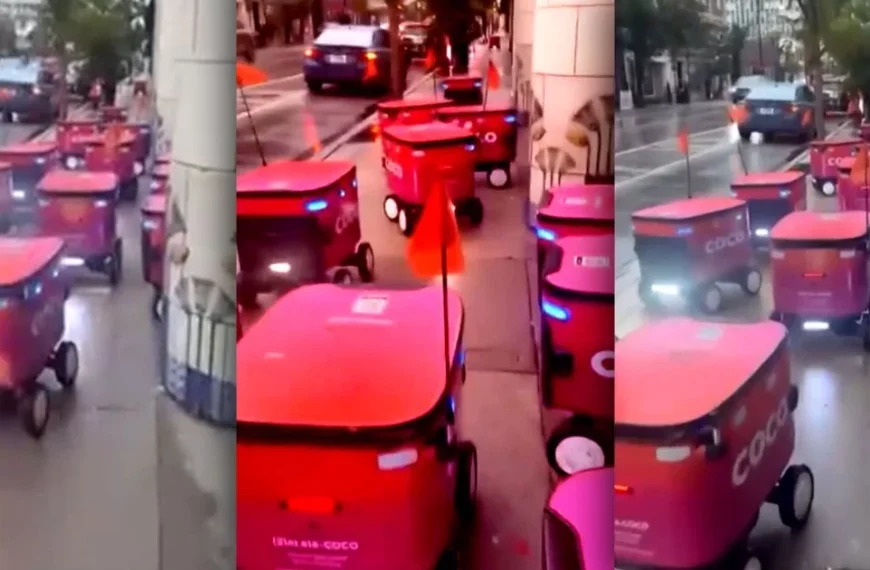
 By
By

 By
By

 By
By