

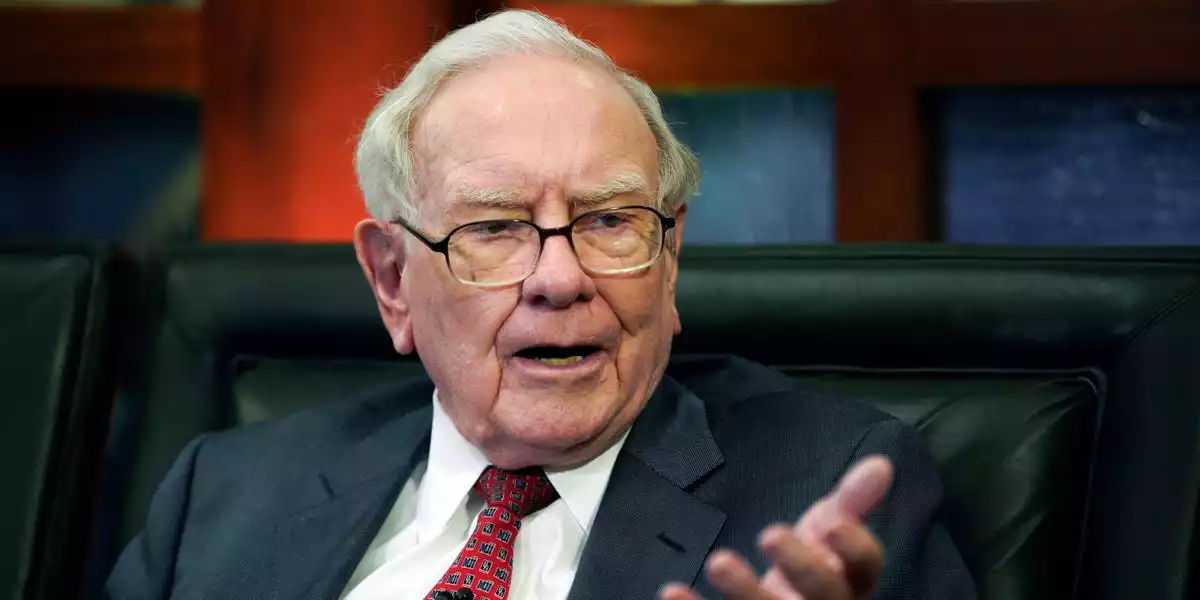

The End of an Era: Berkshire’s Transition and the Architecture of Patience
Warren Buffett’s decision to retire as CEO of Berkshire Hathaway in 2025 marks the coda to one of capitalism’s most storied tenures. After six decades at the helm, Buffett’s exit is not merely a personal milestone but a tectonic shift for global capital markets and the philosophy of long-term investing. The elevation of Greg Abel as operational successor, alongside the departure of portfolio chief Todd Combs to JPMorgan, signals both continuity and quiet reinvention at a moment when Berkshire’s influence—now buttressed by a $1 trillion market value and a record $350 billion cash reserve—has never loomed larger.
Buffett’s stewardship has always been about more than numbers. His recent Thanksgiving reflections and charitable gifts to family foundations underscore a legacy built on soft power and patient capital. Yet, as Berkshire trims its Apple and Bank of America stakes, exits Citigroup, and forges a new $4.3 billion position in Alphabet, the company’s portfolio recalibration speaks volumes about the shifting tectonics of risk, technology, and governance in a late-cycle, high-rate environment.
Berkshire’s Cash Mountain: Macro Signals and Strategic Patience
Berkshire’s $350 billion cash reserve is now larger than the balance sheets of many G-20 central banks—a liquidity arsenal with the power to move markets. This war chest is not an accident of indecision but a deliberate macro signal: risk-adjusted returns in U.S. megacap equities are compressing, while short-dated Treasuries yielding over 5% have re-priced patience as a strategic asset. Executives and investors should heed this as confirmation that the “higher for longer” interest rate regime is not a blip but a new baseline.
Key capital allocation themes emerge:
- Digital Core, Analog Moat: The rotation from Apple to Alphabet reflects a tilt toward capex-light, data-driven platforms—cloud and AI—over hardware-centric giants. Berkshire’s endorsement of Alphabet marks its clearest embrace yet of AI-at-scale economics.
- Hydrocarbon Optionality: The expansion of Occidental Petroleum suggests a continued belief in the resilience of traditional energy, even as the Inflation Reduction Act incentivizes carbon capture and energy transition investments.
- Financial Sector Skepticism: Exiting Citigroup and paring Bank of America after regulatory cost signals and FDIC assessments underscores a wary stance toward financials in a potentially shallow recession.
Governance Evolution: From Founder’s Shadow to Institutional Blueprint
Buffett’s succession plan is as much about architecture as authority. Greg Abel, with deep roots in Berkshire’s energy empire, will oversee operations, while investment discretion diffuses among Ted Weschler (public equities), Ajit Jain (insurance capital), and, notably, Todd Combs—whose move to JPMorgan may open new deal flow channels. This matrixed model, reminiscent of the “pods” approach in alternative asset management, is designed to dilute key-man risk and institutionalize best practices at scale.
Governance reforms extend beyond personnel. The installation of a general counsel and the creation of divisional presidencies under Abel mark a shift toward clearer lines of accountability and operational autonomy. Such reforms are likely to be studied by founder-centric conglomerates worldwide, especially as demographic risk and succession anxiety rise to the fore.
Strategic Horizons: Deployment Scenarios and Policy Crossroads
Berkshire’s next moves will reverberate far beyond Omaha. The conglomerate’s cash pile positions it as a potential “white knight” in any 2025–26 credit dislocation, capable of stabilizing systemically important but capital-strained franchises—think regional utilities, specialty insurers, or data-center REITs. For mid-cap industrials and regulated infrastructure assets, Abel’s ascension signals an openness to asset-heavy, cash-generative businesses primed for transformational capex.
Forward-looking scenarios include:
- Energy-Transition Infrastructure: Expect multibillion-dollar bets on carbon pipelines, geothermal, and grid-scale batteries—areas de-risked by federal tax credits and aligned with Berkshire Energy’s vertical integration playbook.
- Distressed Tech Assets: Should private tech valuations compress, Berkshire could reprise its 2009 railroad acquisition strategy, scooping up mission-critical software with durable cash flows.
- Insurance Consolidation: With reinsurance shortages and rising catastrophe frequency, specialty carriers trading at book value discounts may become acquisition targets.
Buffett’s public challenge to Washington—to “earn” Berkshire’s $27 billion annual tax contribution—frames cash stewardship as a national imperative. As Congress debates corporate tax tweaks and industrial policy, large cash holders should brace for regulatory overtures, potential surtaxes, and calls to support public investment priorities.
Berkshire’s transition is more than a changing of the guard; it is a masterclass in strategic patience, institutional resilience, and the art of capital allocation in an era where liquidity, governance, and technological convergence will define the next chapter of American enterprise.

 By
By

 By
By
 By
By
 By
By


 By
By







