


A New Nuclear Bargain: Waste, Innovation, and America’s Energy Future
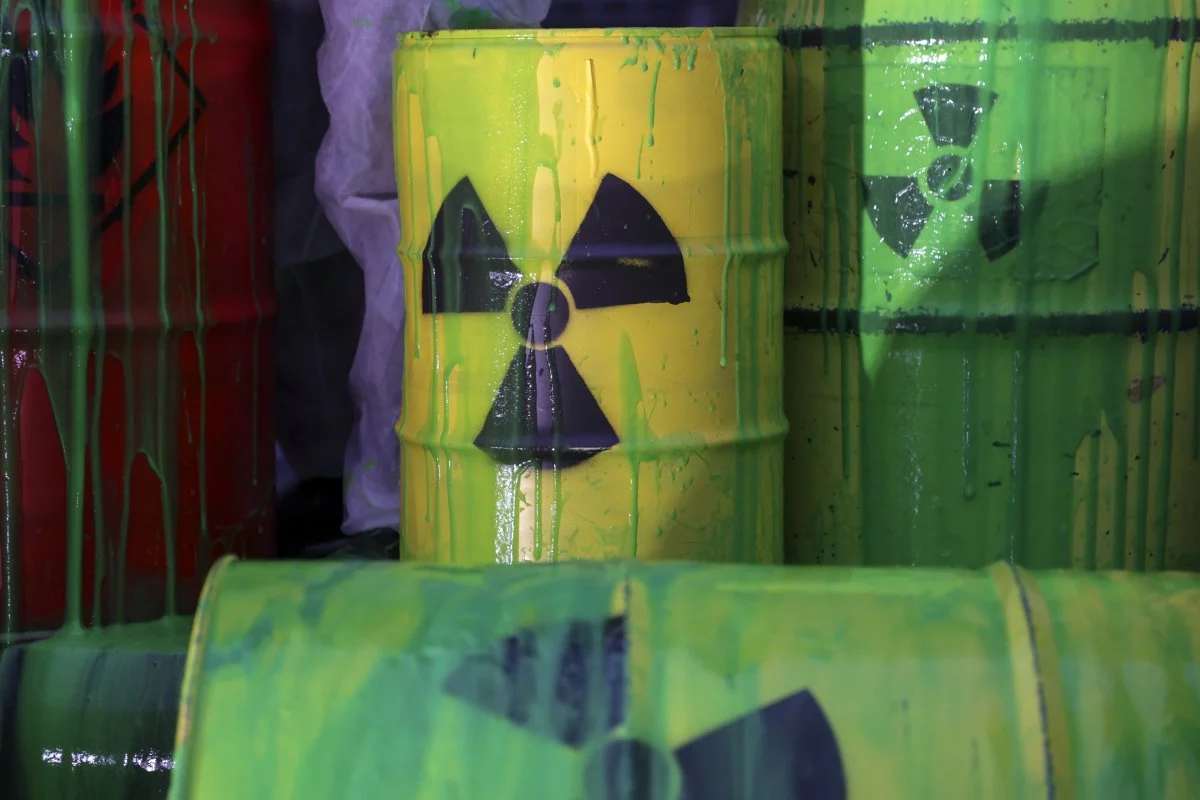
The United States stands at a crossroads in its nuclear energy journey, with the White House unveiling a dual-pronged initiative that may redefine the nation’s relationship with atomic power. This bold strategy, a fusion of economic incentives and technological ambition, seeks not only to resolve the country’s decades-old nuclear waste quandary but also to catalyze a new era of advanced reactor deployment and domestic supply-chain revitalization.
At its core, the proposal offers states a voluntary pathway to host a permanent geological repository for spent nuclear fuel, sweetened by the promise of “Nuclear Lifecycle Innovation Campuses.” These hubs are envisioned as crucibles for small modular reactors (SMRs), uranium enrichment, and advanced manufacturing—a vision that entwines waste management with job creation and strategic energy security. With Utah and Tennessee emerging as early contenders, the next 60 days will reveal whether this carrot-and-stick approach can overcome the inertia that has long stymied U.S. nuclear ambitions.
Integrating Waste and Innovation: Lessons from Abroad, Stakes at Home
For nearly seven decades, the U.S. has operated commercial nuclear reactors without a licensed deep-geologic repository. This persistent gap has been a glaring liability, undermining public trust and utility confidence alike. The new initiative borrows from successful international models—France’s integrated fuel cycle at La Hague, Finland’s Onkalo repository—yet reimagines them for the era of modular, distributed generation. By co-locating waste repositories with innovation campuses, the government signals an intent to close the loop: spent fuel is no longer a dead end, but a linchpin in a virtuous cycle of research, deployment, and economic renewal.
SMRs and micro-reactors lie at the heart of this vision. Factory-built and deployable at a fraction of the capital cost and construction time of traditional gigawatt-scale plants, these compact units promise to democratize nuclear energy. The technical viability is no longer in question—China’s ACP100 and Russia’s Akademik Lomonosov have already entered service—but the U.S. regulatory pipeline remains nascent. Micro-reactors, with outputs below 20 MWe, are particularly attractive for defense, mining, and remote communities, offering a path to decarbonize sectors historically reliant on diesel or gas turbines. Early military deployments could de-risk the technology for civilian markets, expanding the addressable footprint for American nuclear vendors.
Economic Renaissance or Cost Mirage? The Industrial Calculus
The economic narrative is compelling: a single repository complex could generate thousands of construction jobs and hundreds of permanent positions, a boon for regions grappling with post-pandemic industrial contraction. Yet the financial realities are sobering. The total system-level cost of waste isolation—covering site characterization, licensing, and perpetual monitoring—has historically exceeded $10 billion. For states with constrained budgets, up-front federal funding will be decisive.
Beyond direct job creation, the initiative aims to reshore critical supply chains. SMR commercialization could revive domestic production of heavy forgings, specialty steels, and digital instrumentation—sectors now dominated by Asian suppliers. Expanding uranium enrichment capacity is not merely an economic play; it is a strategic imperative as the U.S. seeks to reduce dependence on Russian separative work unit (SWU) capacity—a vulnerability laid bare by the ongoing conflict in Ukraine.
The proposal’s non-obvious synergies are equally intriguing. Hyperscale data centers, hungry for reliable, low-carbon power, are scouting behind-the-meter nuclear to manage grid congestion and Scope-3 emissions. Co-locating enrichment and rare-earth separation facilities could streamline critical-mineral processing, while advanced reactors’ high-temperature steam unlocks a path to affordable green hydrogen—positioning states for Department of Energy hydrogen hub grants.
Policy Innovation, Regulatory Bottlenecks, and the Geopolitical Arena
Consent-based siting is the political innovation at the heart of this initiative. By tying repository approval to the promise of high-tech jobs and infrastructure, the administration hopes to recalibrate the social license calculus. Yet history cautions against easy optimism: the Department of Energy’s 2015 framework foundered amid local opposition. Whether the new economic incentives can tip the balance remains to be seen.
The regulatory landscape presents its own challenges. The Nuclear Regulatory Commission’s current licensing paradigm—designed for bespoke, one-off projects—is ill-suited for the serial deployment that SMRs require. Unless the agency adopts standardized “type certificates,” the administration’s goal of quadrupling nuclear capacity by 2050 may remain aspirational.
On the international stage, a domestic enrichment surge and export-ready SMR platforms could reassert U.S. leadership in global nuclear markets, countering Russian and Chinese civil-nuclear diplomacy. The integration of robust waste-take-back services would further strengthen America’s hand in emerging-market energy procurement.
The Road Ahead: Opportunity and Uncertainty
The administration’s repository-plus-campus proposition reframes nuclear waste from a political liability to a strategic asset—one that could unlock a new era of advanced-reactor leadership, regional economic renewal, and energy security. For utilities, engineering firms, and technology developers, the stakes are high: capital allocation, M&A activity, and workforce strategy will hinge on the credibility of the disposal pathway and the pace of regulatory reform.
As the 60-day window for state interest unfolds, the industry—and the nation—waits to see whether this initiative will break the cycle of nuclear gridlock or join the long list of American nuclear promises deferred. The outcome will shape not only the future of U.S. energy policy but the contours of global nuclear competition in the decades to come.

 By
By
 By
By
 By
By
 By
By


 By
By








