


The Quadruped Awakening: Unitree’s A2 and the New Robotics Vanguard
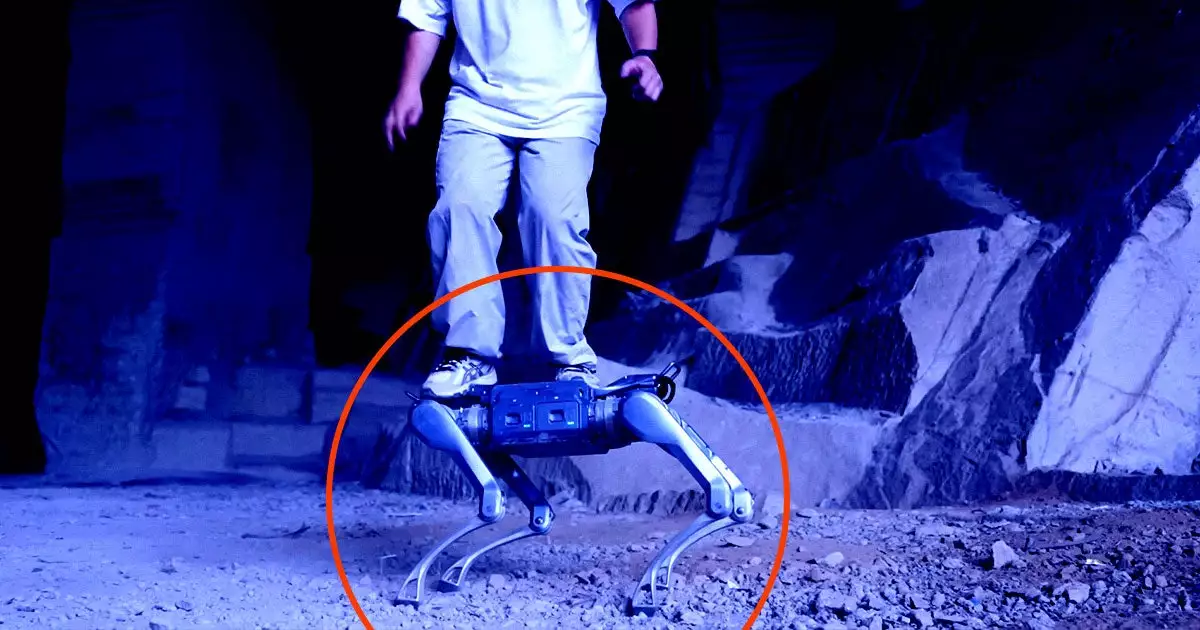
The unveiling of Unitree Robotics’ A2 “Stellar Explorer” is not merely an incremental advance in the world of legged machines—it is a clarion call that the era of high-performance, affordable quadrupeds has arrived. At 81 pounds, yet capable of hefting 220 pounds across terrain, the A2 is a study in power-to-weight alchemy. Five hours of untethered operation, a chassis that shrugs off glass-pane impacts, and a price tag that undercuts Western rivals—all signal a tectonic shift in the robotics landscape. But beneath the surface spectacle lies a deeper narrative: the commoditization of advanced electromechanical systems, China’s ascension from imitator to innovator, and the emergence of quadrupeds as modular, multi-role platforms.
Engineering Prowess and Platformization
The A2’s technical specifications read like a wish list for robotics engineers. Its load-to-mass ratio—nearly triple that of many commercial competitors—owes much to China’s dominance in rare-earth magnet supply chains, enabling motors that are both lighter and stronger. The robot’s extended field endurance, clocking in at up to five hours, is no accident; it is the fruit of advances in battery management and cooling, many borrowed from the electric vehicle sector. By integrating continuous LIDAR and onboard CPUs, the A2 edges toward true edge AI processing, reducing reliance on the cloud and ensuring data sovereignty—a critical feature for enterprise and government buyers alike.
Perhaps most telling is the A2’s embrace of hybrid locomotion. The optional “wheel-leg” kit is a tacit admission that pure legged motion, while visually compelling, is not always the most efficient. On smooth surfaces, wheels can slash power consumption by up to 40%, opening new use cases in logistics and last-mile delivery. Durability, too, is no afterthought: the robot’s ability to withstand dynamic shocks and environmental hazards points to sophisticated composite chassis design and real-time gait stabilization—essential for insurance, defense, and public safety deployments.
Economic Realignment and Competitive Tensions
The A2’s debut is as much an economic event as a technological one. Unitree’s aggressive pricing—its entry-level Go quadruped retails for $5,000, and its humanoid G1 for under $20,000—signals a new phase of price compression in robotics. This is not merely the result of cheaper labor or copycat engineering; it is the outcome of component deflation, as sensors and batteries produced at automotive scale drive down costs across the value chain. The A2, projected to list between $50,000 and $70,000, is now within reach of warehousing, energy, and security firms, shifting robotics from bespoke pilots to fleet-scale capital investments.
This economic realignment is also reshaping business models. By controlling both hardware and middleware, Unitree is poised to follow the “DJI playbook”: subsidize the hardware, monetize the data, and build verticalized applications. Western incumbents, long reliant on margin-rich hardware sales, may find themselves forced into platform-based, subscription revenue models sooner than anticipated. The value-chain rebalancing is stark, and the race is on to control not just the robot, but the ecosystem it inhabits.
Strategic Horizons: Stakeholders and Scenarios
For enterprises, the calculus is changing. Quadrupeds are no longer exotic curiosities relegated to R&D labs; they are modular sensor masts, capable of carrying thermal cameras, methane detectors, or 5G repeaters. In high-labor-cost regions, payback periods can now fall below two years. The integration of wheel-leg hybrids into mixed-mode AMR fleets promises to bridge the perennial gap between outdoor and indoor logistics. Yet, as fleets scale, so too do the demands for governance—cybersecurity, duty-of-care, and labor negotiations all loom large.
Investors, meanwhile, are eyeing a robotics market poised for explosive growth, reminiscent of the drone sector’s boom in the mid-2010s. The cost curve suggests a total addressable market expansion, with consolidation likely around vendors who own their motor IP and power electronics. Yet, risks abound: high-torque motors and advanced sensors straddle dual-use categories, inviting regulatory scrutiny and export controls.
Policy makers and defense planners are also taking note. The A2’s load rating and ruggedness have clear implications for unmanned logistics and perimeter security. As Chinese platforms reach Western price parity, debates over autonomous weapons and public-space regulation will only intensify.
The New Industrial Frontier
The launch of the A2 “Stellar Explorer” is emblematic of a broader convergence: legged mobility, AI perception, and battery electrification are collapsing into a unified platform, much as the smartphone once fused camera, GPS, and compute. China’s robotics ecosystem, resilient in the face of export bans, is now leading the charge—component indigenization first, global brand-building second.
For executives and strategists, the message is clear. High-mobility robotics is no longer a speculative bet, but an economically rational asset class. Those who seize the platform potential of quadrupeds—integrating predictive analytics, edge AI, and hybrid locomotion—will shape the next chapter of industrial automation. The quadruped arms race is not just about acrobatics; it is about who owns the future of intelligent, mobile machines.

 By
By


 By
By
 By
By

 By
By
 By
By







