


Drought as Catalyst: Reframing the UK’s Digital and Water Infrastructures
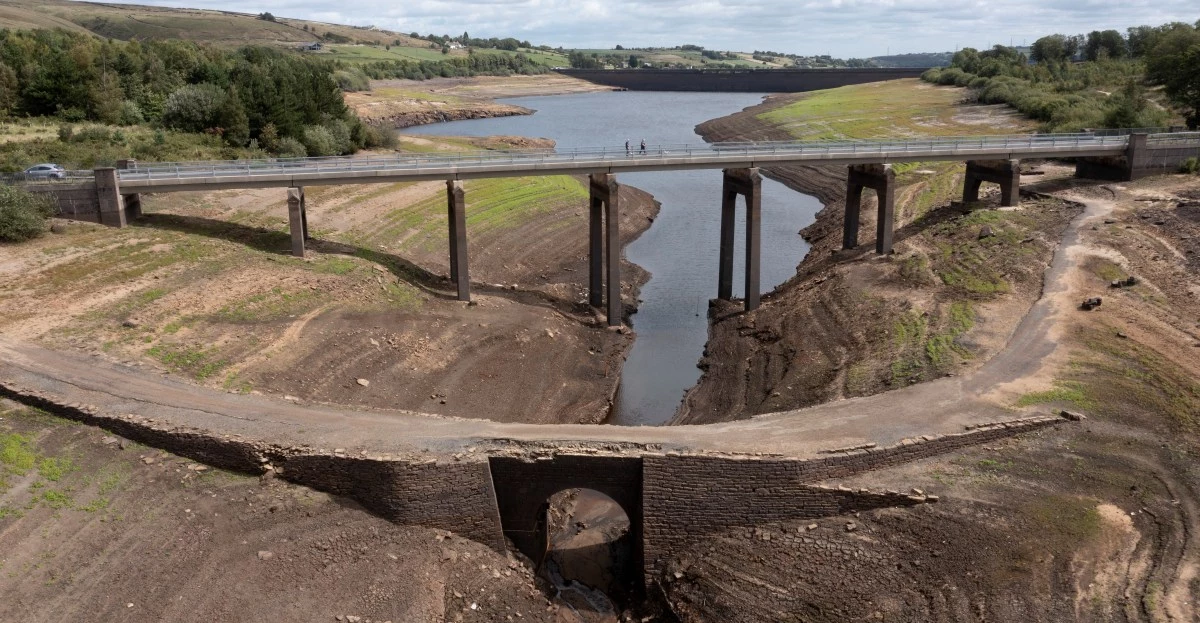
The United Kingdom’s entry into its most severe drought since 1976 is not merely a meteorological footnote—it is a clarion call for a profound reappraisal of how water, technology, and national resilience interlock. The National Drought Group’s recent campaign, which links the seemingly innocuous act of deleting old emails to the broader imperative of water stewardship, signals a cultural and policy inflection point. In a year where five regions are already declared in drought and six more teeter on the precipice, the UK’s water crisis is forcing both citizens and institutions to reckon with a new, expanded definition of “demand”—one that reaches deep into the heart of the digital economy.
The Digital Water Footprint: From Invisible Cost to Strategic Metric
For decades, the environmental impact of our digital lives has been measured in carbon. Yet, as the NDG highlights, water is the next frontier. Every byte—whether a cherished photo, a forgotten email, or the vast training data of an AI model—resides on a server that demands cooling. Traditional evaporative systems in data centres can consume up to 25 million litres of water annually. This is not a theoretical abstraction: as cloud adoption soars and AI workloads proliferate, the aggregate water footprint of digital infrastructure is fast eclipsing that of many traditional industries.
The implications are profound. While households are urged to fix leaky toilets and curb discretionary use, the macro-level challenge is clear: the lion’s share of water demand is shifting to sectors that have, until now, operated with little scrutiny or regulatory oversight. The notion of “Scope Water”—analogous to Scope 2 carbon emissions—will soon become a staple of ESG reporting. Insurers and investors are already signalling that digital water accounting will be a prerequisite for capital and coverage, echoing the carbon disclosure mandates of the previous decade.
Innovation and Inertia: Data Centres at a Crossroads
The technology sector is not blind to these mounting pressures. The innovation pipeline is rich with promise:
- Immersion and Submerged Cooling: Projects like Microsoft’s Natick have demonstrated that submerging servers can nearly eliminate evaporative loss.
- Direct-to-Chip Liquid Cooling: Closed-loop systems are gaining traction, offering significant reductions in water consumption.
- AI-Driven Workload Orchestration: By shifting compute loads to cooler times or water-abundant regions, operators can optimize both energy and water use.
Yet, structural constraints persist. Edge computing and latency-sensitive workloads demand proximity to urban centres—many of which are themselves water-stressed. Retrofitting legacy data centres is capital-intensive, with uncertain returns absent regulatory compulsion or water pricing reform. Renewable energy, often touted as a panacea, is not always water-light: hydrogen production and certain battery chemistries can be surprisingly thirsty.
The interconnectedness of energy and water is especially fraught. Fossil-fuel and nuclear plants, which anchor much of the UK’s grid, are themselves voracious consumers of water for cooling. Drought-induced capacity constraints can send electricity prices soaring, compounding cost pressures for data centre operators and, by extension, the businesses and consumers who depend on them.
Strategic Imperatives for the Digital Age
For boards and C-suite leaders, the message is unambiguous: water risk is now a core business concern. Proactive steps are essential:
- Quantify the Digital Water Footprint: Extend sustainability dashboards to include metrics like litres per compute hour or per terabyte stored. Demand Water Usage Effectiveness (WUE) data from cloud providers.
- Reassess Location Strategy: Integrate water-risk maps into site selection, balancing the allure of water-abundant regions with grid and connectivity constraints.
- Embed Water Efficiency in Procurement: Tie service-level agreements to water usage thresholds, and align incentives with measurable efficiency gains.
- Architect for Flexibility: Where possible, migrate latency-tolerant workloads to hyperscale sites with advanced cooling or to regions with surplus water rights.
- Craft a Holistic ESG Narrative: Investors increasingly view water security as a systemic risk on par with climate. Articulate a credible, forward-looking plan that demonstrates resilience in the face of tightening freshwater constraints.
The regulatory and market signals are unmistakable. OFWAT and the Environment Agency are poised to introduce volumetric pricing for industrial water use. Private equity is flowing into water-efficient cooling and circular-water start-ups. Global standards for water usage in digital infrastructure are on the horizon, and project financing is beginning to reflect drought risk in its covenants.
The UK’s drought has made visible what was once hidden: the physical underpinnings of our digital world, and the finite resources that sustain it. As digital transformation accelerates, water joins carbon as a boardroom metric—one that will define not just operational resilience, but also competitive advantage in an era where AI and high-performance computing are foundational. Enterprises that move swiftly to integrate water stewardship into their technology roadmaps will not only hedge against scarcity premiums and regulatory shocks, but also earn the trust of investors, customers, and society at large.

 By
By
 By
By
 By
By
 By
By
 By
By

 By
By








