
A New Axis in Urban Mobility: Uber, Lucid, and Nuro’s Autonomous Gambit
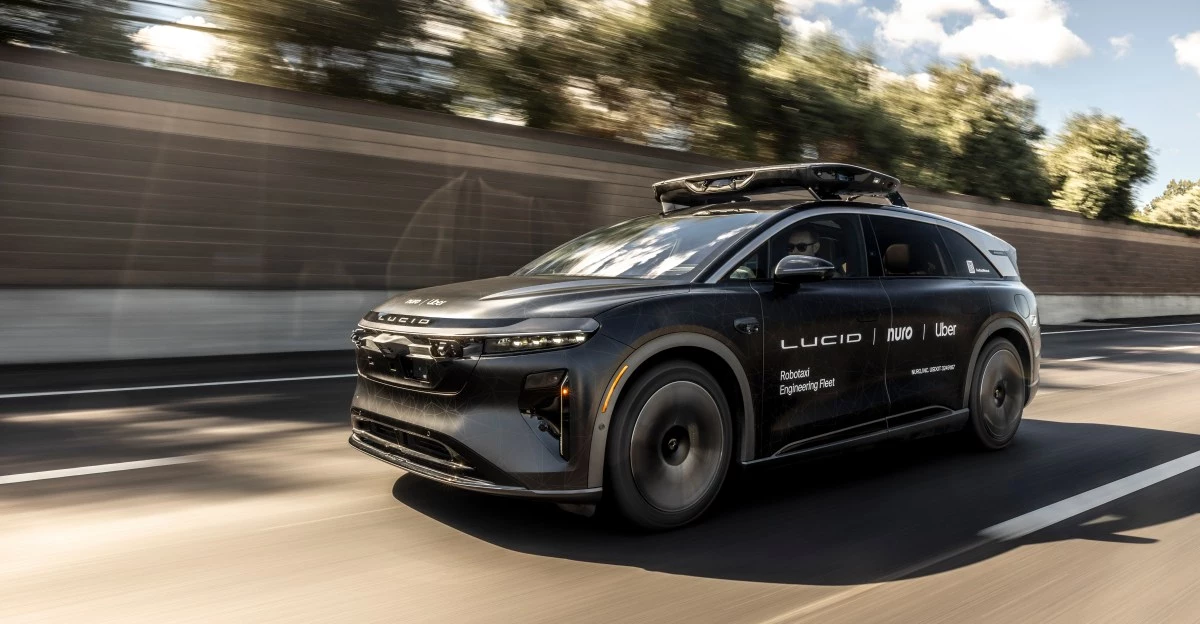
The streets of San Francisco, long a crucible for technological ambition, are about to host a new experiment in urban mobility. Uber’s alliance with Lucid and Nuro—an audacious plan to deploy 20,000 autonomous, electric robotaxis—signals not just a leap in transportation technology, but a recalibration of power within the ride-hailing ecosystem. As the first Lucid Gravity SUV, retrofitted with Nuro’s Level 4 autonomy stack, begins public-road trials, the city becomes a proving ground for the next phase of networked, software-driven transportation.
Engineering the Future: Modular Stacks and Data-Driven Feedback Loops
At the heart of this initiative lies a technological architecture as intricate as it is ambitious. Lucid’s 900-volt battery platform, a marvel of high-voltage engineering, promises longer duty cycles—an essential advantage when fleet economics hinge on maximizing uptime and minimizing charge intervals. The vehicle’s hardware, while premium in cost, may ultimately drive total cost of ownership below the critical $1-per-mile threshold if maintenance and battery longevity projections hold.
Nuro’s sensor fusion suite—melding imaging radar, FMCW lidar, and thermal cameras—was originally honed in the crucible of low-speed delivery bots. Scaling this technology to passenger speeds, with their attendant demands on perception latency and thermal management, is a formidable challenge. Yet, it is precisely this leap that could set the alliance apart from rivals. The integration of Uber’s ride-hail telemetry with Nuro’s reinforcement-learning algorithms creates a closed feedback loop, a data flywheel that competitors lacking real-time demand datasets may struggle to replicate.
The federated software model, harmonizing Uber’s dispatch, Lucid’s vehicle OS, and Nuro’s autonomy firmware via over-the-air updates, stands in stark contrast to Waymo’s vertically integrated approach. This modularity may accelerate innovation, but it also expands the cyber-attack surface—a complexity that regulators and insurers will scrutinize closely.
Economic Stakes and Regulatory Chess
The economic calculus underpinning this alliance is as nuanced as the technology itself. Lucid’s upmarket hardware inflates capital expenditure per vehicle, but the prospect of lower lifetime costs and new B2B revenue streams is tantalizing. Uber, meanwhile, faces a strategic fork: retain balance-sheet ownership of the fleet, or pivot to third-party lessors—each path carrying distinct implications for margin, risk, and flexibility in a volatile interest-rate environment.
Regulatory dynamics add another layer of intrigue. California’s two-step permit regime—driver-off certification from the DMV and ride-hail approval from the CPUC—remains the nation’s most rigorous. Yet, a successful San Francisco launch could generate a regulatory “halo effect,” accelerating approvals in Sunbelt metros where EV incentives and labor shortages converge. Should regulators mandate safety-data reciprocity, however, Uber’s multi-stack approach could morph from a competitive asset into a compliance headache.
The partnership also subtly repositions Uber’s brand—from mere ridesharing to “mobility orchestration,” echoing the platform-agnostic ethos of cloud infrastructure giants. Lucid, for its part, diversifies beyond retail, leveraging excess manufacturing capacity and monetizing its skateboard architecture. Nuro, meanwhile, gains invaluable human-passenger data, subsidized by Uber’s demand, that can be funneled back into its core delivery vertical.
Macro Forces and the Unfolding Urban Tapestry
Beneath the surface, macroeconomic and infrastructural currents are shaping the trajectory of autonomous mobility. The Inflation Reduction Act’s clean-vehicle credits blunt the capital sting of large-scale EV deployment, even as higher interest rates threaten to elevate the weighted average cost of capital. The anticipated energy demand—1.4 gigawatt-hours daily at full fleet maturity—will test the resilience of California’s grid, nudging utilities toward time-of-use pricing and renewable integration.
Labor dynamics are poised for transformation. While human drivers remain indispensable for surge coverage and edge-case scenarios in the near term, the locus of value will shift toward higher-skilled roles: remote tele-assist, fleet diagnostics, and cyber-physical security. Insurance, too, is evolving—actuarial models are migrating from driver-centric to sensor-centric risk, paving the way for granular, parametric micro-policies.
For decision-makers, the implications are profound:
- Mobility platforms must balance supplier diversification with unified data governance to maintain operational coherence.
- OEMs and Tier-1s can look to Lucid’s model as a blueprint for monetizing premium EV IP through fleet partnerships.
- Investors should track regulatory milestones and battery-cost breakthroughs as leading indicators of revenue ramp and profitability.
- Urban planners and utilities must anticipate the infrastructural strain of robotaxi density, particularly around airports and tourist corridors.
- Workforce strategists are called to develop upskilling programs that align with the emerging demands of autonomy at scale.
Uber’s foray into a Lucid-Nuro-powered robotaxi fleet is more than a contest of technological prowess—it is a strategic assertion of independence, a bid for data leverage, and a calculated gamble on the future of urban transportation. If the alliance can navigate the labyrinth of integration, regulation, and capital, it may well redraw the competitive map of mobility, catalyze new business models for electric vehicle manufacturers, and accelerate the transition to a software-defined, network-orchestrated urban future.

 By
By

 By
By
 By
By
 By
By
 By
By


 By
By



 By
By