
Power, Policy, and the Uncertain Road Ahead for America’s Electric Vehicle Ambitions
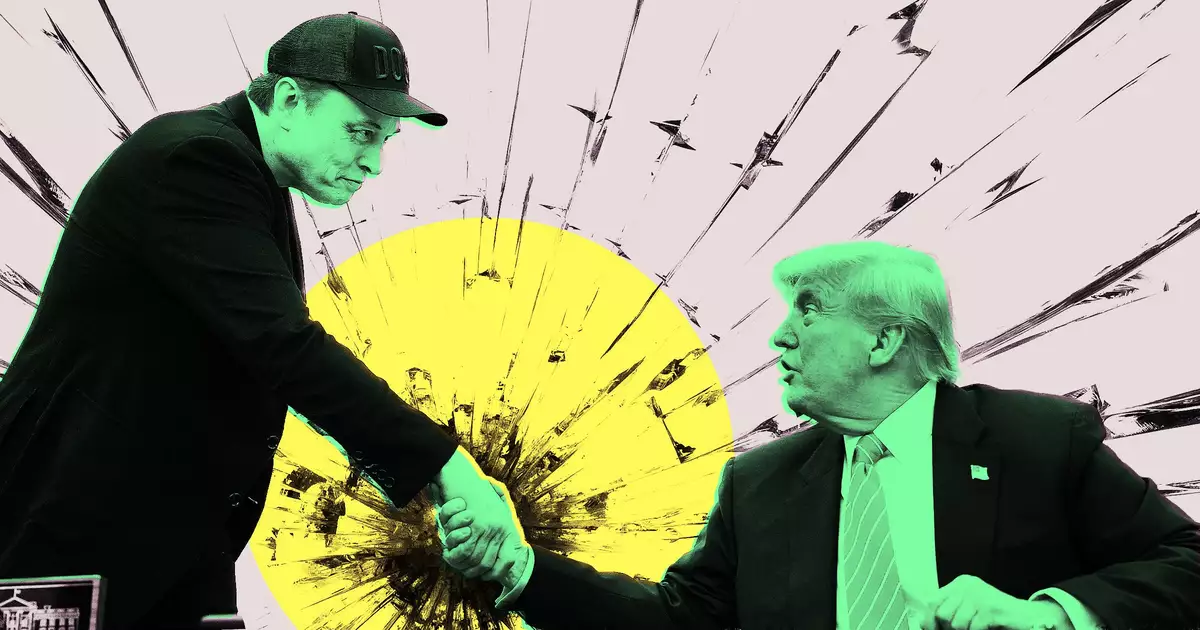
The recent spectacle at the White House—President Donald Trump’s public vow to rescind California’s enhanced emissions standards, coupled with a pointed query to Tesla’s Elon Musk—was more than political theater. It was a clarion call signaling a new phase in the contest over America’s automotive future, one that will reverberate through boardrooms, investment committees, and global supply chains.
At its core, the episode exposes the fragile architecture underpinning the U.S. electric vehicle (EV) sector. The tension between federal authority and state innovation, embodied by California’s Clean Air Act waiver, is not merely a legal skirmish. It is a battle over the very investability of next-generation mobility—and the rules of engagement for automakers, utilities, and investors navigating an increasingly fragmented regulatory landscape.
The Battery-Cost Revolution Meets Policy Uncertainty
The economic logic of the EV transition has always rested on a delicate balance: relentless battery cost deflation on one side, and the tailwind of regulatory certainty on the other. As the White House signals a renewed push to override California’s authority, that balance is threatened. For automakers, the specter of federal pre-emption introduces a volatility that could slow the migration of battery plants and critical mineral refining to American soil.
But the technological story does not end there. Tesla’s competitive moat, after all, is no longer built solely on hardware. Its software stack—encompassing full self-driving (FSD) capabilities and energy services—has unlocked recurring revenue streams that traditional automakers are only beginning to chase. Even if regulatory rollbacks flatten near-term EV demand, the inexorable shift toward software-defined vehicles remains. The question is not whether this transformation will occur, but whether American industry will lead or lag as global competitors accelerate.
Capital, Geopolitics, and the New Map of Risk
The interplay between policy and capital formation is stark. Investments in domestic battery and EV supply chains—heralded by legacy OEMs and Tier-1 suppliers—depend on the stability of zero-emission vehicle (ZEV) credit markets and incentives like those in the Inflation Reduction Act. Diluting state-level standards diminishes the value of these credits, raising the bar for new projects and potentially redirecting global capital to more predictable jurisdictions in Europe or China.
- Trade Implications: A softer U.S. stance on emissions may weaken Washington’s hand in climate-linked trade negotiations, opening the door to retaliatory carbon border adjustments from the European Union.
- China’s Advantage: China’s vertically integrated EV ecosystem, already a formidable export force, stands to consolidate its lead as U.S. policy uncertainty grows—complicating national security debates over critical minerals.
For institutional investors, the spread between green-bond yields and conventional auto debt could widen as regulatory risk increases. Hedging strategies may shift toward European battery champions or diversified commodity plays less exposed to U.S. policy swings.
Strategic Imperatives for Industry Stakeholders
The evolving policy landscape demands a new level of agility and foresight from industry leaders:
- Automakers must plan for a bifurcated market: states adhering to California’s standards (nearly 40% of U.S. auto sales) versus those aligned with looser federal rules. Platform flexibility—architectures capable of accommodating internal combustion, hybrid, and battery-electric powertrains—is now a strategic imperative.
- Utilities and Grid Operators must recalibrate load-growth forecasts and investment timelines for distributed energy resources and vehicle-to-grid (V2G) infrastructure, stress-testing against both accelerated and delayed electrification scenarios.
- ESG-Sensitive Capital may demand higher risk premia or governance concessions before financing new internal combustion capacity, even under relaxed federal rules.
Non-obvious connections abound. States favoring stricter emissions standards often lead in autonomous-vehicle pilot programs, suggesting that regulatory fragmentation could soon extend to autonomy, data privacy, and cybersecurity. Meanwhile, large corporates with delivery fleets may double down on private EV procurement, catalyzing an enterprise-driven demand channel independent of consumer adoption.
Navigating the Crosscurrents: Scenarios and Strategic Takeaways
Three forward-looking scenarios now shape the strategic calculus:
- Dual-Track Regulation: California and its allies litigate to preserve their waiver, forcing automakers to manage two compliance regimes. Modular compliance toolkits and flexible capex allocation become essential.
- Federal Rollback Entrenched: A second Trump term cements relaxed standards, prompting a pivot toward plug-in hybrids. Lobbying for technology-neutral incentives and diversifying battery chemistries preserve optionality.
- Policy Snapback: A post-2024 reversal reinstates strict rules, unleashing pent-up EV demand and straining supply chains. Maintaining “shovel-ready” capacity and agile supplier contracts positions firms to capitalize swiftly.
The Trump-Musk exchange, fleeting as it was, crystallizes a deeper reality: environmental policy is no longer a distant variable to be managed at the margins. It is a core driver of capital allocation, technology strategy, and competitive advantage. In this era of regulatory volatility, the winners will be those who build for flexibility, invest in resilient technology stacks, and follow the arc of policy consistency—wherever it leads.

 By
By
 By
By
 By
By
 By
By

 By
By


 By
By


 By
By