

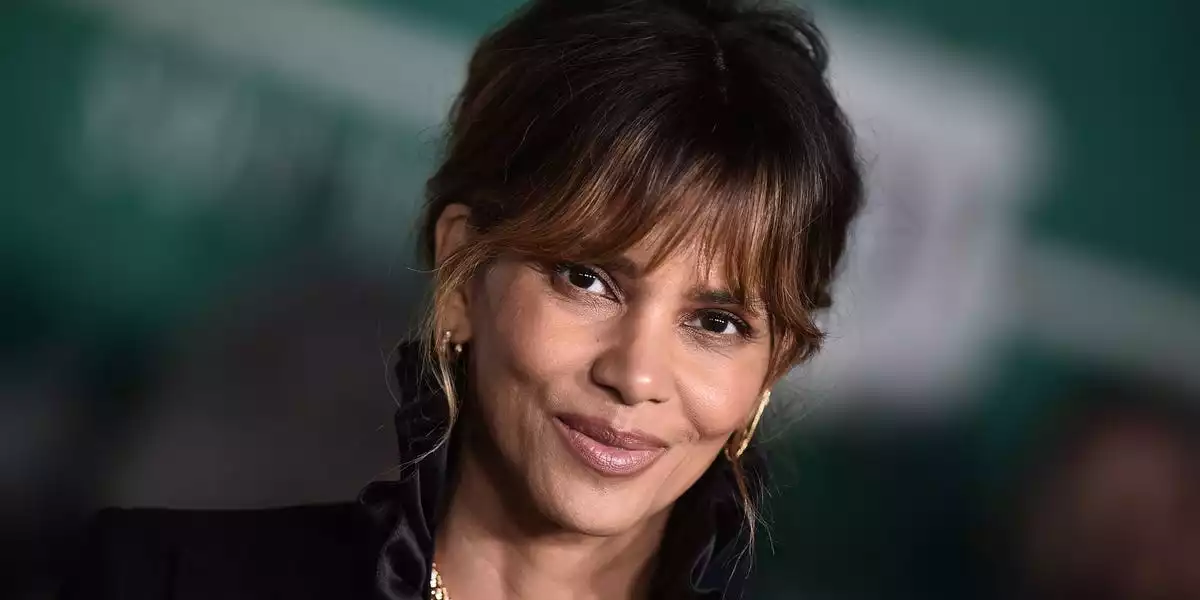

Halle Berry’s anti-retirement message and the shifting power dynamics of age in Hollywood
Halle Berry’s public rejection of retirement—voiced as she approaches 60—lands as more than a personal declaration. It functions as a pointed critique of an entertainment economy that has long treated age as a narrowing corridor, particularly for women, and it arrives at a moment when demographic reality is colliding with legacy casting norms. Speaking on *“Making Space with Hoda Kotb,”* Berry challenged the tacit expectation that veteran performers should “step aside” to make room for younger talent, arguing instead that continued work is tied to purpose, visibility, and cultural presence.
Her stance aligns with a broader chorus from high-profile creatives such as Morgan Freeman and Patti Smith, who have similarly framed longevity not as an exception but as a feature of meaningful creative work. Collectively, these voices are amplifying a cultural reckoning: ageism is not only a social bias—it is an operational constraint that shapes hiring, storytelling, marketing, and investment decisions across film, television, and streaming.
For business leaders, Berry’s comments are a reminder that the industry’s “youth premium” is increasingly out of step with audience composition, platform economics, and the technological tools now available to expand how age is represented on screen.
Screen technology is rewriting what “age” means as a production variable
The entertainment sector’s relationship with age has historically been constrained by physical continuity, audience targeting assumptions, and the perceived marketability of youth. Today, technology is loosening those constraints—sometimes in ways that empower veteran talent, and sometimes in ways that raise new questions about authenticity and control.
Key technology vectors reshaping age representation include:
- AI-driven de-aging and re-aging pipelines: Deep learning tools and advanced CGI can adjust perceived age without recasting, allowing studios to keep iconic performers attached to roles across timelines. This expands creative flexibility and can reduce franchise disruption risk.
- Virtual production and performance capture: LED volumes, real-time rendering, and more accessible capture systems make it easier to integrate performers into physically demanding or stylized environments—potentially extending the range of roles available to older actors.
- Streaming personalization and audience analytics: Platforms increasingly identify and monetize distinct cohorts, including older viewers. If engagement data shows strong retention tied to familiar, veteran-led content, the business case for age-inclusive casting becomes measurable rather than ideological.
- Immersive formats (AR/VR) and cross-platform IP: Stories about legacy, resilience, and reinvention translate well into interactive experiences. Veteran performers can anchor multi-format franchises that appeal to both nostalgia-driven audiences and younger users drawn to novel delivery formats.
The strategic implication is clear: age is becoming less of a technical limitation and more of a creative and commercial choice. As these tools mature, the competitive edge may shift toward studios and platforms that use them to broaden representation rather than to erase it.
The “silver economy” is no longer peripheral—it is a growth thesis
Berry’s refusal to retire also maps onto a macroeconomic reality: populations are aging, and older consumers control substantial discretionary spending. In many markets, the over-50 segment is not a niche—it is a durable revenue base. Entertainment companies that continue to optimize primarily for youth risk leaving money on the table, particularly in subscription models where long-term retention matters as much as opening-weekend buzz.
Several economic dynamics stand out:
- Commercial viability of veteran-led projects: Mature stars can deliver differentiated content in an increasingly crowded streaming landscape. Distinctiveness—rather than broad, youth-centric sameness—has become a hedge against churn.
- Advertising and brand partnerships: Automotive, luxury, travel, healthcare, and wellness brands often target older demographics with high lifetime value. Veteran celebrities remain powerful ambassadors, and Berry’s visibility reinforces that older talent can be both aspirational and contemporary.
- Labor market parallels beyond entertainment: Later-stage career extension is a cross-industry trend. As retirement timelines lengthen, companies face shared challenges—skills renewal, intergenerational collaboration, and the redesign of career arcs. Media firms that treat longevity as normal can build more resilient talent systems.
- Financing and portfolio diversification: Studios historically leaned on younger “bankable” leads as a risk-control mechanism. But as audience fragmentation grows, financiers may increasingly value projects that serve under-addressed segments, especially when paired with data-backed demand signals from platforms.
In this context, age-inclusive casting is not merely reputational. It can be portfolio strategy, aligning content investment with demographic momentum.
What executives and creators can do now to turn age inclusion into advantage
Berry’s commentary spotlights a decision point: entertainment companies can either treat age as a reputational issue to manage—or as a market opportunity to build around. The organizations that move first are likely to define the norms others later adopt.
Practical moves with strategic upside include:
- Commission “silver narratives” with agency: Greenlight stories where older protagonists drive the plot rather than serve as supporting texture. Genres like thriller, sci-fi, comedy, and prestige drama can all carry mature leads without being “about aging” in a reductive way.
- Invest in age-inclusive production tech responsibly: Build internal standards for AI-assisted facial work, consent, and creative intent so that de-aging tools expand storytelling without undermining performer autonomy or audience trust.
- Design multi-generational talent ecosystems: Pair veteran performers and creators with younger technologists through mentorship and reverse-mentorship programs, strengthening both institutional knowledge and digital fluency.
- Use analytics to counter bias with evidence: If data shows strong engagement for veteran-led titles, make it visible internally—dashboards, greenlight criteria, and acquisition models should reflect demonstrated demand, not inherited assumptions.
- Pursue cross-sector partnerships in wellness and longevity: Co-develop docuseries, branded content, or interactive experiences with health-tech and wellness firms, positioning entertainment brands at the center of cultural conversations about purpose and lifespan.
Berry’s refusal to “make room” is ultimately a challenge to an old scarcity mindset—one that assumes relevance is finite and visibility must be rationed by age. In a market shaped by demographic change, algorithmic distribution, and rapidly evolving production technology, the more durable competitive posture may be the one that treats creative longevity not as an anomaly, but as an asset worth building the next era of entertainment around.

 By
By
 By
By
 By
By

 By
By


 By
By







