
The Quiet Revolution in American Wine: From Coastal Dominance to Data-Driven Heartlands
Beneath the storied hills of Napa and Sonoma, a tectonic shift is underway in the American wine industry—one that stretches far beyond the foggy valleys of California. A new generation of vintners, investors, and technologists is quietly redrawing the map of U.S. viticulture, propelled by climate volatility, economic pragmatism, and the relentless advance of precision agriculture. The result is a decentralized, data-savvy, and increasingly resilient wine ecosystem, where terroir is as much a question of silicon and sensors as it is of soil and sun.
Economic Diversification: Risk, Resilience, and the Rise of the Interior
For decades, the West Coast has been the undisputed epicenter of American wine. Yet, as wildfires, drought, and shifting weather patterns threaten the very viability of legacy vineyards, capital is flowing eastward with unprecedented urgency. Bank lending for vineyard development east of the Rockies surged 17% year-over-year, dwarfing the modest 3% uptick on the West Coast. This geographic hedging is not mere speculation—it is a strategic response to the existential risks facing California’s once-unassailable AVAs.
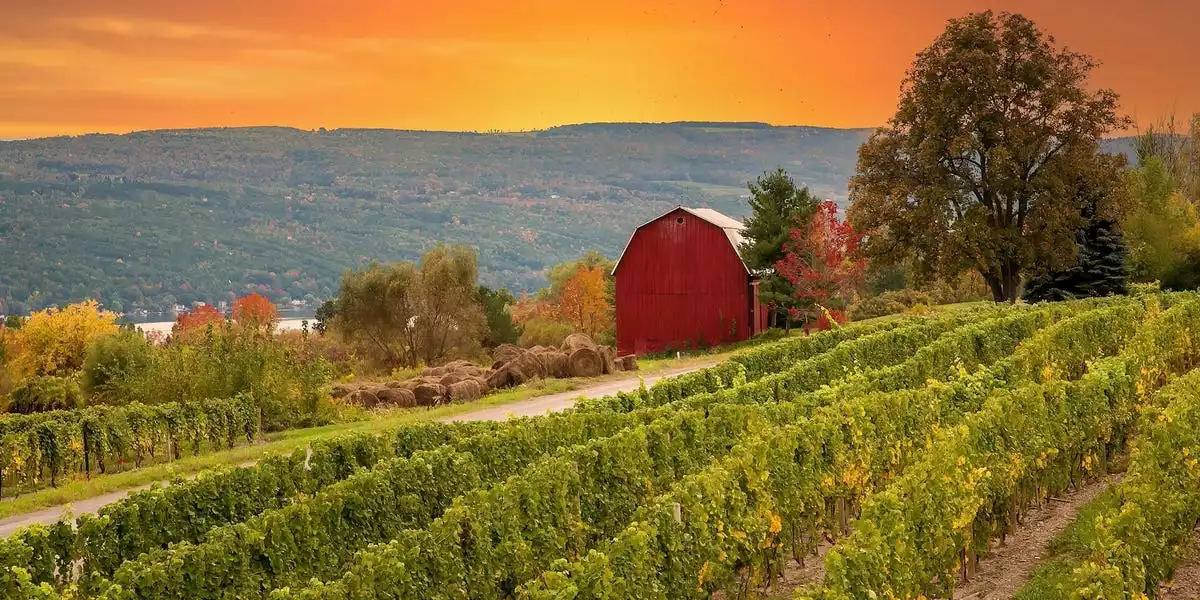
The economic logic is compelling. Midwestern and Northeastern regions, from Michigan’s Traverse Wine Coast to the crystalline lakes of upstate New York, are leveraging their proximity to major population centers. Shorter supply chains mean freight costs drop by as much as $1.60 per case, a margin improvement that can spell the difference between survival and obsolescence for smaller producers. Meanwhile, wine tourism—now a $14 billion engine for local economies—thrives in these emergent districts, where “four-season vineyards” attract visitors year-round, smoothing out the cash-flow peaks and troughs that have long plagued the industry.
Precision Viticulture and the New Agronomy: Technology as Terroir
If the economic case for diversification is clear, the technological transformation underway is nothing short of revolutionary. Precision agriculture, once the domain of Napa’s elite estates, is democratizing at scale. Satellite-driven canopy analysis, IoT soil sensors, and AI-guided irrigation systems are now standard issue in the Willamette Valley and beyond. These innovations deliver tangible results: up to 15% water savings, improved crop resilience, and a newfound ability to navigate the tightening strictures of water rights and environmental regulation.
But the Midwest and Northeast are not merely adopting existing playbooks—they are rewriting them. Here, cold-hardy hybrid varietals such as Marquette and Itasca, bred for 30–40% greater frost tolerance, are transforming fields into living laboratories for climate adaptation. The intellectual property generated in these regions is already feeding back into global viticulture, positioning the U.S. as a leader not just in wine production, but in the science of survival itself.
On the cellar floor, the rise of “Fermentation 4.0”—where micro-oxygenation algorithms and cloud-connected tanks enable small producers to achieve big-league consistency—has narrowed the quality gap across price points. The competitive field is now defined less by acreage and more by data mastery, supply-chain dexterity, and a brand narrative that resonates across digital and physical channels.
Strategic Inflection Points: Stakeholders, Synergies, and the Shape of Things to Come
For producers, the implications are profound. Multi-AVA sourcing is evolving from a luxury to a necessity, a hedge against both climate risk and market volatility. Direct-to-consumer (DTC) channels, supercharged by regional proximity and next-day shipping capabilities, offer a lower-carbon, higher-margin alternative to the traditional three-tier system. Technology vendors, meanwhile, are recalibrating their strategies for a patchwork of smaller, more diverse terroirs, unlocking new revenue streams in climate analytics and microclimate data.
Hospitality and real estate are converging with agriculture in unexpected ways. Vineyards that double as boutique lodgings or “workcation” retreats are capturing premium rates and hedging against commodity-price swings. The rise of remote work, especially near Tier-1 cities, is transforming wine country into a lifestyle destination for a new class of urban escapees.
Macro forces, too, are reshaping the landscape. The integration of renewable energy—agrivoltaic arrays that shade vines and generate power—aligns with federal incentives and promises to redefine vineyard economics. Insurance innovation, in the form of parametric policies linked to satellite fire indices, is emerging as a lifeline for regions abandoned by traditional carriers. And as institutional investors chase agricultural carbon offsets, no-till, cover-cropped vineyards in cooler climates are attracting ESG capital that could tilt the competitive balance for years to come.
The New Center of Gravity: Where Tech Meets Terroir
The American wine industry stands at a crossroads, its center of gravity shifting from the storied coasts to a dynamic, decentralized heartland. The convergence of technology and terroir is spawning a bifurcated future: on one side, tech-forward “smart vineyards” that treat data as a second crop; on the other, heritage estates trading on legacy and lore. Cross-pollination—through mergers, acquisitions, and the migration of talent from UC-Davis-trained winemakers to emergent regions—will define the next era.
For decision-makers, the imperative is clear. Capital allocation, partnership frameworks, and technology roadmaps must evolve to reward those who see terroir not as a fixed anchor, but as a living, diversified portfolio. The American wine renaissance is no longer a coastal affair—it is a national, and increasingly technological, phenomenon. Those who adapt will not only survive, but shape the future of viticulture itself.

 By
By
 By
By

 By
By

 By
By

 By
By
 By
By

 By
By
 By
By