

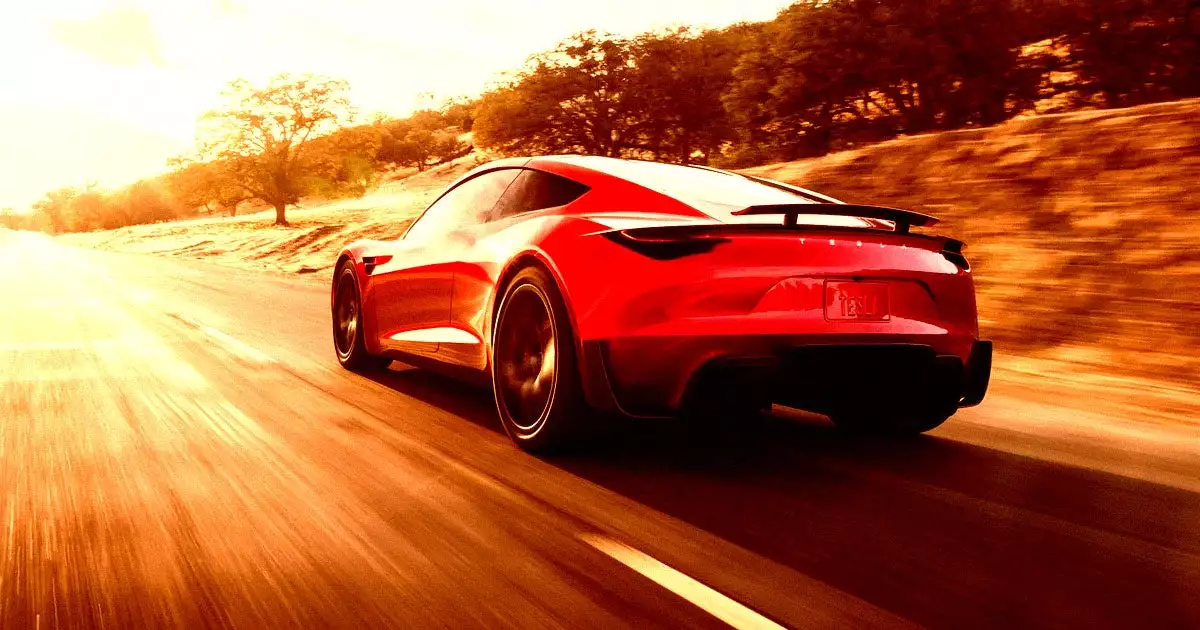

The Roadster’s Return: Tesla’s High-Stakes Play for Innovation Primacy
Few products in the modern industrial imagination have lingered at the edge of reality quite like Tesla’s next-generation Roadster. Announced with bombast in 2017, the all-electric supercar has spent years as a tantalizing promise—its deposits quietly accruing interest, its specs growing ever more fantastical. Now, as Tesla signals a “most epic demo ever” before year’s end, the Roadster’s long-awaited debut is poised to become a crucible not just for engineering, but for the very narrative Tesla weaves around itself.
Engineering Spectacle or Substance? The Technology Stakes
Tesla’s Roadster is less a car than a manifesto. Its rumored features—cold-gas thrusters borrowed from SpaceX, a 500-mile range, and a sub-two-second sprint to sixty—blur the boundaries between automotive and aerospace. Such ambitions, while captivating, pose a fundamental question: can Tesla’s multidisciplinary engineering prowess translate into scalable, real-world innovation, or does it risk devolving into “hype engineering” that never escapes the prototype stage?
- Cold-Gas Thrusters: These aerospace-inspired systems, if demonstrated credibly, would signal a new era of cross-industry R&D. Yet their regulatory, cost, and insurance hurdles render them impractical for mass adoption. The Roadster, then, becomes a testbed—a halo project that could burnish Tesla’s reputation as a technological vanguard, or expose it as a purveyor of spectacle over substance.
- Battery Architecture: Achieving the Roadster’s claimed range and acceleration would demand breakthroughs in battery chemistry and manufacturing—perhaps the long-promised 4680 cell or a silicon-dominant anode. Success would validate Tesla’s vertical integration and battery leadership, while failure would highlight vulnerabilities as Asian suppliers close the gap in energy density and cost.
- Software-Defined Driving: The prospect of a simulated manual gearbox hints at a broader push toward configurable, software-driven experiences. As the industry pivots to software-defined vehicles, Tesla’s ability to deliver on this front could reassert its lead—or, if underwhelming, cede ground to rivals like Porsche and BMW, who are quietly advancing their own SDV platforms.
Economic Realities and the Art of Narrative Control
The Roadster’s significance transcends its carbon-fiber skin. For Tesla, the demo is a strategic gambit, a bid to shore up brand equity and investor confidence at a time of margin compression, cooling EV demand, and intensifying competition.
- Deferred Revenue and Reputation: Roadster deposits—some as high as $50,000—have functioned as low-interest financing. Yet each year of delay transforms this into a reputational liability. A high-profile demo buys Tesla time, forestalling refund requests and rolling forward a debt that is as psychological as it is financial.
- Brand Halo vs. Product Pipeline: With the Model S and X aging, Cybertruck volumes constrained, and the affordable Model 2 postponed, Tesla faces a conspicuous gap in its mass-market portfolio. The Roadster’s spectacle can temporarily sustain the company’s premium aura, but it cannot substitute for the volume and relevance of a refreshed, accessible lineup.
- Investor Optics: Tesla’s valuation has long been buoyed by the promise of perpetual innovation. Stagnation invites skepticism and multiple compression. A successful Roadster demo—regardless of immediate commercial viability—can reinflate the “option value” embedded in Tesla’s stock, at least in the short term.
The Competitive and Regulatory Crosswinds
Tesla’s Roadster reemergence comes as the global EV landscape shifts underfoot. Demand is plateauing, subsidies are waning, and the luxury performance segment is increasingly crowded. Porsche, Rimac, and NIO have all fielded electric supercars with specs that rival or surpass Tesla’s claims. In this context, the Roadster’s demo is not just a product launch—it is a battle for narrative supremacy.
- Regulatory Attention: A gasoline-free supercar with exotic propulsion may draw both praise for zero emissions and scrutiny for safety. Policymakers and insurers are already contemplating the implications of non-traditional propulsion systems, and any credible demonstration will accelerate those conversations.
- Capital Markets: The broader tech sector faces volatility, with investors scrutinizing forward guidance and delivery timelines. A headline-grabbing demo could spark a relief rally, but the market will quickly pivot to questions of production cadence and margin trends.
Strategic Watchpoints and the Road Ahead
For suppliers, a credible Roadster demo could signal imminent demand for advanced materials and next-generation batteries. Competitors will seize the publicity window to contrast their own deliverables against Tesla’s aspirations, emphasizing reliability and production reality. Investors and boards must watch for signs that Tesla’s capital allocation is skewing toward halo projects at the expense of mass-market innovation—a risk that could delay the company’s next act.
Ultimately, the Roadster’s impending reveal is a referendum on Tesla’s ability to convert audacious engineering into tangible product. In an era where narrative and reality are more tightly coupled than ever, the stakes could not be higher: for Tesla, for the industry, and for the evolving story of technological ambition itself.

 By
By
 By
By

 By
By
 By
By


 By
By







