
A Collision of Automation and Accountability: The Tesla–FANUC Lawsuit’s Deep Currents
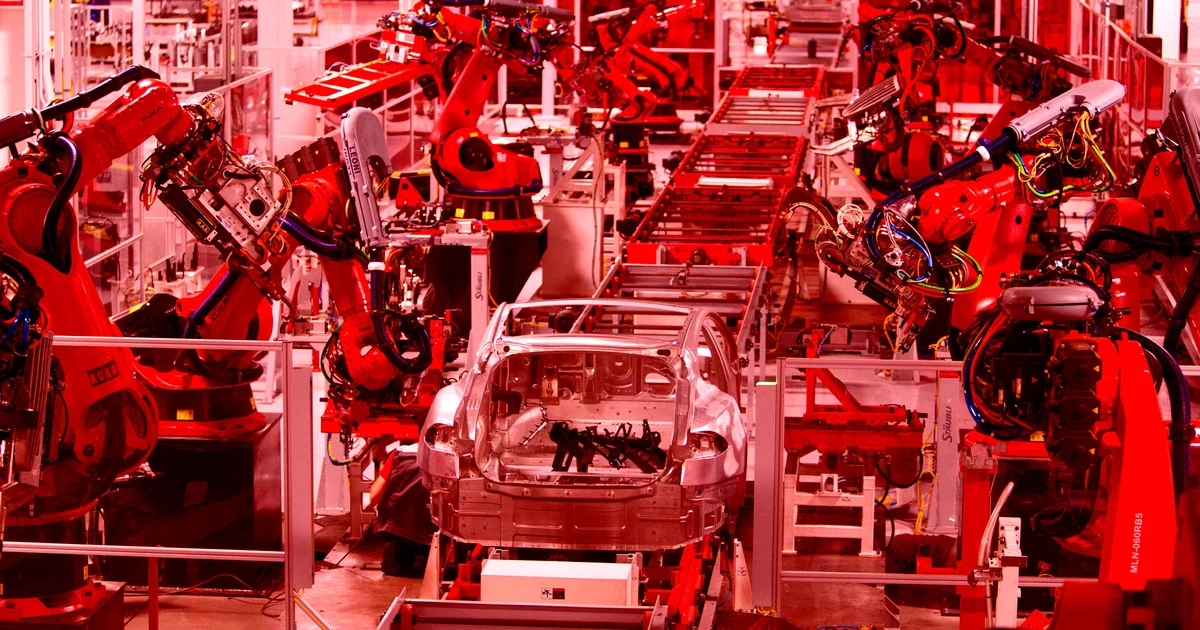
On a sweltering July day in 2023, the relentless hum of Tesla’s Fremont assembly lines was punctured by an incident that now reverberates far beyond the plant’s walls. Peter Hinterdobler, a robotics technician, alleges he was struck by an 8,000-pound counter-balance weight—an appendage of a FANUC robotic arm—during a routine disassembly. His $51 million lawsuit against Tesla and FANUC is more than a plea for redress; it is a crucible for the evolving relationship between human labor, automation, and corporate responsibility.
The Anatomy of a Safety Breakdown: Where Technology Outpaces Governance
Industrial robots have, in recent years, transformed from programmable arms into cyber-physical titans, capable of moving payloads with a force and speed that rival construction cranes. Yet, the protocols that govern their safe operation—most notably, lock-out/tag-out (LOTO) procedures—were forged in an era of simpler, more predictable machines. The Hinterdobler incident exposes a critical fissure: the rapid proliferation of advanced robotics has not been matched by a commensurate evolution in safety governance.
- Legacy Protocols, Modern Machines: Many manufacturing plants continue to rely on safety frameworks that do not fully account for the software-driven unpredictability and kinetic energy of today’s robots.
- Human Factors Engineering: The integration of sensors and fail-safes remains uneven, with system design often prioritizing throughput over maintenance safety.
- Liability in the Age of Integration: The lawsuit raises profound questions about where responsibility lies when a cyber-physical system fails. Tesla, as both architect and operator, and FANUC, as the original equipment manufacturer, are now entangled in a legal test case that could redefine the liability chain across the industry.
The New Calculus of Risk: ESG, Regulation, and Insurance in Flux
Workplace safety, once a technical compliance matter, now sits at the heart of environmental, social, and governance (ESG) materiality. For a company like Tesla, whose valuation is buoyed by its technological mystique and growth narrative, recurring safety controversies threaten to erode investor confidence and inflate its cost of capital.
- ESG Discount Rate: Institutional investors increasingly price in safety performance, and a pattern of violations can widen the ESG discount, raising borrowing costs and dampening equity multiples.
- Regulatory Headwinds: The recent Cal/OSHA citations at Tesla’s facilities signal a shift toward more aggressive enforcement. Meanwhile, global standards—such as the EU’s AI Act and ISO/TS 15066—are converging on prescriptive, data-driven safety requirements, complicating compliance for multinational manufacturers.
- Insurance Realignment: Industrial insurers, ever attuned to risk, are recalibrating premiums for plants deploying large-payload robots. A precedent-setting verdict could trigger sector-wide rate hikes, fundamentally altering the return-on-investment calculus for automation projects.
Strategic Inflection Points: Safety Innovation and the Future of Industrial Labor
The implications of the Tesla–FANUC lawsuit ripple outward, challenging manufacturers to rethink not just how they deploy automation, but how they govern, insure, and staff their operations.
- Safety-by-Design: The adoption of digital twins—virtual replicas that simulate robot behavior under stress—can preemptively identify failure modes before maintenance begins. Real-time telemetry and AI-driven anomaly detection are poised to become board-level priorities.
- Contractual Evolution: Expect a migration toward tripartite contracts that allocate safety responsibilities with surgical precision, supported by robust data-sharing for forensic analysis after incidents.
- Workforce Transformation: The incident underscores the need for hybrid talent: technicians fluent in both controls engineering and safety protocols. Early adopters are forging partnerships with educational institutions and issuing micro-certifications, creating a new class of safety-savvy technologists.
- Supplier Opportunity: Technology vendors specializing in retrofit safety solutions—such as torque-limiting actuators and AI-vision proximity shut-offs—are poised for a surge in demand as automakers seek to harden legacy lines.
This moment is not merely a legal skirmish between two industrial giants. It is a flashpoint illuminating the friction between the accelerating promise of automation and the lagging evolution of safety regimes. The outcome of this case will echo through boardrooms and factory floors alike, shaping how risk, capital, and human talent are allocated across the manufacturing landscape. For those who respond with rigor and foresight—embedding safety into the very architecture of automation—the rewards will extend far beyond regulatory compliance, offering a durable competitive edge in an era of relentless scrutiny and rapid technological change.

 By
By
 By
By
 By
By
 By
By
 By
By


 By
By