

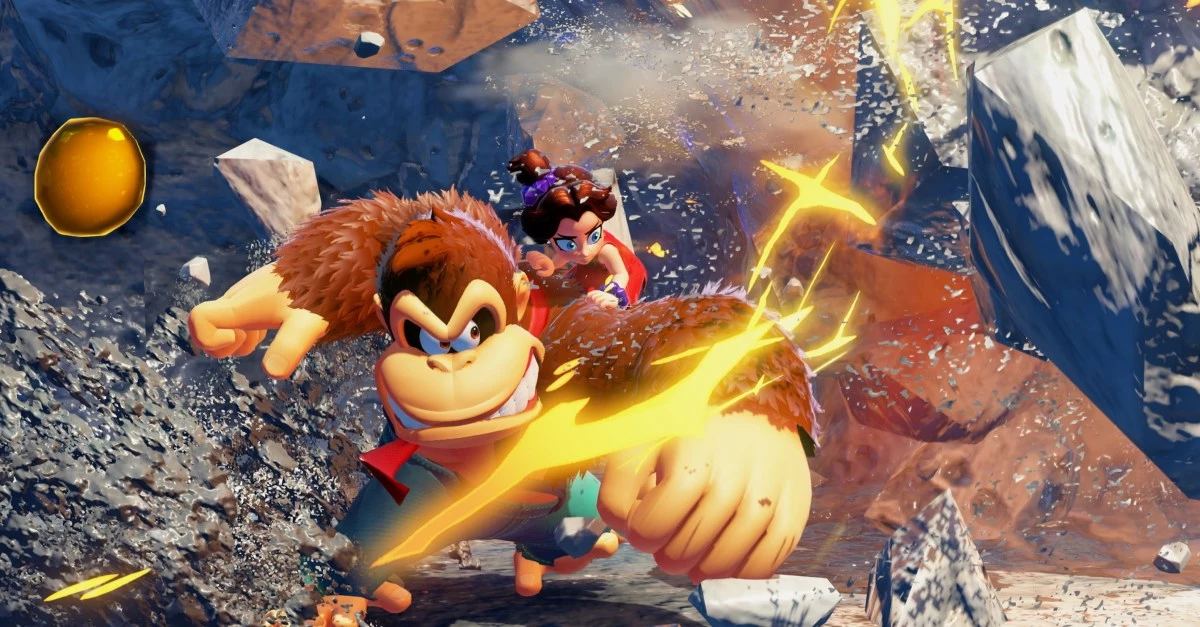

A rare Nintendo software markdown becomes a loyalty-data play for Target Circle
Target’s limited-time offer—$30 off when Target Circle members buy any two eligible Nintendo Switch or Switch 2 games—is more than a straightforward promotion. It is a carefully engineered loyalty event built around one of the industry’s most price-disciplined catalogs. With 224 qualifying titles and a deadline of 2:59 AM ET on April 5, the campaign leverages urgency and breadth to convert casual interest into decisive checkout behavior.
What makes the move notable is the underlying brand math. Nintendo first-party software has historically resisted deep, frequent discounting, particularly near a hardware cycle inflection. By enabling a meaningful bundle-level reduction on games often priced $69 to $79.99, the promotion temporarily turns a typically “fixed-price” segment into a traffic and conversion engine—without signaling a permanent repricing of Nintendo’s premium tier.
For Target, the mechanics are equally strategic:
- Target Circle gating ensures the discount is not a public, anonymous price cut but a member-identified transaction.
- The offer encourages higher basket size (two titles minimum) and increases the likelihood of add-ons—controllers, gift cards, warranties, and storage.
- The campaign functions as a behavioral data capture event, revealing which franchises, formats, and price points drive action during the early Switch 2 adoption window.
In a retail environment where margin pressure and customer acquisition costs remain elevated, promotions that simultaneously drive incremental store/app engagement and first-party data enrichment are increasingly prized. This one is designed to do both.
Switch 2 launch timing and the “two-format” distribution reality: cartridges vs Game Key Cards
The inclusion of both physical cartridges and Game Key Cards (which initiate digital download) highlights a transitional distribution era. Nintendo and its retail partners are effectively running a dual-track strategy: preserve the shelf presence and gifting convenience of boxed product while shifting more of the fulfillment and lifecycle value into the digital ecosystem.
That split has immediate consumer implications. Traditional cartridges place minimal demands on internal storage beyond save data. Game Key Cards, by contrast, move the storage burden to the console’s internal drive and the eShop pipeline, making capacity a practical constraint rather than a technical footnote. With the Switch 2 featuring 256 GB of internal SSD storage, the promotion subtly accelerates a second market: storage expansion.
This is where the campaign’s economics become layered. A shopper enticed by discounted software may quickly confront the reality that modern game libraries—especially with digital downloads—create a near-term need for microSD Express expansion. With entry-level 256 GB microSD Express cards around $59, the “discounted game” can become the trigger for a higher total transaction value across accessories.
From an industry standpoint, the coexistence of cartridges and Game Key Cards signals three parallel priorities:
- Retail merchandising continuity: boxed product still matters for visibility, gifting, and impulse purchasing.
- Digital margin and ecosystem pull: downloads strengthen platform control, engagement, and long-run monetization.
- Operational hedging: maintaining both formats reduces risk during a generational transition when consumer preferences are not uniform.
The result is a promotion that sells games today while nudging households toward the infrastructure of a more digital tomorrow.
Pricing psychology in a cautious macro climate: bundling without devaluing the brand
Gaming has shown resilience amid inflation and cautious discretionary spending, but resilience does not mean indifference to price. Even committed players exhibit price elasticity when flagship releases cluster at premium price points. Target’s structure—discounting only when two titles are purchased—is a classic retail tactic that protects perceived value while increasing unit velocity.
For Nintendo, the approach is especially instructive. Rather than broad markdowns that could reset consumer expectations, a bundle discount:
- Preserves the headline MSRP and the premium positioning of first-party titles.
- Encourages attach-rate behavior (more games per console owner), which is critical early in a hardware cycle.
- Allows selective curation—promoting certain releases while keeping the most demand-inelastic franchises insulated.
The reported exclusion of certain mega-franchises (such as a tentpole Pokémon title) reads less like omission and more like deliberate scarcity management. In practical terms, it suggests a segmentation strategy: discount where it expands the audience or accelerates adoption, but protect the titles that already sell through at full price with minimal friction.
For consumers, the value proposition is clear: a rare opportunity to reduce the effective per-title cost on premium Nintendo releases—particularly relevant for households buying multiple games at once. For the industry, the more interesting signal is that controlled discounting is becoming a precision instrument, not a blunt seasonal lever.
What this promotion signals for retailers, publishers, and the accessory ecosystem
Target’s Nintendo Switch 2 game deal sits at the intersection of loyalty strategy, platform economics, and the growing importance of peripherals. Several implications stand out for stakeholders tracking retail and gaming industry trends:
- Retailers are increasingly using high-demand, high-margin categories as loyalty accelerants—promotions designed to build repeatable identity-based purchasing rather than one-off deal hunting.
- Publishers and platform holders can experiment with discount sensitivity while maintaining pricing power, using curated eligibility and limited windows to avoid long-term brand dilution.
- Accessory makers and storage vendors benefit from the downstream effects of digital distribution—where every incremental game purchase increases the probability of a storage upgrade.
- Platform operators face a balancing act: digital storefront economics are attractive, but physical retail still provides discovery, gifting relevance, and marketing scale that algorithms alone do not replicate.
The deeper takeaway is that this is not merely a sale; it is a compact case study in modern commerce design. A loyalty-gated Nintendo discount converts scarcity into urgency, turns software into a basket-building catalyst, and exposes how quickly the Switch 2 era may normalize storage as an essential companion purchase. The winners will be the companies that treat these moments not as isolated promotions, but as repeatable, data-driven systems for shaping lifetime customer value.

 By
By
 By
By

 By
By
 By
By

 By
By
 By
By







