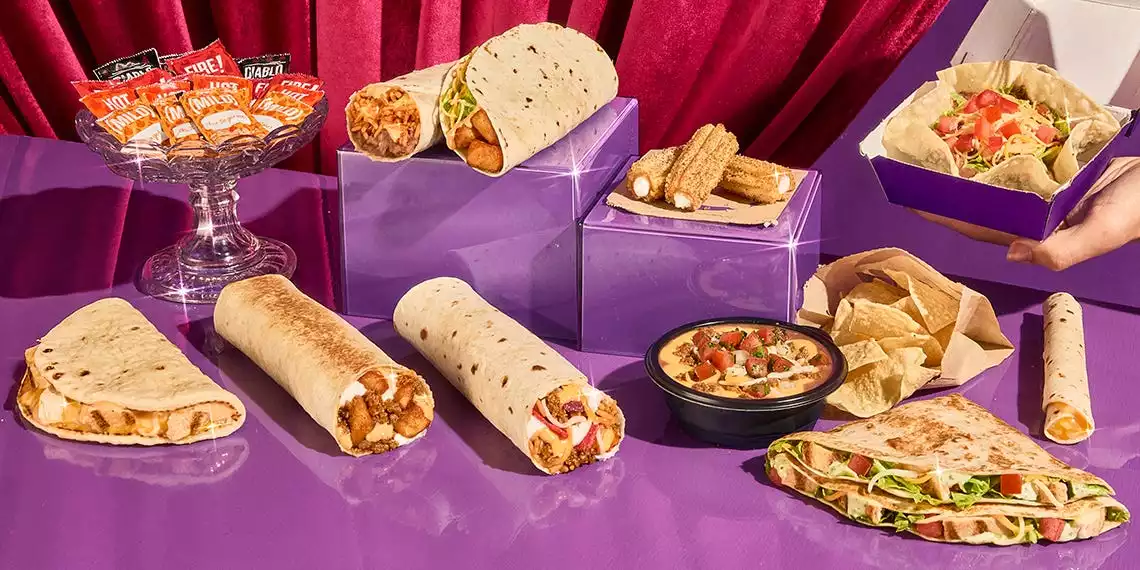

A Calculated Response to Economic Headwinds: Taco Bell’s Luxe Value Gambit
The American quick-service landscape is in flux. As inflation stubbornly persists and real wage growth tapers, the consumer psyche has shifted—value is not just desired, it is demanded. Taco Bell’s unveiling of its “Luxe Value” menu, with a strict $3 ceiling and a blend of ten meticulously selected items, is a masterstroke that resonates far beyond the drive-thru window. This move is not merely a nod to affordability; it is a nuanced, data-driven strategy that redefines value leadership in the quick-service restaurant (QSR) sector.
The Economics of Value: Navigating Margin Pressures and Consumer Migration
The context is stark. U.S. households, squeezed by a 4.5% year-over-year rise in food-at-home costs, are migrating from casual dining to QSRs at a rate unseen since the pandemic’s early days. Taco Bell’s $3 price point is a direct appeal to the 40% of diners now classified as “value-seekers,” a cohort that has become the industry’s lodestar.
Yet, this is not a race to the bottom. While ingredient inflation remains acute—beef and dairy costs up 9% and 7% respectively—Taco Bell’s menu engineering is a study in margin stewardship. The new Luxe Value lineup leans heavily on beans, tortillas, and potatoes, ingredients whose prices have either stabilized or declined. This tactical pivot not only cushions EBITDA per unit but also insulates the chain from the volatility that has battered competitors.
Meanwhile, the competitive chessboard is being rapidly redrawn. As McDonald’s and Wendy’s pare back their value menus, Taco Bell’s expansion to ten SKUs is a bold counteroffensive. The brand is not just keeping pace; it is staking a claim as the category’s definitive value leader, all while preserving its “Mexican-inspired” identity.
Data Science and Digital Engagement: The New Frontiers of Menu Innovation
Behind the scenes, Taco Bell’s parent, Yum! Brands, has quietly unleashed a technological arsenal. Its proprietary “MenuIQ” engine ingests a torrent of data—point-of-sale, loyalty, regional costs—to simulate the P&L impact of every menu tweak. The Luxe Value menu is a product of this algorithmic curation, where high-attachment add-ons like nacho cheese and chipotle sauce are embedded to subtly lift ticket values, even as the headline price remains low.
This digital sophistication extends to customer engagement. Each Luxe item is available with customizable upsells, but only through the Taco Bell app. This not only offsets razor-thin base pricing but also feeds a growing reservoir of first-party data, fueling future AI-driven personalization. The menu’s production is equally savvy: by leveraging existing cookline equipment, Taco Bell achieves rapid rollout without labor disruption—a critical feat as minimum wages escalate in key states.
Strategic Menu Architecture and Risk Hedging: Sensory Science Meets Supply Chain Savvy
The Luxe Value menu is more than a collection of low-cost items; it is a masterclass in sensory and economic design. Each item is engineered to deliver a combination of crunch, melt, and spice—sensory anchors that maximize perceived indulgence at minimal cost. This approach, rooted in sensory science, is designed to sustain repeat visitation even as wallets tighten.
Risk mitigation is woven into the portfolio. By spotlighting plant-forward SKUs such as the Cheesy Bean & Rice Burrito and Spicy Potato Taco, Taco Bell hedges against the volatility of animal protein markets and aligns with the surging flexitarian trend. This not only supports cost control but also positions the brand favorably in anticipation of future ESG and regulatory scrutiny, particularly as plant-based options gain traction and carbon disclosure mandates loom.
The Broader Implications: AI-Driven Value, Supply Chain Integration, and Loyalty Economics
Taco Bell’s Luxe Value initiative signals a new era for QSRs—one where AI-assisted, hyper-localized menus become the norm, and real-time cost inputs drive dynamic pricing. Early adopters of this approach stand to capture incremental traffic, while laggards risk margin erosion as price competition intensifies.
On the supply chain front, the volatility of commodity costs is likely to spur deeper, tech-enabled partnerships with growers and co-packers, with API-level integrations becoming increasingly common. Labor automation, too, is poised for acceleration, as sustained low-price strategies put pressure on unit economics and drive demand for kitchen robotics and AI-powered drive-thrus.
Perhaps most critically, the battle for loyalty intensifies. As discretionary spending tightens, brands that can translate value traffic into long-term customer lifetime value—leveraging robust customer data platforms—will outpace those reliant on episodic discounting. Taco Bell’s approach offers a compelling blueprint, one that decision-makers across foodservice, retail tech, and CPG would do well to study.
In a period marked by economic uncertainty and shifting consumer priorities, Taco Bell’s Luxe Value menu is not simply a promotional tactic. It is a sophisticated, technology-enabled maneuver that redefines the boundaries of value, operational agility, and data-driven menu economics. The rest of the industry is now on notice.

 By
By
 By
By

 By
By
 By
By


 By
By