


A proxy fight that reframes labor relations as boardroom risk
Starbucks is facing a pointed investor-led proxy challenge that signals how quickly labor relations have moved from an operational concern to a governance and valuation issue. A coalition that includes New York City Comptroller Mark Levine and the Trillium ESG Global Equity Mutual Fund is urging shareholders to vote against the re-election of directors Jørgen Vig Knudstorp and Beth Ford, arguing that the board has presided over “sustained oversight failures” tied to labor practices and union engagement.
This is not a symbolic protest. It is a strategic escalation that uses the mechanics of corporate governance—director accountability, committee structure, and oversight mandates—to force a reassessment of how Starbucks manages workforce risk. The coalition’s thesis is straightforward: when labor disputes become persistent, litigated, and publicly amplified, they can evolve into material enterprise risk with direct implications for brand equity, unit economics, and long-term shareholder returns.
Key elements driving the campaign include:
- Scale of alleged labor-related legal exposure, including more than 700 NLRB charges since union organizing began in late 2021 and over 125 unfair-labor-practice complaints filed since January 2025 (as cited by the investor group).
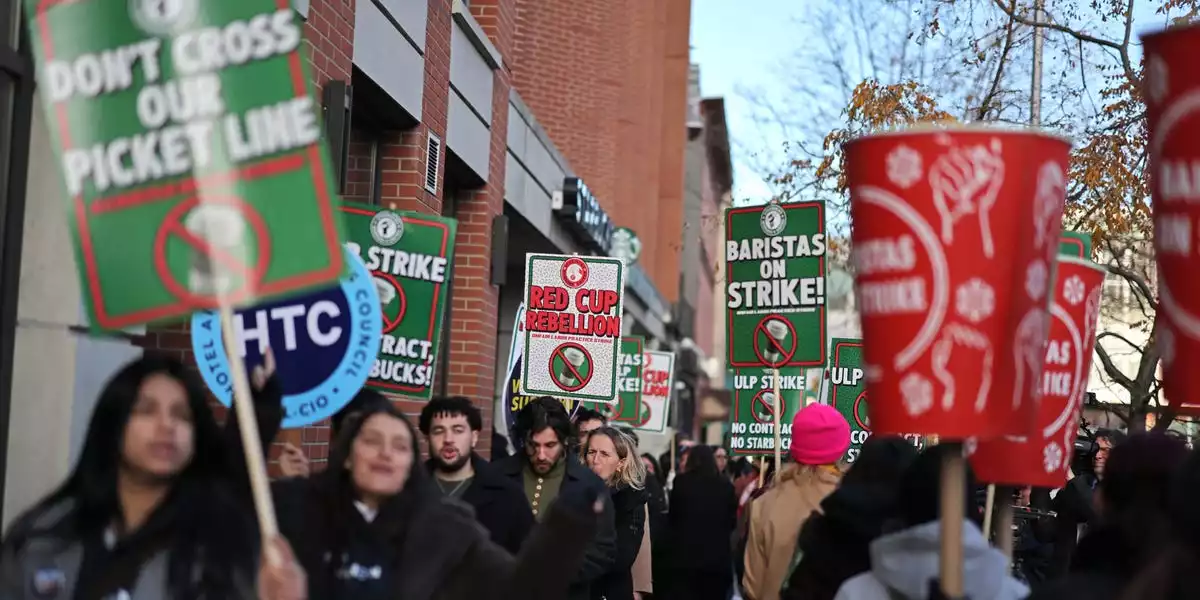
- Ongoing labor unrest, with unionized baristas—supported by Starbucks Workers United and prominent political voices—engaging in their fourth strike in two years without a collective bargaining agreement.
- A governance flashpoint, as Starbucks eliminated its Environmental, Partner, and Community Impact Committee, previously the primary board venue associated with labor and workforce oversight.
For investors, the question is less about any single allegation and more about whether the company’s governance architecture is equipped to prevent recurring disputes from becoming a chronic drag on performance.
Legal exposure, brand trust, and the compounding cost of conflict
Starbucks contests key union claims, including the union’s assertion that it represents 12,000 employees, and maintains that union coverage is fewer than 5% of company-owned stores. The company also characterizes a reported demand for a 77% wage increase over three years as economically unsustainable. Those counterpoints matter, particularly for shareholders focused on margin durability and precedent-setting labor costs.
Yet the investor critique is anchored in a different risk calculus: even if union penetration remains limited, the visibility of the conflict can create outsized reputational and operational consequences. Starbucks’ consumer brand—built on consistency, service quality, and the “third place” experience—can be uniquely sensitive to disruptions that play out on social media, in local news cycles, and in regulatory venues.
The recent $38.9 million settlement in New York City for Fair Workweek Law violations—reported as the largest labor-law settlement in the city’s history—adds a concrete financial data point to what might otherwise be dismissed as reputational noise. For markets, such settlements can function as:
- Signals of process breakdowns (e.g., scheduling systems, documentation, manager training, escalation pathways)
- Catalysts for copycat scrutiny in other jurisdictions with similar labor protections
- Inputs into credit, insurance, and litigation risk models, especially when paired with recurring NLRB activity
From a business and technology lens, the underlying story is also about systems: scheduling algorithms, workforce planning tools, store-level managerial controls, and the governance mechanisms that ensure those systems are compliant, fair, and resilient under stress. When those systems fail—or are perceived to fail—the cost is rarely confined to legal fees. It can show up in turnover, training costs, service speed, customer satisfaction, and ultimately same-store sales.
Governance design under pressure: committees, accountability, and ESG’s new center of gravity
The decision to eliminate the Environmental, Partner, and Community Impact Committee has become a focal point because it intersects with a broader debate in corporate governance: Should labor and human capital oversight live in a dedicated committee with specialized expertise, or be centralized within the full board?
In theory, either model can work. In practice, removing a specialized oversight body during a period of heightened labor tension can be interpreted—fairly or not—as reduced transparency or diminished prioritization. For activist investors, that perception is actionable. It supports a narrative that the board is not structurally organized to receive consistent, cross-functional reporting on workforce risk where legal exposure, operational execution, and brand reputation converge.
This is where ESG’s evolution becomes most visible. Labor relations—once treated as a “social” disclosure topic—now sits closer to the core of enterprise risk management. The proxy challenge suggests that some shareholders increasingly view workforce stability as a value creation lever and a risk control function, not a corporate responsibility add-on.
For Starbucks, the governance question is not merely whether directors should be re-elected. It is whether the board can credibly demonstrate:
- Clear lines of oversight for labor strategy and compliance
- Measurable accountability for reducing litigation and improving engagement outcomes
- A coherent operating model that aligns store-level realities with corporate commitments
Strategic pathways: bargaining frameworks, workforce tech, and the next playbook for service-sector labor
Starbucks now operates as a bellwether for service-sector unionization dynamics, and the company’s next moves will be studied across retail, hospitality, and other labor-intensive consumer businesses. The strategic challenge is to reduce volatility without locking the business into a cost structure that undermines reinvestment capacity.
Several forward-looking options are emerging from the debate—each with implications for profitability, employee experience, and public legitimacy:
- Hybrid governance for workforce risk
– Reintroduce a dedicated board mechanism—potentially reframed as a Workforce Strategy and Risk Committee—to formalize oversight of labor relations, compliance, DEI, and workforce technology.
- Region-based or multi-unit bargaining pilots
– Test agreements in select geographies to reduce the friction of national-scale bargaining while building templates that can be replicated if successful.
- Digital engagement that is operational, not performative
– Use Starbucks’ digital strengths to create structured feedback loops on scheduling, training, and workplace issues—paired with resolution metrics that management can track and the board can audit.
- Automation-human capital synergy
– Accelerate modular automation (ordering, workflow tools) designed to redeploy labor toward higher-value customer interaction, helping offset wage pressure while protecting the brand’s experiential premium.
The proxy campaign ultimately underscores a modern reality for iconic consumer brands: the workforce is not just a cost line—it is a governance test, a technology systems challenge, and a reputational asset that can appreciate or erode in public view. Starbucks’ response will help define whether the company can convert a period of labor conflict into a more durable operating model—one that investors can underwrite and employees can trust.

 By
By
 By
By
 By
By
 By
By



 By
By







