


Storage Shrinkage and the Economics of Modern Console Cycles
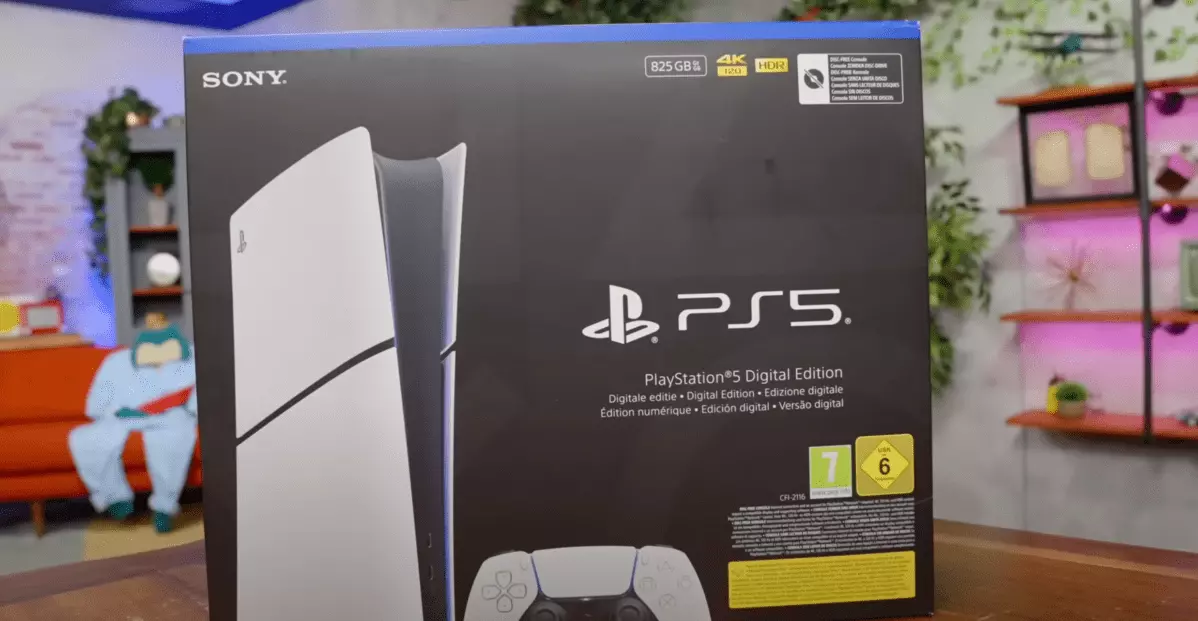
Sony’s recent, almost whispered, revision of the PlayStation 5 Digital Edition in Europe has sent subtle but unmistakable ripples through the gaming and technology sectors. The company’s decision to quietly swap out the 1 TB solid-state drive for a smaller 825 GB unit—yielding a mere 667 GB of usable space—while maintaining the €499 price tag, is a masterclass in mid-cycle platform economics. The move, which also trims 100 grams from the chassis and introduces a matte finish, is less about aesthetic refinement and more about the calculus of margin preservation in an era of volatile component costs and relentless currency headwinds.
Sony, now a year and a half into the PS5’s “slim” refresh, is navigating a landscape where the rules of engagement are shifting. Traditionally, this phase marks a transition: component prices fall, manufacturing matures, and hardware makers quietly bank the difference. But in 2024, the script has flipped. NAND flash memory, the lifeblood of modern consoles, has surged by roughly 20% since late 2023, reversing years of decline. Simultaneously, the yen’s depreciation against the euro—down 13% year-over-year—has gnawed at Sony’s repatriated earnings, forcing difficult decisions in its most lucrative markets.
The Strategic Levers: Storage, Modularity, and Margin
The reduction in internal storage is more than a footnote in a spec sheet; it’s a calculated bet on consumer behavior and the elasticity of perceived value. Modern AAA games routinely claim 80–120 GB apiece, meaning the revised PS5 Digital can house just five to seven marquee titles before users must triage their libraries or invest in expansion. Yet, Sony’s retention of the user-installable M.2 slot is no accident. This move deftly channels demand toward third-party SSD vendors, whose “PS5-certified” drives—often retailing at €180–€250 for 2 TB—transform a hardware downgrade into an ecosystem opportunity.
This strategy is not without precedent. In a market increasingly defined by modularity, Sony’s approach echoes broader trends across consumer electronics: core devices become leaner, while the accessory and peripheral ecosystem absorbs the upsell. For hardware makers, this is a hedge against the volatility of the bill of materials (BOM), spreading risk and reward across a wider value chain.
Mechanical tweaks, such as the downsized power delivery and cooling assemblies, suggest a migration to more efficient silicon—potentially a die-shrunk CPU/GPU on TSMC’s advanced nodes. These changes, while subtle, yield quieter acoustics and lower shipping costs, and align with the sustainability imperatives now enshrined in EU regulation. The lighter chassis is not merely a nod to ergonomics; it’s a strategic alignment with carbon disclosure guidelines that will soon become table stakes for hardware manufacturers.
Consumer Dynamics and Competitive Chess Moves
Sony’s willingness to pare back storage without sweetening the pot elsewhere—no ray-tracing boost, no Wi-Fi 7—signals a prioritization of price-point stability over feature escalation. The company is betting that digital-only buyers, who tend to spend more in the PlayStation Store, will tolerate the inconvenience of smaller storage in exchange for access to the broader ecosystem. In Europe, where physical disc attachment rates lag behind North America, the risk calculus tilts in Sony’s favor.
Meanwhile, the competitive landscape is anything but static. Microsoft’s Xbox Series X maintains a full 1 TB drive at €549, while the Series S offers a budget-friendly 512 GB at €299. Sony’s revised PS5 Digital now occupies a curious middle ground: storage that mirrors the Series S, but performance that rivals the Series X. This segmentation blurs the traditional lines of console hierarchy and could, paradoxically, muddy Microsoft’s price-value narrative just as much as Sony’s.
Cloud gaming, too, is reshaping the storage equation. With a 44% year-over-year increase in cloud gaming minutes in Western Europe, Sony may be quietly wagering that the future of play is less tethered to local storage than ever before. If a growing share of gameplay migrates to the cloud, the pain of a smaller SSD may fade into irrelevance.
Signals for Industry Stakeholders and the Road Ahead
For supply chain executives, the abrupt storage rollback is a canary in the coal mine. Watch for renegotiations with NAND suppliers and a possible softening of volume commitments through fiscal 2025. Peripheral makers should prepare for a surge in demand for certified SSDs, while platform strategists at Sony and its rivals will likely explore new service bundles, ad-supported tiers, or region-specific promotions to balance the scales.
Regulatory and ESG considerations are no longer afterthoughts. The lighter, more efficient PS5 aligns with Europe’s tightening carbon disclosure regime—a move that may blunt criticism over the storage downgrade and set a template for other hardware revisions.
The real story here is not of technological retreat, but of strategic adaptation. As component costs, currency fluctuations, and evolving user patterns reshape the industry, Sony’s move is a bellwether for how value will be managed in the next era of interactive entertainment: less through headline specs, and more through modularity, ecosystem monetization, and agile portfolio management. In this new normal, the console is less a monolith than a node in a sprawling, ever-shifting network—a reality that every player in the sector, from memory suppliers to platform architects, must now reckon with.

 By
By
 By
By

 By
By
 By
By

 By
By
 By
By







