

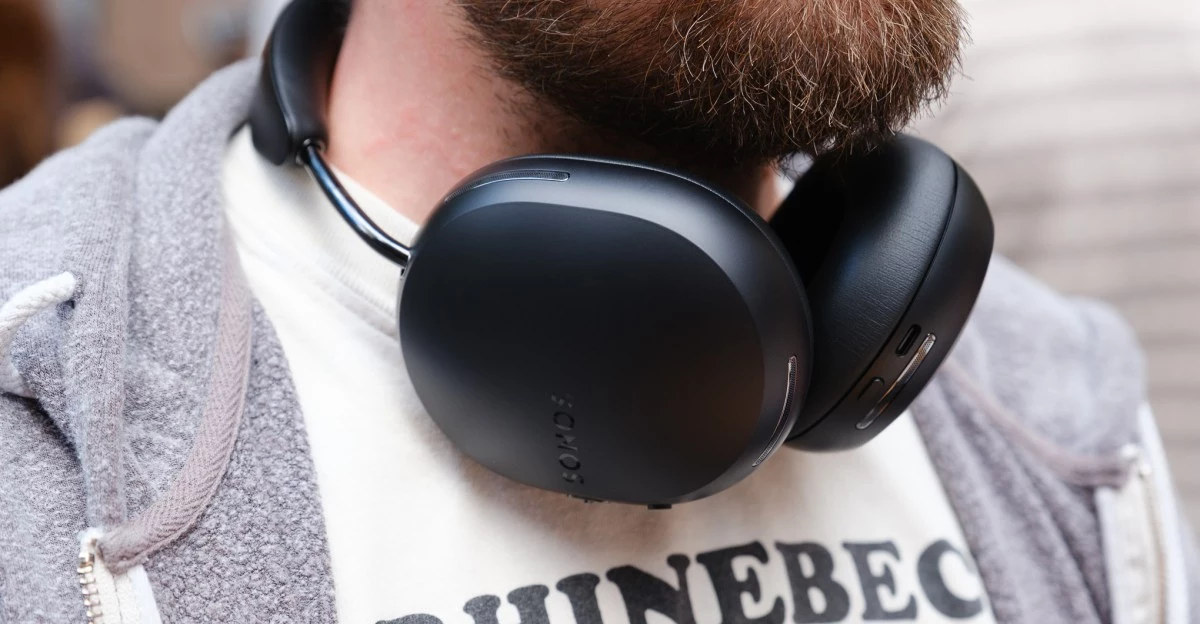

Amazon’s Big Spring Sale spotlights premium audio’s new pricing reality
Amazon’s Big Spring Sale is not traditionally the marquee event that Prime Day is, yet this year’s selection of high-end headphone discounts reads like a signal flare for the premium audio market. The deals are relatively narrow—most notably Sony’s WH-1000XM6 at roughly $60 off—but the more consequential move is the Sonos Ace dropping to $299 from $399. In a category where pricing communicates confidence as much as cost, a $100 cut on a flagship product functions as both a consumer incentive and a strategic message.
For shoppers, the immediate narrative is simple: top-tier noise-canceling headphones are becoming more attainable. For the industry, the deeper story is that premium audio is increasingly governed by promotion cycles, inventory discipline, and ecosystem strategy, not just raw product performance. When a newer entrant like Sonos discounts aggressively, it pressures incumbents—Apple, Bose, and Sony—to defend share with either sharper differentiation or sharper pricing.
Key deal dynamics emerging from the sale include:
- Flagship discounting as demand stimulation: Premium headphones are discretionary purchases; in a cautious consumer climate, sales events are becoming essential levers rather than seasonal bonuses.
- Visibility traded for margin: Amazon’s scale offers brands reach, but repeated promotional dependence can compress margins and train consumers to wait.
- Value perception reset: A $299 Sonos Ace reframes the product from “ambitious newcomer” to “credible alternative” in the same mental checkout lane as category leaders.
Sonos Ace: a hardware triumph shaped by software baggage and ecosystem choices
Sonos entered the over-ear headphone market with a product that, by many critical accounts, nails the fundamentals: premium industrial design, strong audio fidelity competitive with Apple and Bose, and advanced transparency modes. Yet the Ace launched in early 2024 under the shadow of an app-related crisis that disrupted customer trust and muted what might otherwise have been a breakout debut.
That context matters because premium audio is no longer judged purely as hardware. Consumers increasingly buy into a system—firmware stability, companion app reliability, multi-device handoff, and long-term feature updates. In that environment, software missteps can become a tax on brand equity, forcing companies to compensate with pricing and promotions.
The Sonos Ace also embodies a deliberate strategic trade-off: it does not offer Wi‑Fi music streaming and lacks broad Sonos speaker integration beyond USB‑C wired support. This is a notable omission in a market where “wireless” increasingly implies not just Bluetooth, but seamless multi-room and cross-device continuity.
What Sonos does offer, however, is a distinctive feature that aligns tightly with its home-theater DNA: TV Audio Swap, enabling near-instant audio handoff from select Sonos soundbars—Arc, Beam, and Ray—to the headphones, with spatial audio and head tracking. This is not a generic checkbox feature; it is a targeted bet that many households want private, immersive TV listening without friction.
From a product strategy standpoint, Sonos is effectively prioritizing:
- Home entertainment differentiation over universal wireless openness
- Immersive TV-centric experiences over being a general-purpose Wi‑Fi headphone
- Ecosystem reinforcement over cross-brand interoperability
The $299 price point makes that bet easier to accept for consumers who already own Sonos soundbars—or who might now consider entering the ecosystem.
Immersive audio becomes the new battleground beyond noise cancellation
The premium headphone segment is crowded, and active noise cancellation (ANC) has matured into table stakes. The next competitive layer is increasingly about “audio as experience”—spatial audio, head tracking, environment-adaptive tuning, and perceptual realism that borrows from AR/VR design principles.
Sonos Ace’s positioning reflects this shift. Features like spatial audio with head tracking and TrueCinema (virtual surround tuned to a listening environment) mirror a broader industry migration: consumers are being sold not just silence and clarity, but presence. This matters because immersive features can create defensible differentiation even when baseline sound quality converges across brands.
At the same time, immersive audio raises the bar for engineering execution:
- Low-latency processing becomes critical for video synchronization
- Sensor fusion and DSP sophistication become core product value drivers
- Software reliability becomes inseparable from perceived hardware quality
This is where Sonos’ earlier app turbulence becomes strategically relevant. In a world where premium audio is increasingly software-defined, reliability is not merely support overhead—it is a competitive moat. Brands that deliver stable updates, predictable connectivity, and transparent diagnostics will earn pricing power; brands that stumble may find themselves leaning more heavily on discounts to maintain momentum.
Bundled ecosystem economics: Beam and Roam deals reinforce Sonos’ household strategy
Amazon’s sale also includes complementary Sonos discounts that clarify the company’s broader play: sell the household, not the device. The 2nd-gen Sonos Beam at $369 (down $130) and the Roam 2 at $139 (down $40) are not just standalone bargains; they are ecosystem accelerants. A discounted soundbar expands the addressable base for TV Audio Swap. A compact Bluetooth speaker keeps the brand present beyond the living room.
This is the modern consumer-tech growth model: multi-device orchestration that increases revenue per household and raises switching costs through convenience rather than contractual lock-in. The strategic upside is clear—cross-sell synergies between soundbars, speakers, and headphones can compound over time. The strategic risk is equally clear—if the software layer falters, the entire ecosystem’s value proposition weakens simultaneously.
For the wider market, these promotions underscore a tension executive teams across consumer electronics are navigating:
- Discount-driven volume versus margin preservation and brand equity
- Closed-loop ecosystems versus interoperability demanded by multi-brand homes
- Feature escalation versus the operational discipline required to ship stable software
Amazon’s Big Spring Sale may look like a routine retail moment, but the pricing and product mix reveal something more structural: premium audio is entering an era where immersive experiences, ecosystem leverage, and software credibility determine who can command full price—and who must compete through the discount window.

 By
By
 By
By


 By
By

 By
By
 By
By







