
Labor Tensions and the High-Stakes Calculus of AAA Game Development
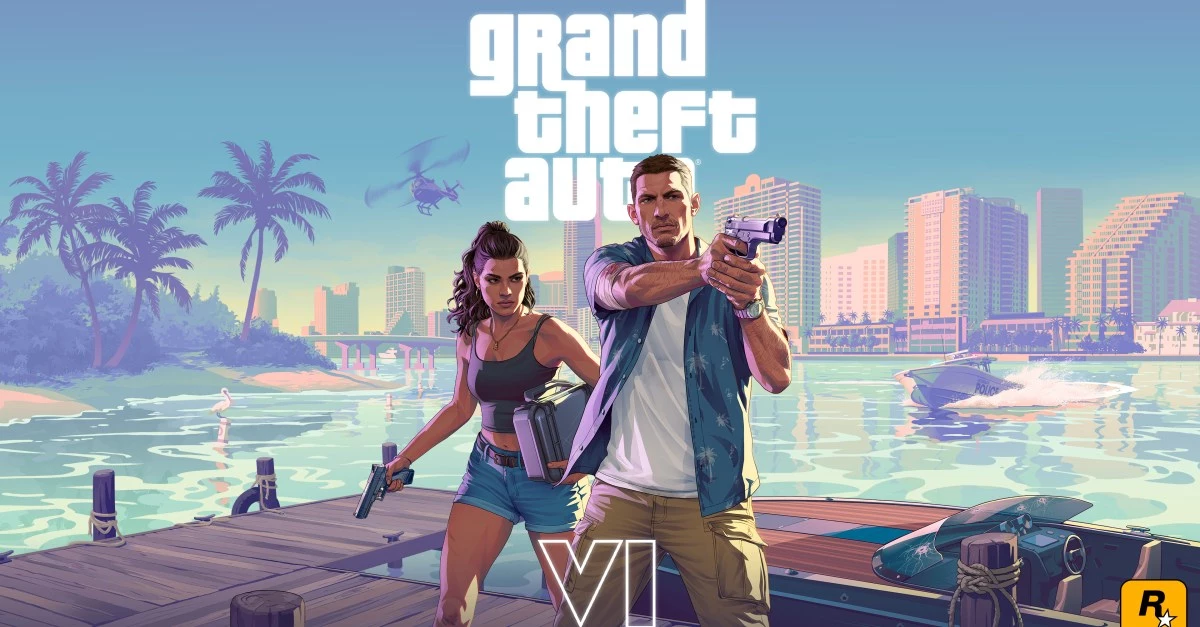
Rockstar Games, the creative force behind the Grand Theft Auto franchise, stands at a volatile crossroads. The recent dismissal of 30–40 employees across its UK and Canadian studios, officially attributed to “gross misconduct” by parent company Take-Two Interactive, has ignited a firestorm of controversy. The Independent Workers’ Union of Great Britain (IWGB) alleges that these firings are a thinly veiled act of union busting, promising legal action and a renewed push for worker organization. This flashpoint comes as the much-anticipated Grand Theft Auto VI slips from its original fall 2025 target to a new launch date of May 26, 2026—a delay that reverberates far beyond the confines of the studio floor.
The collision of labor activism and blockbuster production timelines is no longer a subplot in the games industry; it is the main narrative. For decades, the sector’s creative volatility was buffered by the mythos of the “rockstar developer”—a culture that prized individual brilliance and relentless crunch over collective bargaining. Today, however, organized labor is emerging as a material risk factor, reshaping wage structures, project timelines, and even the calculus of mergers and acquisitions. The regulatory momentum building in the UK and Canada, spurred by this high-profile dispute, signals a new era of scrutiny. For Take-Two, the specter of litigation and the potential for regulatory intervention introduce fresh volatility into operating margin forecasts—especially when a single tent-pole IP like GTA VI dominates forward revenue models.
The Economic and Strategic Stakes: Portfolio Risk, Cost of Capital, and Talent Scarcity
The delay of GTA VI exposes Take-Two’s acute portfolio concentration risk. Unlike competitors such as Epic Games or Tencent, whose diversified live-service pipelines buffer against single-title delays, Take-Two’s fiscal 2026–2027 guidance is tethered to one colossal launch. Each postponement not only defers revenue recognition but also complicates covenant headroom and share buyback policies. In an era of higher global interest rates and softening consumer-electronics demand, management faces mounting pressure to defend free cash flow—often by reducing headcount. Yet, in a talent-centric industry, such moves risk impairing the very IP velocity that underpins long-term value.
Investors are watching closely, increasingly attaching ESG (Environmental, Social, and Governance) premiums or penalties based on labor practices. A high-profile IP like GTA amplifies reputational exposure, and an adverse ESG rating could marginally elevate Take-Two’s cost of equity. The interplay between labor relations and capital markets is no longer theoretical; it is shaping the strategic options available to executive teams.
The talent pipeline itself is under duress. The dismissed employees reportedly include senior engineers and designers with deep expertise in proprietary tool-chains. Replacing such talent is a non-trivial exercise: onboarding delays can cascade through asset-creation sprints and QA cycles, inflating the burn rate on idle art and marketing assets. The rumored evolution of Rockstar’s RAGE engine—incorporating real-time ray tracing and AI-generated NPC interactions—raises the stakes further. Workforce disruptions at this juncture heighten the risk of technical debt and ethical missteps, particularly as GenAI tool-chains become integral to next-generation workflows.
Regulatory Momentum, Unionization, and the Battle for Senior Talent
Rockstar’s labor dispute is not an isolated incident; it mirrors recent organizing campaigns at Activision Blizzard, Sega, and Microsoft-owned studios. Regulatory bodies, notably the UK’s Competition and Markets Authority (CMA) and Canada’s Industrial Relations Board (CIRB), may treat this as a bellwether case, accelerating the development of sector-specific labor guidelines. The global supply-demand imbalance for AAA-caliber programmers only intensifies the stakes. Public disputes over workplace fairness tilt the market in favor of upstart studios and VC-backed independents, which promise flatter hierarchies and revenue-sharing models—an alluring prospect for talent weary of corporate opacity.
The cultural friction between Rockstar’s push for studio-first workflows and the post-pandemic preference for remote or hybrid arrangements further complicates recruitment and retention. In competitive hubs like Montréal and Edinburgh, the risk is that top-tier talent will vote with their feet, seeking environments that better align with their expectations for autonomy and participation.
Navigating the New Normal: Leadership Imperatives in a Shifting Industry
For decision-makers, the path forward demands scenario-planning that accounts for extended launch windows and liquidity stress-tests. Modular releases—whether as DLC or live-service verticals—offer a hedge against revenue lumpiness, while transparent wage bands and participatory production road-mapping can help defuse adversarial labor dynamics. Critical path succession mapping for proprietary engine leads, coupled with targeted retention grants, may prove essential in preserving knowledge continuity.
Above all, stakeholder communication must be both unified and credible. Distinguishing between legitimate misconduct charges and anti-union sentiment—ideally via third-party audits—will be critical in maintaining investor confidence and regulatory goodwill. As the games industry navigates the intersection of labor dynamics, technological innovation, and financial stewardship, the questions facing executive teams are as complex as any open-world narrative. The answers will shape not only the fate of Grand Theft Auto VI, but the contours of the industry itself.


 By
By
 By
By
 By
By
 By
By


 By
By