


The Disappearance in Andromeda: A New Chapter for Black Holes and Data-Driven Discovery
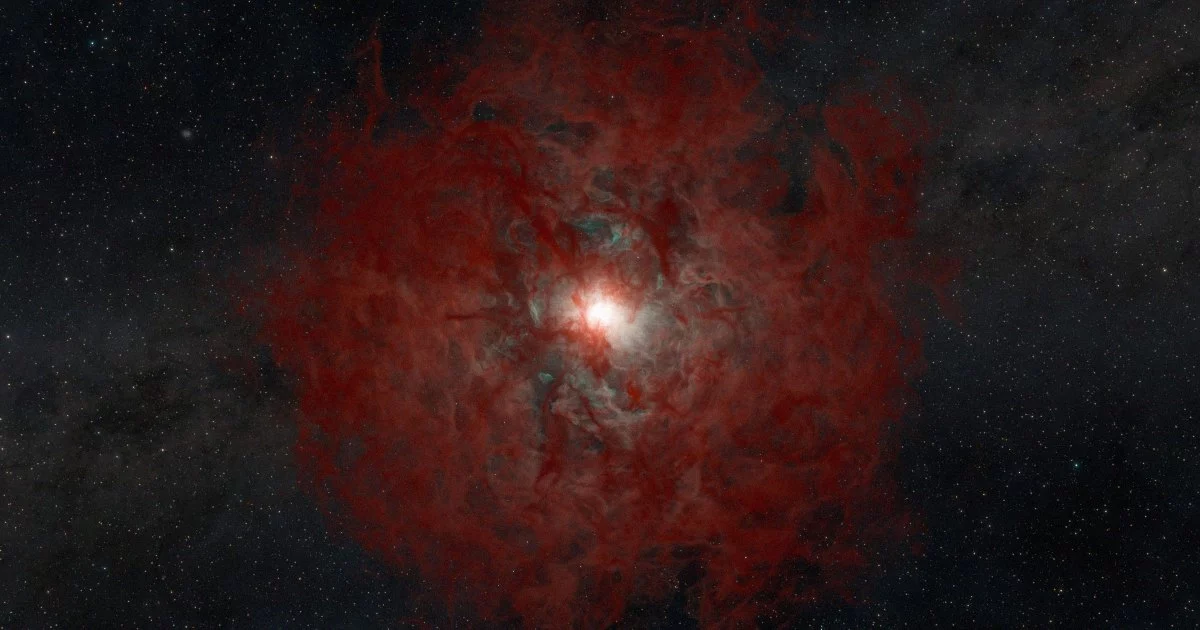
In the vast theater of the cosmos, few acts are as dramatic—or as consequential—as the sudden vanishing of a star. The recent disappearance of M31-2014-DS1, once a beacon in the Andromeda galaxy, has sent ripples through both astrophysical circles and the broader technology sector. Documented over a remarkable 15-year span by NASA’s NEOWISE infrared survey, this event is not merely a tale of stellar demise but a harbinger of how persistent observation, advanced sensors, and AI-powered analytics are reshaping our understanding of the universe—and the business models that orbit it.
Infrared Eyes and the Power of Persistent Observation
The NEOWISE mission, initially launched in 2009 and repurposed in 2013, stands as a testament to the value of long-lived platforms. Its sustained gaze enabled the detection of M31-2014-DS1’s anomalous brightening in 2015, followed by its abrupt disappearance—a sequence invisible to traditional optical telescopes. The leading hypothesis: a “failed supernova,” in which the star’s core collapsed directly into a black hole, bypassing the luminous spectacle that typically heralds such cosmic endings.
This scenario challenges long-held doctrines about the mass thresholds required for black hole formation and suggests that the universe may be teeming with “dark collapses”—events that leave no optical trace. For astrophysicists, the implications are profound: the census of black holes may be due for a dramatic upward revision, with ripple effects for gravitational-wave astronomy and our broader cosmic narrative.
But the significance extends well beyond the realm of pure science. The NEOWISE archive, now spanning petabytes, exemplifies the mission-critical role of persistent, longitudinal data. The same architectures—cold focal-plane arrays, radiation-hardened onboard processing, and automated anomaly detection—are being adapted for terrestrial applications, from climate monitoring to mineral prospecting and defense intelligence. The era of “data as infrastructure” is no longer aspirational; it is operational reality.
AI and HPC: From Cosmic Anomalies to Commercial Opportunity
The detection of failed supernovae is, in essence, a needle-in-haystack problem—one tailor-made for AI. Next-generation observatories, such as the Vera C. Rubin Observatory and the upcoming Roman Space Telescope, are embedding machine-learning inference at both the edge and the high-performance computing (HPC) backend. These systems sift through torrents of data, flagging rare events in real time and enabling discoveries that would elude even the most diligent human analyst.
This technological leap is not confined to the stars. The same anomaly-detection frameworks are now being repurposed across sectors:
- Fintech: Real-time fraud analytics
- Manufacturing: Predictive maintenance for critical infrastructure
- Bioinformatics: Discovery of rare genetic variations in drug development
The computational demands of simulating core-collapse events—factoring in neutrino transport, magnetic fields, and the intricacies of general relativity—are catalyzing the evolution of multi-exaflop, heterogeneous computing environments. This surge in scientific demand is a rare bright spot for the semiconductor industry, which has faced headwinds in consumer markets. Vendors of GPUs, CPUs, and specialized ASICs find themselves at the confluence of scientific ambition and commercial necessity.
Capital, Policy, and the New Space Economy
The prospect of a hidden population of stellar-mass black holes is more than an astrophysical curiosity—it is a market signal. An uptick in black hole mergers will flood gravitational-wave observatories like LIGO, Virgo, and the proposed LISA with data, tripling current loads and birthing a new frontier in real-time streaming analytics. For asset managers, gravitational-wave infrastructure emerges as the next “concession-style” investment, akin to subsea cables or renewable energy grids.
This technological arms race is mirrored in the supply chain. Demand for cooled infrared detectors and cryogenic electronics is set to rise, with implications for both civilian astronomy and national security. Export controls will tighten, and photonics vendors—once niche players—now find their components at the heart of both scientific discovery and geopolitical strategy.
Policy, too, is in flux. China’s ambitions for a LIGO-class observatory intersect with Western pushes for open data, making transnational data-sharing agreements not just desirable, but strategically essential. U.S. budget priorities are shifting, with funds likely to migrate from legacy Mars missions to black-hole-centric observatories, reshaping the vendor landscape for deep-space technologies.
Strategic Imperatives for the Next Decade
For decision-makers across the spectrum, the lessons are clear:
- Invest in Persistent Sensing: Long-baseline sky surveys are proving grounds for edge analytics and radiation-hardened hardware.
- Leverage Archival Data: Satellite operators can unlock new SaaS revenue streams by repurposing observation archives for cross-domain analytics.
- Anticipate Supply Chain Risks: Joint ventures with materials suppliers can mitigate fragility around cryogenic and specialty semiconductor components.
- Align Capital with Scientific Trajectory: Grant-making agencies and venture funds are poised to favor sensor miniaturization, AI-driven triage, and power-efficient onboard compute, with public-market windows opening in the late 2020s.
The vanishing of M31-2014-DS1 is not an isolated event; it is a clarion call for organizations attuned to the feedback loops between sensor innovation, AI-driven discovery, and the capitalization of the new space economy. Those who heed it will find themselves not just observing paradigm shifts, but actively shaping—and monetizing—them.


 By
By

 By
By
 By
By

 By
By
 By
By







