


Venusian Lava Tubes: An Unlikely Catalyst for Terrestrial Innovation
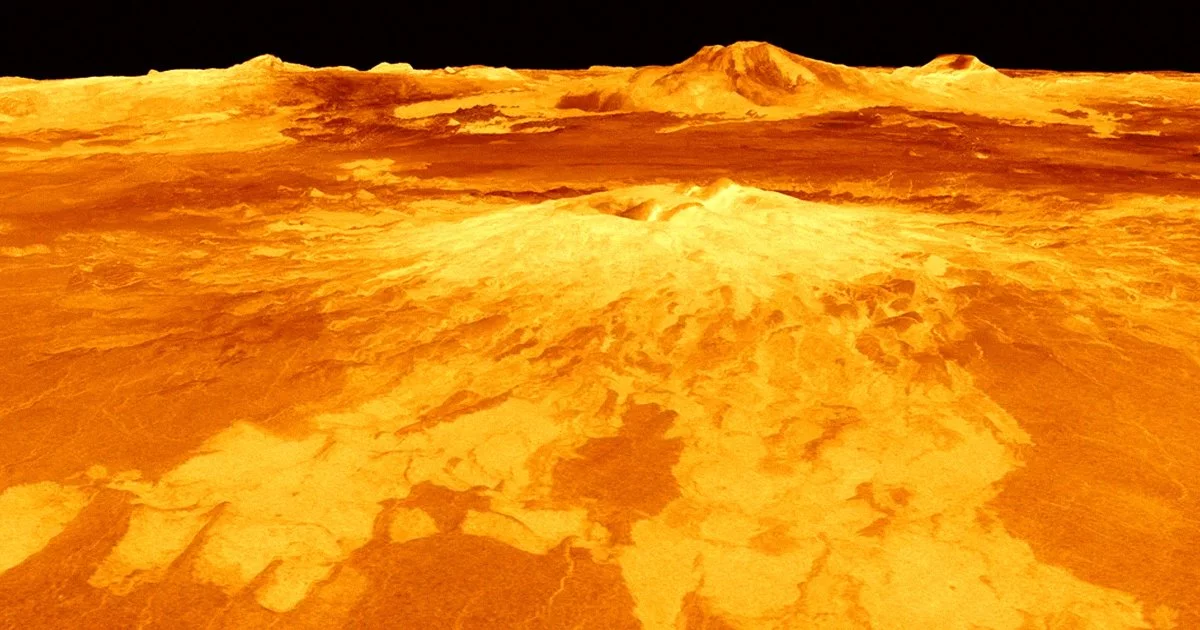
The latest modelling published in *Icarus* has upended conventional wisdom about our closest planetary neighbor. Venus, long dismissed as an irredeemable inferno, now emerges as a crucible for technological and scientific ambition. The revelation: kilometer-scale lava tubes—vast, ancient caverns sculpted by volcanic flows—almost certainly lace the planet’s surface beneath its shroud of clouds. This insight not only rekindles the case for renewed exploration but also promises a cascade of innovations with profound implications for Earthbound industries.
The Science: Kilometer-Scale Caverns and Their Implications
At the heart of this paradigm shift lies the application of Finite Element Limit Analysis (FELA), a computational technique that has, for the first time, quantified the structural stability of Venusian lava tubes. The findings are striking:
- Immense Scale: Simulations suggest tubes up to 1 kilometer wide—ten times the span of their terrestrial or Martian counterparts.
- Near-Earth Gravity: Venus’s surface gravity (0.91 g) confers a stability that challenges prior assumptions about the fragility of subsurface voids under such extreme conditions.
- Empirical Corroboration: The geometry predicted by FELA aligns with radar-detected “sinuous rilles,” lending credence to the model and inviting targeted investigation.
Detecting and characterizing these tubes, however, will demand a new generation of instrumentation—sub-meter radar, long-wave infrared imaging, and active seismology deployed by aerial drones or penetrators. The technical requirements are daunting, but the potential rewards are equally outsized.
Technology Spillovers: From Hot Electronics to Edge AI
Venus’s hellish environment—temperatures near 900 °F and a supercritical CO₂ atmosphere—poses a formidable challenge for conventional hardware. Yet, the race to meet these demands is already spawning a suite of technologies with far-reaching commercial applications:
- Extreme-Environment Electronics: Silicon-Carbide (SiC) and Gallium-Nitride (GaN) chipsets, developed for Venusian probes, are poised to transform gas-turbine monitoring, geothermal energy, and defense systems.
- Advanced Materials and Robotics: Superalloys, lubricants, and sealants rated for Venusian conditions will find ready markets in deep-sea mining and hydrogen infrastructure—industries grappling with similar corrosion and pressure regimes.
- Data Processing and Autonomy: High-bandwidth synthetic-aperture radar (SAR) and edge AI, essential for the VERITAS orbiter, dovetail with the needs of Earth-observation satellites and autonomous inspection drones.
The economic ramifications are equally compelling. Congressional momentum behind NASA’s DAVINCI and the revived VERITAS missions signals bipartisan commitment to flagship science, even amid fiscal austerity. This, in turn, is likely to unlock venture capital and specialized investment vehicles targeting high-temperature semiconductors, ruggedized robotics, and advanced analytics.
Strategic Ripples: Geopolitics, Climate, and the Future of Infrastructure
The implications of Venusian lava tube research radiate far beyond the confines of planetary science:
- Geopolitical Stakes: China’s Tianwen-4 Venus mission underscores the growing strategic competition in space exploration, positioning planetary science as a new arena for soft power projection.
- Habitat Design for the Moon and Mars: Insights from Venus’s subsurface voids directly inform the design of radiation-shielded habitats for lunar and Martian missions, potentially expanding the scale and ambition of off-world logistics hubs.
- Climate Science: Venus, as the archetype of a runaway greenhouse world, offers a cautionary analogue for Earth. High-resolution mapping of volcanic degassing pathways will refine climate models and inform policy debates on carbon feedback and geoengineering.
There are also non-obvious, high-leverage applications. FELA techniques honed for Venus can accelerate risk assessments for urban tunnels and high-speed rail bores, potentially streamlining civil infrastructure projects. Insurance markets may soon price catastrophe bonds using Venus-derived analytics, while intellectual property generated for planetary missions could confer durable advantages under export-control regimes.
The Window for Leadership: Actionable Steps for Forward-Thinking Executives
For technology firms, defense contractors, and infrastructure giants, the Venus opportunity is not a distant abstraction but a near-term inflection point. Strategic recommendations include:
- IRAD Investment: Allocate internal R&D budgets for Venus-class prototypes in ruggedized electronics, advanced composites, or SAR processing.
- Cross-Sector Partnerships: Forge joint ventures between defense primes and energy or oilfield service leaders to co-develop high-temperature robotics and autonomous systems.
- Policy Engagement: Proactively engage with Congressional space caucuses to secure multiyear appropriations, leveraging the Venus narrative’s alignment with climate and competitiveness priorities.
- Supply Chain Intelligence: Monitor global procurement trends for critical components—particularly in silicon-carbide and SAR technologies—to anticipate bottlenecks and capture on-shoring incentives.
- Talent Acquisition: Recruit across volcanology, high-pressure physics, and semiconductor engineering, capitalizing on the emergence of cross-disciplinary university institutes.
The prospect of kilometer-scale lava tubes on Venus is more than a scientific curiosity—it is a crucible for technological, economic, and strategic transformation. Those who recognize Venus as the ultimate proving ground for extreme-environment innovation will seize first-mover advantage, both in space and here on Earth. The race is underway; the time to act is now.

 By
By
 By
By

 By
By
 By
By

 By
By








