


From Living Circuits to Sonic Canvases: The Rise of Bio-Responsive Synthesis
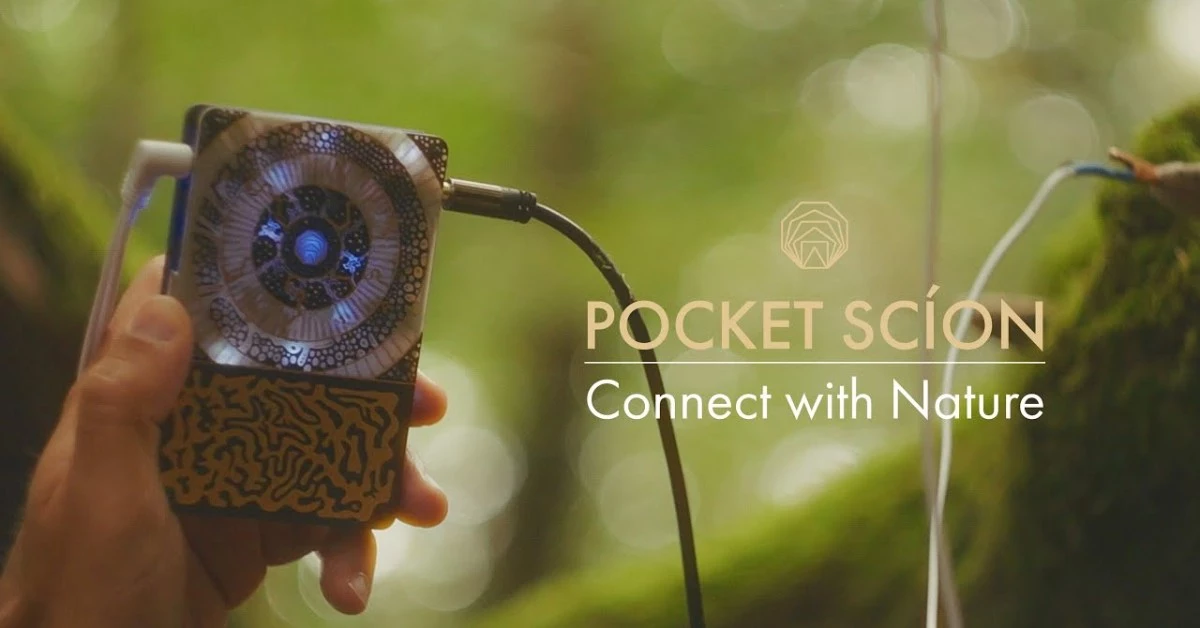
A new current is running through the world of music technology—one that is not just electrical, but biological. The Pocket Scion, a $149 pocket-sized synthesizer born from the collaboration between Modern Biology and Glasgow’s Instruo, has electrified the market by transforming the subtle voltages of plants, fungi, and human skin into musical data. The device’s immediate sell-out is more than a commercial success; it’s a signal that the boundaries between the organic and the digital are dissolving, and a new era of biologically attuned creativity is at hand.
The Anatomy of a Living Instrument
At the heart of the Pocket Scion lies a feat of engineering: low-noise differential amplifiers and a nimble microcontroller, capable of detecting micro-volt fluctuations—less than a millionth of a volt—on the surface of living matter. When a user closes the circuit with a leaf, a fingertip, or a mushroom, the device translates these ephemeral bio-signals into MIDI and control-voltage (CV) streams. The result is not just a novel input, but a living interface—a bridge between the unpredictable rhythms of biology and the deterministic logic of digital synthesis.
This is not merely a miniaturized Eurorack module. The Pocket Scion’s onboard synthesis engine, battery power, and cross-platform app make it a self-contained edge device, equally at home in a modular rack or a backpack. Its support for Open Sound Control (OSC) protocols places it at the crossroads of hardware and software, allowing seamless integration with creative platforms from Max/MSP to Unreal Engine. In effect, the Pocket Scion is less a gadget and more a platform—a node in the growing network of ambient, responsive, and context-aware media.
Economic Catalysts and Creative Frontiers
What is most striking about the Pocket Scion is not just its technology, but its economics. At under $150, it democratizes access to a domain previously reserved for the well-heeled or the technically adept, where legacy biosensing rigs commanded prices upwards of $1,000. This radical affordability is enabled by the ongoing collapse of microcontroller and MEMS sensor costs, as well as a direct-to-creator distribution model that bypasses traditional retail markups.
The device’s viral ascent—fueled by TikTok demos and short-form content—embodies a new feedback loop in the creator economy: product as content, content as demand generator. This dynamic is already reshaping revenue models, shifting the focus from hardware margins to ecosystems of software, firmware upgrades, and community-driven marketplaces for patches and sample packs.
The implications ripple outward:
- Education: STEAM classrooms gain a tactile, interdisciplinary tool, turning lessons in biology and electronics into participatory sonic experiments.
- Experiential Retail and Events: Real-time, plant-driven sound installations become turnkey, expanding the palette for immersive brand experiences.
- Wellness and Therapy: Early adopters are exploring the device for mindfulness practices and bio-responsive ambient environments, hinting at new intersections between music, health, and personal technology.
Strategic Horizons in the Age of Ambient Computing
The Pocket Scion’s success is a harbinger of larger shifts. As bio-interfaces become entwined with the audio stack, established digital audio workstation (DAW) and plugin vendors must consider how to natively support bio-signal integration. Meanwhile, consumer wearables—already bristling with sensors—may soon leverage similar analog front-end designs to ingest galvanic skin response or plant electrophysiology, opening new dimensions in interactive content.
Supply-chain dynamics remain a critical challenge. The rapid sell-out of the Pocket Scion underscores the fragility of boutique hardware production, especially amid ongoing semiconductor allocation volatility. Yet the true competitive moat is shifting: it is not the sensor hardware, but the proprietary firmware and mapping algorithms that will define defensible intellectual property in this emergent space.
Looking ahead, the trajectory is clear:
- Ecosystem Expansion: An open SDK or firmware could unlock a flourishing of third-party wave engines and AI-driven modulation, while partnerships with educational and wellness distributors broaden reach.
- Competitive Response: Larger musical instrument brands are likely to enter the fray with higher-resolution, wireless-enabled bio-MIDI interfaces, potentially sparking consolidation and licensing deals.
- Data Flywheel: Aggregated bio-signal datasets may soon power generative AI models for adaptive music scoring, introducing SaaS-style recurring revenue streams.
As sensors and bio-feedback become woven into the fabric of everyday devices—from earbuds to AR glasses—bio-responsive modulation will shift from novelty to norm. The Pocket Scion’s early momentum secures its place in the vanguard, but the broader story is one of convergence: where living systems, creative technology, and ambient computing coalesce, the soundtrack of tomorrow will be composed not just by human hands, but by the living world itself.

 By
By
 By
By
 By
By

 By
By

 By
By








