
The Gilded Mirage: When Political Memecoins Collide with Real-World Risk
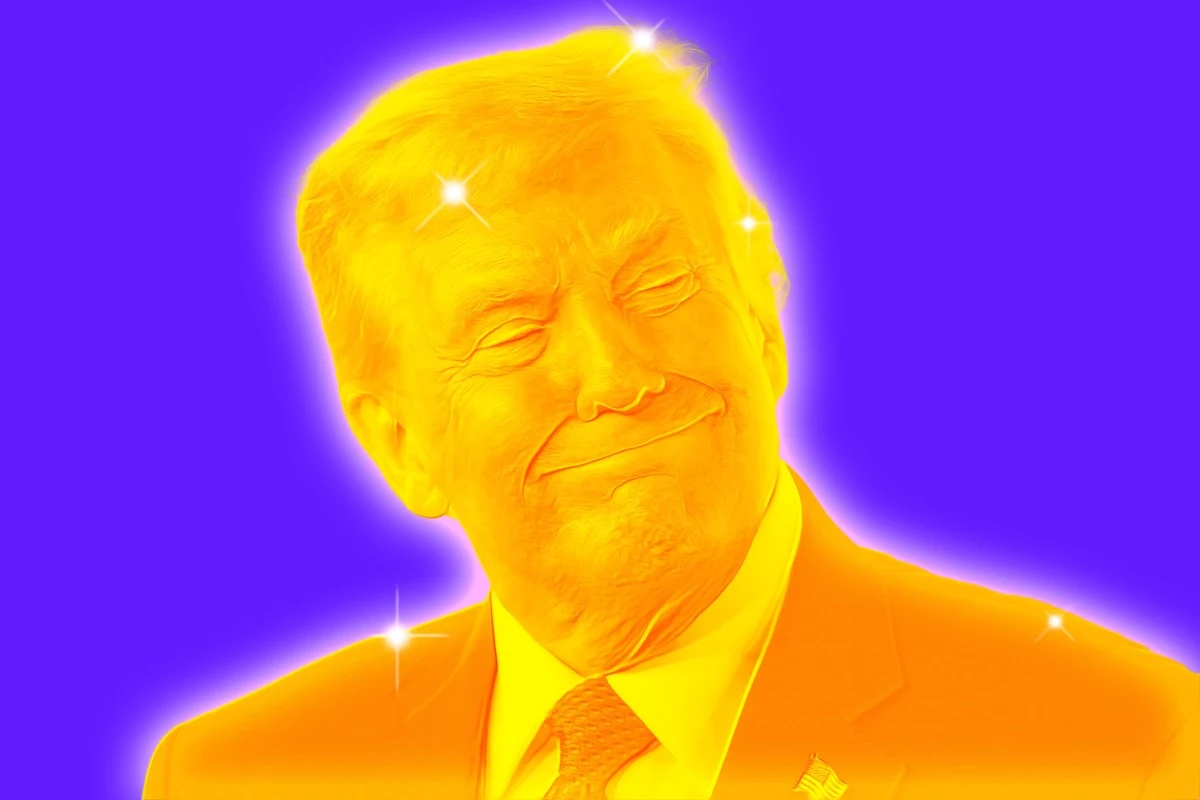
In the fevered intersection of digital assets and political spectacle, a self-organized cohort of retail crypto investors recently staged a performance that was as audacious as it was fleeting. Pooling $300,000, they commissioned a 15-foot gilded statue of former President Donald Trump—not for a museum or a campaign rally, but as the physical avatar of a new memecoin, $PATRIOT. For a brief, incandescent moment, the token’s fully diluted market cap soared to $77.7 million, buoyed by social media fervor and the tantalizing prospect that a Trump resurgence could usher in a friendlier crypto policy regime. Yet, as quickly as the narrative took flight, it unraveled, leaving behind a stranded sculpture in an Ohio foundry and a cautionary tale for the digital-asset age.
Anatomy of a Narrative-Driven Collapse
The $PATRIOT saga unfolded with the velocity and volatility that have become hallmarks of the memecoin genre, but several distinctive dynamics hastened its demise:
- Narrative Saturation and Cannibalization: The token’s raison d’être was its proximity to a polarizing political figure. But memecoins thrive on narrative scarcity; once a rival $TRUMP coin entered the arena, the story fractured, and capital scattered. Investors, ever attuned to the next viral opportunity, migrated with little friction.
- Governance Vacuum: The developer cohort behind $PATRIOT operated without a formal governance model or treasury oversight. Internal disputes quickly surfaced, eroding trust both within the project and among external holders. In the absence of transparent processes, the project’s credibility evaporated.
- Physical Liabilities Meet Digital Volatility: The $300,000 statue—initially a bold marketing gambit—became an albatross as token liquidity dried up. An unresolved $90,000 payment to the sculptor underscored how real-world obligations can amplify financial risk in speculative digital ventures.
- Legal and Regulatory Overhang: The unauthorized use of the sculptor’s copyrighted work, coupled with potential trademark issues linked to a living political figure, cast a pall over the project. In an era of heightened regulatory scrutiny, such exposures are more than academic—they are existential.
Memecoins and the Mirage of Attention Liquidity
At their core, most memecoins are little more than ERC-20 tokens, differentiated not by underlying technology but by the virality of their distribution. The $PATRIOT episode laid bare several structural truths:
- Low Switching Costs: Forking or relaunching a memecoin is trivial, rendering investor allegiance fragile and ephemeral.
- On-Chain Transparency, Off-Chain Opacity: While token flows are visible on public ledgers, crucial determinants of value—such as marketing spend, influencer incentives, and legal liabilities—remain shrouded in opacity.
The meteoric rise and fall of $PATRIOT exemplifies speculative reflexivity: price appreciation begets social proof, which attracts more capital, until the underlying narrative fractures and the reflex unwinds with equal force. For corporate treasurers and brand managers, the lesson is stark—memecoins offer “attention liquidity” at best, not the durable capital or reputational resilience that enterprise-grade projects require.
Political Tokens, Physical Artefacts, and the Next Regulatory Frontier
The $PATRIOT debacle surfaces deeper industry trends that will shape the future of digital assets:
- Physical Artefacts as Digital Collateral: The gold statue was not merely a stunt; it echoed a broader playbook where high-visibility physical installations are leveraged to legitimize intangible tokens. Similar strategies are emerging in sports and the NFT art world, but they introduce complex impairment, insurance, and legal considerations for CFOs.
- Celebrity IP and the Attention-Liquidity Doctrine: As public figures become more assertive in controlling their likeness, expect a rise in licensing marketplaces and “IP-cleared” token launches, where royalty streams are embedded directly into smart contracts. The era of the unlicensed, personality-driven memecoin may be drawing to a close.
- Memecoins as Sentiment Indices: Volatility in politically themed tokens could evolve into a real-time barometer of voter enthusiasm or policy expectations, akin to prediction markets. Financial institutions may soon scrape memecoin order books for supplementary macro signals.
- Liquidity Stress in a Tightening Macro: The rapid deterioration of $PATRIOT’s market cap is a harbinger for all crypto assets lacking intrinsic cash flow, especially as global liquidity tightens and retail trading activity wanes.
Governance, Compliance, and the Path to Sustainable Tokenization
For decision-makers contemplating token issuance, the $PATRIOT implosion is instructive. Rigorous on-chain governance, comprehensive IP diligence, and prudent budgeting for real-world liabilities are not optional—they are prerequisites. Regulatory convergence is accelerating, particularly for politically affiliated tokens, with likely mandates for enhanced disclosure, KYC, and potential securities classification.
Ultimately, the gilded statue languishing in Ohio is more than a curiosity—it is a milestone in the maturation of digital-asset markets. In a world where attention can be monetized in an instant, it is governance, compliance, and tangible utility that separate fleeting spectacle from enduring value. The lesson for boards and investors is clear: demand the rigor of public-company finance for any venture that seeks to blend narrative, technology, and capital at scale.

 By
By
 By
By
 By
By



 By
By
 By
By