
The Reality Show Gambit: Founder Psychology Meets Defense Tech Governance
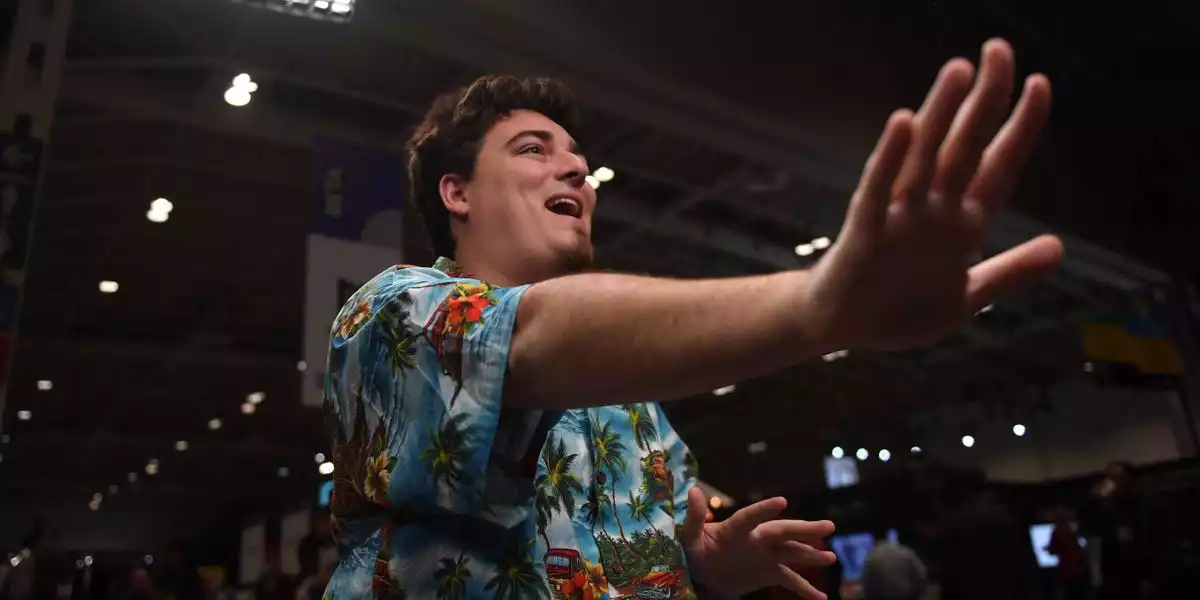
Palmer Luckey’s perennial bid to join the cast of “Survivor” might, at first blush, seem like a billionaire’s whimsy—a playful aside from a figure whose career has already traversed virtual reality and the high-stakes world of defense contracting. Yet, beneath the surface, this public overture exposes a set of tensions now animating the intersection of Silicon Valley culture and the national security establishment.
Bandwidth and Boardroom: The Leadership Dilemma
The prospect of Anduril’s CEO disappearing into the wilds for six weeks is more than a hypothetical; it crystallizes the anxieties that haunt late-stage investors and federal customers alike. In an era where defense start-ups must compress product cycles to match the tempo of geopolitical crises, the absence of a company’s public face can trigger a cascade of governance questions:
- Operational Depth: Can Anduril’s executive bench sustain momentum and decision-making without its founder at the helm?
- Succession and Continuity: How robust are the protocols for leadership transitions or unexpected outages?
- Federal Perception: With the Department of Defense increasingly prioritizing “execution resilience,” any suggestion that a CEO could be off-grid during contract milestones may invite scrutiny—or even competitive disadvantage.
Luckey’s long-standing request for a “Survivor clause” in his employment agreement is more than a personal quirk; it is a case study in the evolving relationship between founder autonomy and institutional capital discipline. Boards across the dual-use technology landscape will undoubtedly reference this episode as they draft key-person covenants and outage contingencies, recalibrating the balance between entrepreneurial freedom and operational reliability.
Media Magnetism and the Double-Edged Sword of Celebrity
Luckey’s public persona—equal parts Silicon Valley iconoclast and defense industry disruptor—has become a strategic asset in itself. His flirtation with reality television is a calculated extension of the consumer-tech playbook into a domain traditionally defined by discretion and gravitas.
Brand Chemistry in a Sensitive Sector
- Humanizing the Defense Brand: By channeling the media-centric tactics that propelled Tesla and SpaceX, Luckey softens Anduril’s image, potentially broadening its appeal to a new generation of engineers and technologists.
- Attention Arbitrage: Acknowledging his billionaire status as a likely impediment to winning “Survivor” deftly neutralizes class-based criticism while amplifying brand reach—a maneuver that underscores the underexploited power of earned media in defense.
- Cultural Tension: Yet, the very qualities that attract talent and attention may alienate the civil servants and legislators who control procurement budgets. For some, entertainment-driven publicity risks trivializing the seriousness of national security, offering ammunition to competitors eager to question Anduril’s cultural fit.
Macro Forces: Autonomy, Acquisition, and the Charisma Premium
The defense technology sector is in the midst of a structural transformation, as budget priorities shift decisively toward unmanned and AI-enabled systems. Anduril’s recent $642 million Marine Corps contract for anti-drone technology is emblematic of this trend, as is the bipartisan momentum in Congress for rapid fielding authorities.
Strategic Implications for the Ecosystem
- Prime–Startup Dynamics: Legacy contractors are increasingly seeking joint ventures or outright acquisitions to absorb software-defined capabilities. The media magnetism of founder-led firms like Anduril can inflate acquisition premiums—not just for themselves, but for the entire cohort of VC-backed defense AI companies.
- Capital Market Appetite: Defense tech indexes have outpaced broader tech benchmarks, buoyed by government demand that is less sensitive to macroeconomic cycles. Yet, the prospect of an Anduril IPO or next-generation SPAC raises a fundamental question: how much of a company’s value is tethered to the charisma—and availability—of its founder?
Talent, Culture, and the Blurring of Public and Private Spheres
Luckey’s “Survivor” ambitions also signal a generational inflection point in workforce expectations. Top engineers are no longer content with compensation alone; they seek employers whose leadership embodies authenticity, risk-taking, and cultural expressiveness.
- Talent Arbitrage: Companies that codify founder authenticity without compromising mission focus may out-recruit even the most lavishly funded tech giants.
- Psychological Safety: Publicly joking about a six-week absence can be a litmus test for organizational maturity. If the culture truly tolerates leader absence, it can empower middle management and accelerate innovation. If not, it risks reinforcing founder-centric bottlenecks.
- Soft-Power Projection: A defense CEO crossing into mass-market entertainment would blur the boundaries between politics, culture, and industry—potentially reshaping public sentiment about defense spending in ways that echo the space tourism boom.
Palmer Luckey’s reality-show overture is, in the end, more than a curiosity. It is a prism through which to examine the evolving demands of leadership, the power and peril of media strategy, and the shifting sands of strategic credibility in defense technology. For investors, policymakers, and entrepreneurs alike, it is a timely reminder: in this new era, the personal and the institutional are inextricably entwined, and the stakes—both reputational and geopolitical—have never been higher.

 By
By
 By
By
 By
By
 By
By
 By
By