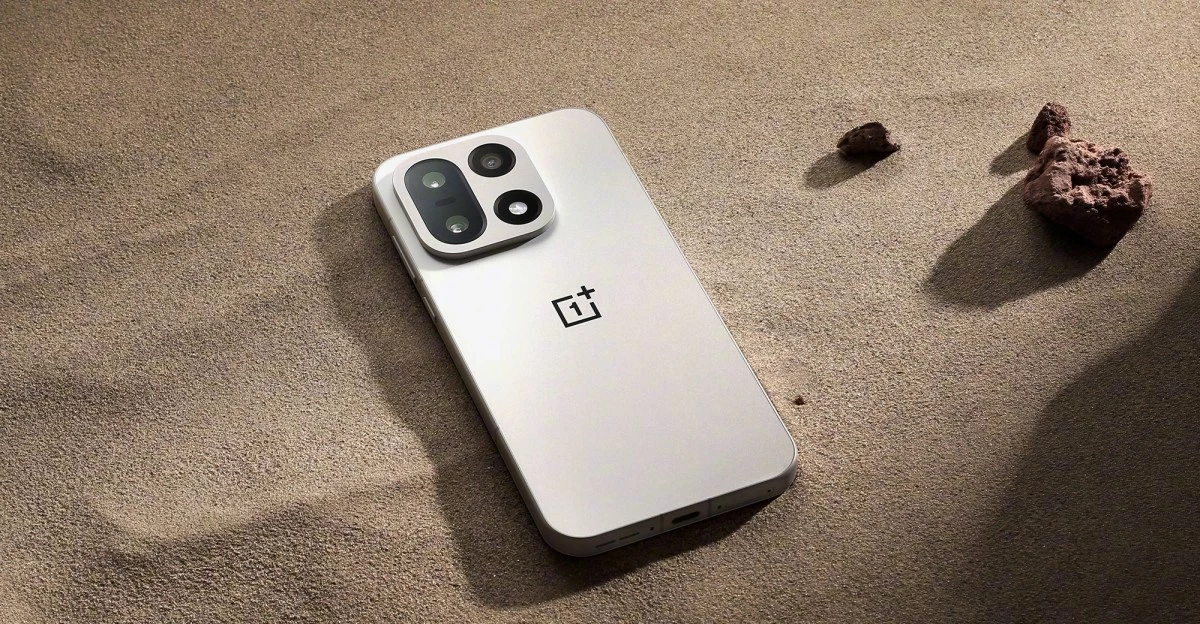

The New Battery Vanguard: OnePlus 15 and the Rewriting of Smartphone Priorities
The unveiling of the OnePlus 15 in China, with its audacious 7,300 mAh battery and a price tag hovering at ¥3,999 (roughly $560), is not merely another flagship launch—it is a gauntlet thrown at the feet of the global mobile industry. This device, and its even more battery-laden sibling, the Ace 6, are harbingers of a new era in which energy endurance, not just processing muscle or camera prowess, defines premium smartphones.
Endurance as the New Luxury: Breaking the 7,000 mAh Barrier
For years, smartphone innovation has been a dance of incrementalism—thinner bezels, faster refresh rates, marginally better cameras. The OnePlus 15, however, signals a decisive pivot: Chinese OEMs are now breaching the 7,000 mAh threshold, betting that the tradeoff between battery mass and all-day usability is one consumers are ready to make.
- Battery Arms Race: At nearly 28 Wh, the OnePlus 15’s battery approaches air-freight and airline carry-on limits, hinting at looming regulatory and logistical negotiations for global variants.
- Thermal Management: The oversized battery is not just about longevity; it creates a larger chassis, which in turn allows for more aggressive vapor-chamber cooling—critical for the Snapdragon 8 Elite Gen 5’s on-device AI acceleration.
- Refresh Rate and AI Synergy: The 165 Hz LTPO display may outpace most current content, but it is a strategic bet on the rise of cloud gaming, XR streaming, and AI-driven UI interactions, where ultra-low latency is not just cosmetic, but essential.
This is a device engineered for the power user of tomorrow: someone who expects to run generative AI models locally, stream high-frame-rate content, and never worry about battery anxiety.
Competitive Compression and the Global Supply Chain Squeeze
The OnePlus 15’s arrival at a sub-$600 price point compresses the value equation in the upper echelons of the Android market. The mid-premium tier—where Samsung’s A-series and Google’s Pixel xA Series have long competed—now faces a squeeze from below, as near-ultra-flagship hardware becomes aggressively democratized.
- BBK’s Lattice Strategy: By positioning OnePlus as the “global spec disruptor,” BBK Electronics hedges its bets across regions, letting OPPO and vivo focus on design and camera differentiation. This multi-brand lattice allows for rapid adaptation to regulatory and consumer shifts without diluting brand equity.
- Component Demand Shock: Expect a surge in orders for high-density Li-ion cells, GaN chargers, and 165 Hz LTPO panels. For second-tier OEMs, the risk of being priced out of the supply chain is rising, as BBK-scale purchasing power tightens availability and inflates bill-of-materials costs.
The economic ripples are not confined to device makers. Component suppliers, mobile network operators, and logistics providers must now recalibrate their forecasts and risk models, as the definition of a flagship device is rewritten in real time.
Regulatory Headwinds and the Edge-AI Imperative
The OnePlus 15’s oversized battery is as much a product of technological ambition as it is of regulatory timing. With the European Union’s battery-sustainability directive on the horizon and U.S. right-to-repair momentum building, the window for shipping ultra-large, sealed batteries may be closing.
- Regulatory Cross-Currents: By front-loading its large-battery marketing, OnePlus is capitalizing on a regulatory gap before new rules force a rethink of both battery size and ingress-protection ratings.
- Air-Freight and Safety Concerns: As individual handsets approach 30 Wh, shipping logistics become more complex, with IATA regulations looming large. OEMs may need to explore regional pack-out options or distributed logistics models to stay compliant.
- AI Power Budget: The oversized battery is a pre-emptive answer to the power demands of on-device generative AI—image upscaling, real-time translation, and more—where sustained workloads are the new norm.
For emerging markets, where grid reliability is intermittent, the value proposition is even clearer. A phone that can last days, not hours, becomes a lifeline, not just a luxury.
The Next Competitive Epoch: Risks and Strategic Imperatives
The OnePlus 15 is a marker for a new competitive epoch—one where endurance, AI-readiness, and aggressive price-value math converge. Yet, the path forward is not without risk:
- Content Gap: If high-frame-rate gaming and XR services lag, the 165 Hz narrative may stall.
- Ergonomics: At 230 grams or more, weight may become a pain point, affecting both user comfort and repair costs.
- Geopolitical Uncertainty: U.S.-China tech friction could disrupt global rollout of the Elite Gen 5 SoC, forcing contingency plans.
- Battery Safety: As energy density climbs, so does the imperative for robust thermal management—a single incident could reset consumer tolerance for massive batteries.
The OnePlus 15’s launch is less a culmination than a catalyst. It signals a shift in the smartphone arms race—from raw performance to sustainable, AI-powered longevity. For decision-makers across the mobile value chain, the message is clear: the future belongs to those who can deliver not just speed, but stamina, in an AI-driven world.

 By
By
 By
By

 By
By
 By
By
 By
By

 By
By