
A depleted interceptor magazine becomes a strategic signal, not just a battlefield statistic
President Volodymyr Zelenskyy’s warning of a threefold decline in Western missile interceptor stocks lands as more than a plea for urgent resupply. It is a data point about the West’s ability to sustain high-end, high-tempo defense production under stress. The immediate operational consequence is stark: during a recent large-scale Russian strike involving 24 ballistic missiles and four anti-ship missiles—including Iskander-M and S-400-derived variants, with reports of cluster munitions—Ukraine’s air defenses reportedly failed to intercept any of the incoming threats, with civilian casualties and infrastructure damage around Kyiv.
For Kyiv, the message is tactical and humanitarian: air defense is the difference between a disrupted power grid and a mass-casualty event. For Washington, Brussels, and defense executives, it is industrial: interceptor availability is now a pacing constraint on strategy. When the “magazine” runs low, deterrence erodes, escalation risks rise, and political leaders are forced into uncomfortable trade-offs between domestic readiness and allied support.
The Patriot PAC-3 bottleneck: why demand shocks are colliding with industrial reality
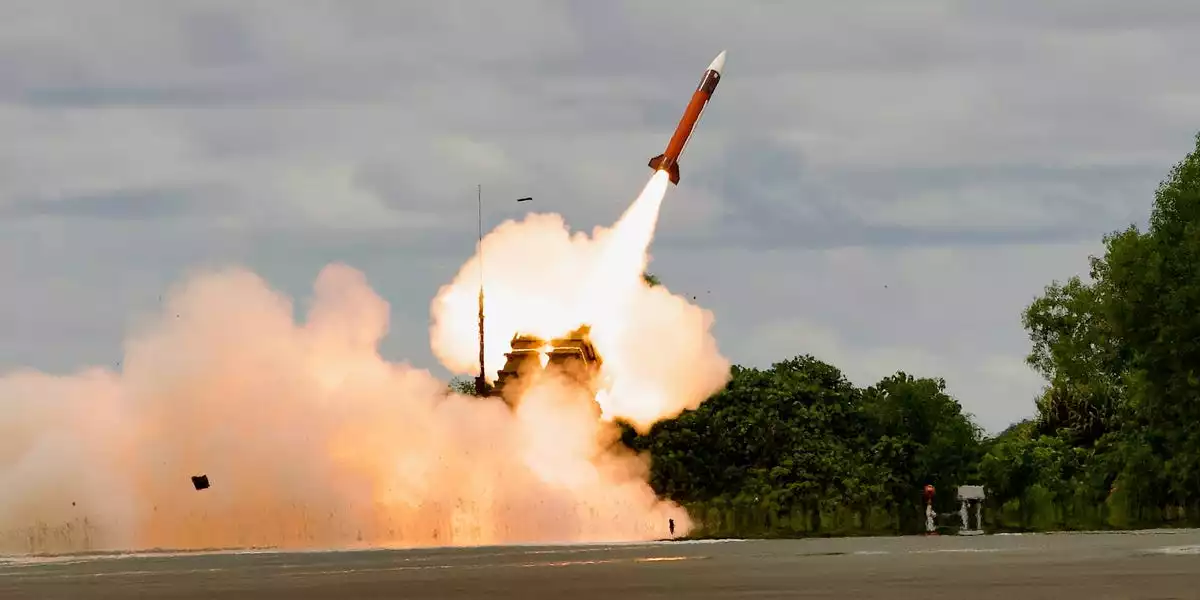
The Patriot PAC-3 interceptor remains the benchmark for countering fast ballistic threats, particularly because of its hit-to-kill design and proven integration into layered air defense architectures. Yet its strengths are inseparable from its constraints: unit costs exceeding $4 million and a manufacturing ecosystem that is not easily surged.
What looks like a procurement problem is, in practice, a supply-chain physics problem:
- Specialized component dependency: PAC-3 production relies on a distributed network of subcontractors for seekers, solid-propellant motors, and guidance electronics—precisely the kinds of components that resist rapid scaling.
- Extended lead times: critical parts that once moved in months are now stretching beyond a year, exposing vulnerabilities in single-source procurement and “just-in-time” logistics assumptions.
- Multi-theater demand pressure: Ukraine is competing with other operational requirements, including Middle East air and missile defense operations, for the same finite interceptor pool.
- Price signals are intensifying: heightened demand is pushing lot prices up 15–20% year-to-date, a classic indicator that capacity is constrained and buyers are bidding against one another.
This is where the business and technology story sharpens: advanced interceptors are not commodities. They are highly regulated, export-controlled, and production-constrained systems whose supply elasticity is low. Without structural changes—multi-year procurement, guaranteed demand signals, and supplier investment protection—governments risk repeating a cycle of emergency drawdowns followed by slow replenishment.
Europe’s air-defense diversification dilemma: capability, integration, and time-to-field
Ukraine’s parallel push for a pan-European air defense network reflects a rational attempt to reduce dependence on a single interceptor family and a single political pipeline. Europe has credible building blocks—most notably SAMP/T and the MBDA Aster missile family—alongside a broader trend toward defense consolidation and joint procurement. The strategic logic is clear: a diversified interceptor portfolio can reduce single-point failure risk and potentially lower costs through competition and scale.
But the technical and operational hurdles are equally real:
- Performance against evolving threats: cluster-munitions–armed ballistic missiles and salvo tactics stress seekers, discrimination algorithms, and engagement timelines. Some European systems may require seeker upgrades and additional testing to demonstrate consistent effectiveness against these specific profiles.
- Command-and-control integration: layered air defense is as much about sensors, battle management, and interoperability as it is about missiles. Integrating disparate national systems into a coherent “air shield” is a software, doctrine, and governance challenge—not merely a procurement decision.
- Political and regulatory inertia: Kyiv’s reported interest in a domestic production license runs into the hard edges of US export controls, IP frameworks, and Congressional risk tolerance, while European initiatives face their own procurement politics and industrial allocation debates.
The result is a familiar transatlantic paradox: allies broadly agree on the necessity of air defense, yet the mechanisms to accelerate production, harmonize requirements, and share technology remain slower than the pace of battlefield adaptation.
The next competitive frontier: non-kinetic defenses, new financing models, and a rebalanced industrial map
The interceptor shortage is already shaping the next wave of defense technology investment. When $4 million interceptors are used to defeat cheaper threats—or when inventories cannot keep up—innovation shifts toward cost-per-shot reduction and capacity expansion.
Several trends are converging:
- Hybrid architectures and directed energy: interest is rising in directed energy weapons (DEWs) and other non-kinetic tools to handle short-range or lower-end threats, reserving premium interceptors for the hardest targets. Over a five-year horizon, hybrid stacks—lasers for drones and some cruise threats, kinetic interceptors for ballistic missiles—could materially ease inventory pressure.
- Manufacturing rebalancing to Eastern Europe: a Ukrainian license to build advanced interceptors, if ever approved, would represent a strategic decentralization of Western missile-defense production—potentially spawning new supplier clusters and workforce pipelines closer to the front line.
- Financialization of defense IP and production: proposals that blend sovereign demand with private capital—export royalties, risk guarantees, and structured payment streams—are gaining attention. They echo commercial aerospace financing logic, but face heavier scrutiny due to national security, export control, and technology transfer sensitivities.
For policymakers and industry leaders, the actionable question is no longer whether to support Ukraine’s air defense, but how to build a system that can scale under crisis conditions. That means expanding seeker and propellant capacity, diversifying interceptor families, modernizing command-and-control, and aligning financing and regulation with wartime tempo. Russia’s salvo tactics are testing more than Ukraine’s defenses; they are testing the West’s ability to convert industrial power into sustained operational resilience.

 By
By
 By
By
 By
By


 By
By
 By
By
 By
By