
A Bloomberg report republished by The Japan Times says Japan’s Rapidus has fallen several months behind on a crucial step toward its planned 2-nanometer process: demonstrating functioning SRAM cells. That does not amount to an official delay, and Rapidus says it still aims to begin mass production in the second half of fiscal 2027. But it matters because SRAM is the kind of milestone that starts to connect lab progress to the things customers, lenders and the Japanese government actually need to see before they keep betting on a new foundry.
The real question is whether this is ordinary slippage inside a brutally hard leading-edge ramp, or a sign that Japan’s effort to rebuild advanced logic manufacturing is entering its most vulnerable phase. The best reading from the public record is somewhere in between. The reported miss does not prove the 2nm program will fail. It does show how little slack Rapidus may have left if it wants to hit a target that effectively points to March 2028.
Why SRAM matters more than a transistor prototype
Rapidus has real achievements behind it. The company, created in 2022 with heavy government backing and technology cooperation involving IBM, publicly reported a 2nm gate-all-around transistor prototype in 2025. It has also rolled out process-design kits, opened a new analysis center and expanded its design ecosystem, including the Rapidus CORE program and 17 design-solution partners announced in October.
Those are meaningful steps, but they are not the same as proving a manufacturable logic platform. SRAM is a small memory structure embedded throughout modern processors. Getting it to work is important because it forces a foundry to integrate far more than an isolated transistor. Transistor behavior, interconnects, memory arrays, design rules, process control and early yield all have to line up closely enough to produce a functional circuit.
That is why the reported SRAM shortfall is more consequential than a missed internal checkpoint in a slide deck. If people familiar with the work are right that Rapidus has not yet demonstrated functioning SRAM and missed a milestone expected by summer 2026, then the schedule pressure does not stop at one block of circuitry. It can ripple forward into PDK maturity, customer test-chip schedules, defect learning, qualification wafers and ultimately the point at which customers can trust a production plan.
None of that means the March 2028 goal is already gone. Leading-edge chip programs often miss intermediate milestones and recover with more engineering time, more capital, or both. What it does mean is that every month lost now becomes more expensive later.
The schedule risk is really a financing risk
Rapidus is not just building a chip process; it is building a national industrial-policy project while still pre-revenue. In a METI business-plan summary, Japan set a target of beginning 2nm mass production in the second half of fiscal 2027, alongside an approximate 2031 listing target. The same plan sketches more than ¥4 trillion of expected investment across R&D and production, including roughly ¥2.6 trillion for R&D and ¥1.6 trillion for manufacturing, plus a goal of securing more than ¥2 trillion in private financing with government debt guarantees available.
That funding roadmap is why the SRAM story is bigger than a technical footnote. Public money can keep a fab moving for a while, but eventually customers, banks and equity investors want signs that the process is converging toward something repeatable and commercial. A delayed SRAM milestone can compress the time available for customer qualification without any formal schedule change. In practice, the next evidence of trouble may show up not in a press release, but in tighter lending conditions, more cautious customer commitments, or government reviews that ask for clearer proof before the next tranche is released.
Japanese reporting cited by SemiMedia on Nov. 11 said a one-year shift into fiscal 2028 was being considered. That remains unconfirmed, and Rapidus has explicitly pushed back only to the extent of saying it remains committed to its fiscal-2027 production target while keeping technical details confidential. Still, even an unconfirmed discussion of a one-year delay is significant because it suggests schedule risk is now serious enough to be debated around the project.
What customers and suppliers should watch next
For prospective customers, the immediate issue is not whether Rapidus can eventually make a working 2nm chip in a controlled setting. It is whether the company can move quickly enough from engineering proof to a usable foundry service. Rapidus says it is discussing possible manufacturing business with more than 60 firms, but those discussions are not binding production orders.
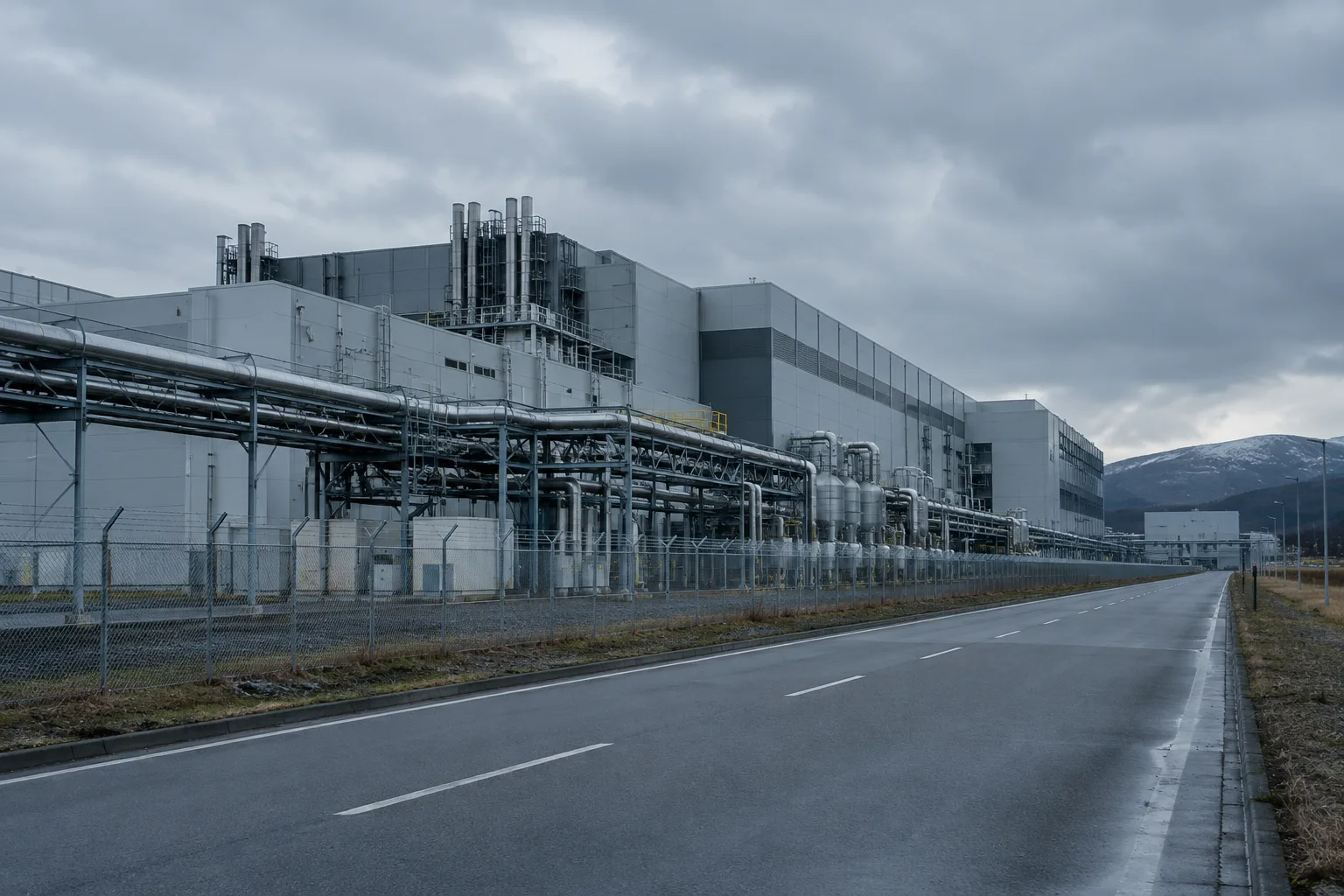
To turn interest into commitments, the company needs a chain of evidence: more mature PDKs, customer tape-outs, demonstration wafers, visible yield learning, qualification lots and a credible path to volume. It also has to show that its first fab, IIM-1 in Chitose, Hokkaido, can offer more than a patriotic alternative to established foundries. Customers in AI data-center chips, and later automotive, robotics and other edge devices, will care about predictable yield, wafer cost, design support, packaging and production capacity—not just whether the transistor architecture works.
Suppliers and policymakers have their own watch list. Equipment and materials partners will be looking for continued fab-readiness signals in Hokkaido. Tokyo will have to decide how tightly to link future support to technical milestones and customer demand. That is the governance test in this story. Japan can rationally spend to diversify advanced-chip supply and rebuild domestic capability even if Rapidus is not initially the cheapest option. But the case for additional subsidies, guarantees and private loans gets harder if technical progress and commercial traction are not becoming more visible.
So the reported SRAM miss should be read neither as proof of collapse nor as noise. It is a stress point. If Rapidus can show working memory structures, stronger design-tool readiness and customer progress soon, the schedule may still be salvageable. If not, the first clear sign of slippage may come in budgets, financing terms and customer behavior well before any official change to the fiscal-2027 target.
 By


 By
 By

 By

 By