

Cerberus Capital Management has agreed to acquire the U.S. Space Systems business of Airbus U.S. Space & Defense, a Merritt Island, Fla., satellite manufacturer with a production site next to Kennedy Space Center. The deal, announced by Cerberus on Nov. 24 and posted Nov. 25, is expected to close by the end of 2026, with no purchase price disclosed. What makes it notable is not the arrival of a new factory, but the possibility that a proven U.S. satellite platform could get fresh capital and a more explicit domestic-supply-chain focus at a moment when defense and commercial buyers want more resilient space capacity.
That also points to the real question behind the transaction: will Cerberus expand dependable satellite production, or mostly change the owner of an existing facility while the harder work of winning contracts, keeping engineers, and scaling output still lies ahead?
For now, the answer is potential, not proof. Cerberus says the business has produced and launched more than 650 satellites and that it intends to invest in the engineering organization, product portfolio, and U.S. supply chain. Those are meaningful promises. But the companies have not disclosed the amount or timing of that investment, the facility’s current utilization, its annual production rate, backlog, or customer concentration. On the evidence available today, the transaction changes control of an operating manufacturer; it does not yet demonstrate new throughput.
What Cerberus is actually buying
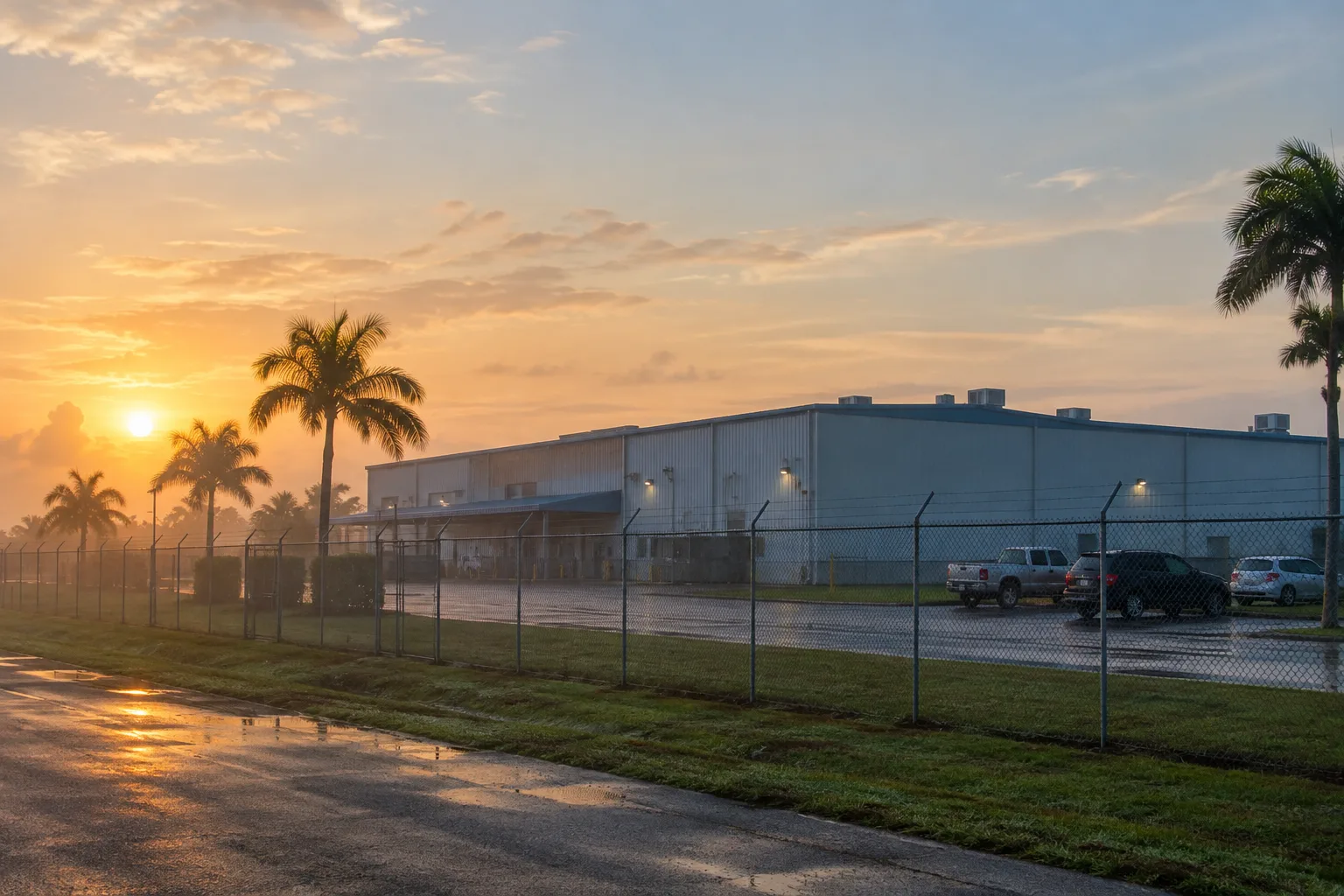
The asset is more substantial than a financial headline might suggest. Cerberus is buying a business that designs, manufactures, integrates, tests, and prepares spacecraft for launch. It is headquartered in Merritt Island and operates an approximately 200,000-square-foot production facility adjacent to Kennedy Space Center, serving both national-security and commercial customers. In an industry where flight heritage matters, Cerberus’s claim of more than 650 satellites produced and launched is the kind of operating record that can open doors that a start-up factory cannot.
That matters because space manufacturing is not just about floor space. Output is shaped by qualification cycles, specialized labor, component supply, security requirements, export controls, launch schedules, and long sales cycles. A site can be physically capable of building more hardware without being commercially or programmatically able to deliver more satellites in the near term.
Cerberus, which says it manages about $74 billion across credit, real estate, and private-equity strategies, is also not entering the sector cold. Its Supply Chain platform launched in 2022 and says it has made more than two dozen investments across aerospace and defense, data and microelectronics, critical minerals and power, industrial manufacturing, and next-generation telecommunications. That gives Cerberus a plausible story about how it might support suppliers, operations, and sourcing discipline around a satellite business.
Still, Airbus’s decision to sell does not automatically mean the U.S. unit lacked strategic value. The public record points to corporate portfolio priorities on both sides of the Atlantic. Airbus’s U.S. subsidiary is focusing more on autonomous aircraft, while Airbus is also reshaping its European satellite activities through a venture with Leonardo and Thales, as Bloomberg Law reported. Read that way, the divestiture looks as much like strategic simplification as a verdict on space demand.
Why a simple ownership change could still matter
Even without adding a new building on day one, the deal could matter to the U.S. space industrial base. Governments and constellation operators increasingly want “resilient” and “proliferated” architectures: more distributed fleets, more redundancy, and faster replacement cycles instead of dependence on a small number of exquisite satellites. That shifts value toward manufacturers that can repeatedly deliver qualified spacecraft on schedule.
A U.S.-owned platform with an existing workforce, launch-site adjacency, and flight heritage can be easier to position in some domestic procurement and supply-chain discussions than a unit inside a foreign parent’s portfolio. Cerberus is plainly leaning into that argument by emphasizing engineering investment and a U.S. supply chain.
But ownership is not a magic lever. A new parent does not automatically transfer government contracts, security clearances, export authorizations, or customer approvals. It does not erase component shortages or reduce launch bottlenecks. It does not guarantee that national-security buyers or commercial operators will shift awards to Merritt Island. Demand for proliferated constellations is real; whether this specific plant captures more of that demand remains unanswered.
The private-equity angle cuts both ways. Cerberus can bring concentrated operating attention and capital that a diversified industrial parent may not have chosen to prioritize. That can be valuable in a market where supplier resilience and engineering depth often decide execution. But private-equity ownership can also bring pressure for returns and an eventual exit. Because the financing structure is undisclosed, outsiders cannot yet judge how much flexibility the business will have to invest patiently rather than optimize financially.
The scorecard that matters next
The most useful way to watch this deal is as an ownership-to-capacity test. Not every signpost will be visible immediately, but some will be clearer than others.
First comes closing itself. The deal is expected to close by year-end 2026, not before, and customary approvals still matter. After that, the first operational test is retention: whether key engineers, program managers, manufacturing specialists, and supplier relationships stay in place through the ownership change. A satellite factory’s practical capacity walks out the door if its experienced staff does.
Next is whether Cerberus turns broad investment language into specifics. Readers should look for disclosed additions to engineering headcount, tooling, test capability, supplier depth, or production processes. A stronger domestic supply chain would be more than a slogan if it shows up as additional qualified sources for critical components, fewer single-point failures, or shorter waits for flight hardware.
Then comes the metric that actually matters to customers: throughput with reliability. That means more launch-ready spacecraft delivered per year, better schedule performance, or faster movement from design approval to completed hardware. No independent reporting so far has shown a production increase, larger order book, or new major award tied to the announcement. Until those indicators arrive, claims about growth remain forward-looking.
For defense agencies, space primes, launch providers, constellation operators, and suppliers, that distinction is practical, not semantic. They do not buy ownership structures; they buy qualified spacecraft delivered on time. For workers in Merritt Island, the stakes are equally concrete: whether new ownership brings durable investment and opportunity, or simply a new name over an already functioning operation.
If Cerberus can convert a 200,000-square-foot facility and a long flight record into measurably higher output and stronger supplier resilience, the deal will have strengthened the U.S. space industrial base without needing to cut the ribbon on a new plant. If not, it will stand mainly as a portfolio handoff in a market that still has to build capacity the hard way.
 By

 By

 By

 By

 By