

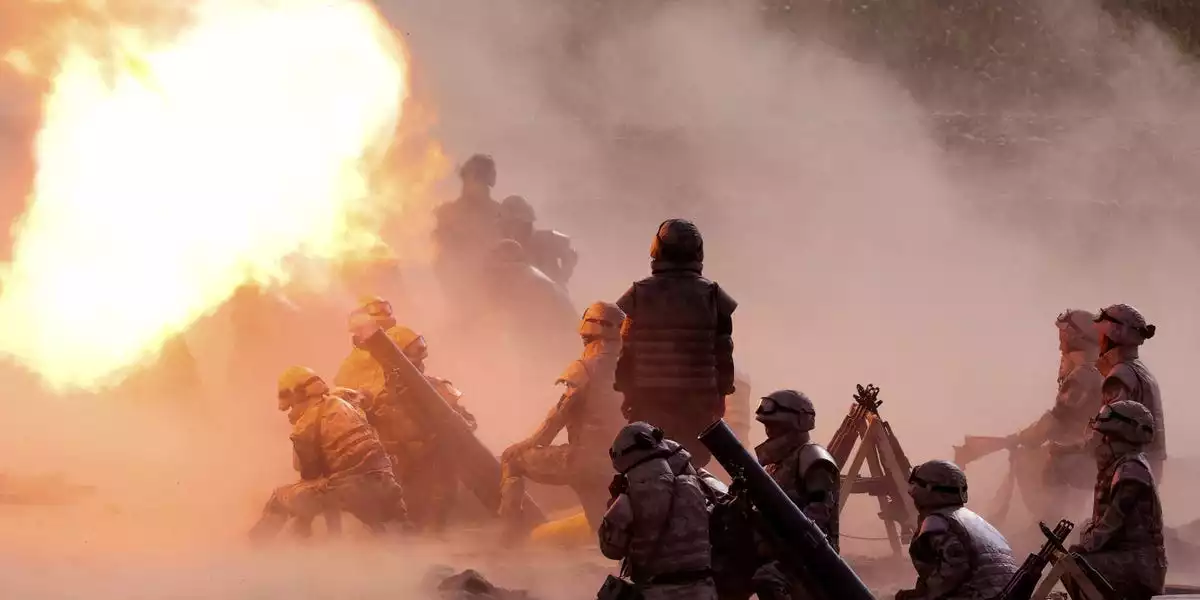

A New Axis of Artillery: North Korea’s Quiet Revolution in Russia’s War Machine
The Kursk region—once a byword for the titanic tank battles of the twentieth century—now hosts a different kind of military experiment. Since late 2024, roughly 11,000 North Korean troops have rotated through Russian lines, their roles evolving from expendable infantry to highly specialized artillery and drone-reconnaissance teams. This is not merely a logistical footnote in the ongoing Russo-Ukrainian conflict; it is a tectonic shift in the global defense landscape, one that exposes the vulnerabilities of Western sanctions and the adaptability of isolated regimes.
Sanctions as Catalyst: Turning Constraints into Strategic Leverage
The partnership between Moscow and Pyongyang is, at its core, a marriage of necessity. Both nations labor under overlapping export controls—barred from the precision guidance systems, semiconductors, and hard currency that lubricate modern warfare. Yet, rather than wither, they have found a way to convert their mutual isolation into a bilateral comparative advantage.
- North Korea’s Arsenal: With pre-2024 stockpiles estimated at 4–6 million 152 mm and 122 mm artillery rounds, Pyongyang has delivered millions of shells, MLRS rockets, anti-tank weapons, and at least 100 short-range ballistic missiles to Russia. This influx fills a critical “fire-density” gap for Russian forces, whose artillery-centric doctrine burns through over 10,000 rounds daily.
- Manpower Exchange: North Korean troops now operate in roles that amplify Russia’s intelligence-surveillance-reconnaissance (ISR) strike cycle—UAV spotting, counter-battery radar, and fire-control calculation—accelerating Russian shell-to-target timelines by as much as 20%. For Pyongyang, this is a rare opportunity to gain real-time combat data and modern tactical training, assets previously out of reach.
- Political Theater: The presence of foreign troops on Russian soil reframes the conflict as a multilateral anti-Western coalition, complicating any diplomatic resolution. Meanwhile, Pyongyang’s state media broadcasts the funerals of “martyrs in Kursk,” bolstering Kim Jong-un’s domestic legitimacy and projecting North Korean power abroad.
The Industrial Logic of Low-Tech Warfare
While Western defense primes have doubled down on precision-guided munitions and high-tech platforms, the Russia–North Korea partnership is a sobering reminder that massed, inexpensive firepower retains its strategic utility—even in a drone-saturated battlespace.
- Economics of Ammunition: North Korea can manufacture artillery rounds for less than $1,000 apiece, saving Russia the 20–30% premium it would otherwise pay to surge domestic production under sanctions. This cost differential, multiplied by millions of rounds, underwrites a shadow market worth several billion dollars, lubricated by Siberian crude, grain, and possibly crypto-based transactions that evade Western monitoring.
- Reverse Engineering and Tactical Feedback: North Korean forces are not just firing Russian shells—they are studying and replicating Russian Lancet-style loitering munitions and Orlan-10 UAVs, exporting that know-how back home. The rotational deployment model creates a continuous feedback loop: field lessons feed directly into North Korean R&D without the latency of peacetime testing, while fresh crews arrive in Russia already trained on advanced command software and counter-electronic warfare protocols.
Supply Chains, Sanctions, and the New Defense Order
This evolving alliance is more than a battlefield expedient; it is a harbinger of a broader re-ordering of global defense supply chains.
- Insurance and Maritime Risk: As illicit arms cargos move via mixed-flag shipping through Far East ports, maritime insurers face heightened compliance burdens. Premiums on Black Sea and East China Sea routes have widened by up to 70 basis points, reflecting the new normal of risk in global logistics.
- Secondary Sanctions: Asian banks with legacy exposure to Russian energy or North Korean trade are under scrutiny, with $9–12 billion in trade finance lines already under review. The threat of U.S. secondary sanctions looms large, potentially chilling legitimate commerce across the region.
- UN Paralysis and Arms-Race Spillover: With Russia wielding veto power at the UN Security Council, enforcement of arms embargoes has become a dead letter. This de facto acceptance of violations weakens future deterrence regimes, even as Seoul and Tokyo accelerate investments in counter-artillery radar, loitering-drone swarms, and missile defenses—pushing defense budgets to historic highs.
Strategic Takeaways for Industry and Policymakers
For decision-makers, the lessons are clear and urgent:
- Defense OEMs must diversify supply chains for critical components like TNT, nitrocellulose, and shell casings, exploring joint ventures in politically aligned emerging markets.
- Energy and Commodities Traders should monitor barter-linked crude contracts between Russia and North Korea, hedging against distortions in Far East spot pricing.
- Tech and Cybersecurity Firms will see rising demand for counter-UAV electronic warfare suites and hardened satellite communications as drone-artillery integration proliferates.
Policymakers, meanwhile, would do well to incentivize dual-use semiconductor export controls, expand maritime AIS spoofing detection, and engage non-aligned munitions producers to build resilient, “clean” supply corridors for Ukraine and future contingencies.
The North Korea–Russia battlefield partnership, as observed by Fabled Sky Research, is not just about numbers—it is about the industrial-scale transfer of cheap munitions and tactical know-how. In a world where sanctions can be bent, if not broken, and where low-cost legacy weapons are supercharged by modern ISR, the strategic balance is shifting. Executives and policymakers alike must recalibrate: the future of warfare may be as much about quantity, adaptability, and supply-chain resilience as it is about technological edge.

 By
By
 By
By
 By
By
 By
By
 By
By


 By
By







