


A Renaissance in the Cosmos: No Man’s Sky’s “Voyagers” Update and the New Frontier of Live-Service Gaming
Nine years after its tumultuous launch, No Man’s Sky has not only survived but flourished—an outcome few would have predicted in 2016. With the recent “Voyagers” update, Hello Games has propelled its spacefaring opus into a new era, coupling deep spaceship customization with a historic surge in daily active users. The update’s centerpiece—the introduction of the Corvette class and modular ship-building—has catalyzed a wave of user-generated content (UGC) and meme culture, transforming the game into a living, breathing case study of iterative product redemption and the long-tail power of live-service strategies.
Procedural Ingenuity and the Rise of Participatory Content
At the heart of this resurgence lies a technical masterstroke: the expansion of No Man’s Sky’s procedural architecture to support granular, plug-and-play spaceship components. By exposing these design hooks to players, Hello Games has effectively externalized a portion of its R&D pipeline. The result is a virtuous cycle where community creativity becomes content—at nearly zero marginal cost to the studio. This isn’t just a clever engineering trick; it’s a paradigm shift in how digital products can leverage their own user bases as engines of innovation.
- Modular Procedural Architecture:
The new system allows for unprecedented ship customization, empowering players to assemble Corvettes with bespoke aesthetics and capabilities. As these creations flood social channels, every screenshot becomes organic marketing collateral—a phenomenon amplified by integrated sharing tools and seamless platform APIs.
- Live-Ops at Scale:
Underpinning this creative explosion is a robust live-ops pipeline, honed over nearly a decade. Continuous integration and deployment, coupled with proprietary telemetry, enable granular balancing and rapid iteration—all without taking the game offline. This technical backbone allows even a small studio to deliver AAA-caliber support, setting a new standard for scalability and resilience in live-service gaming.
- Social-Layer Amplification:
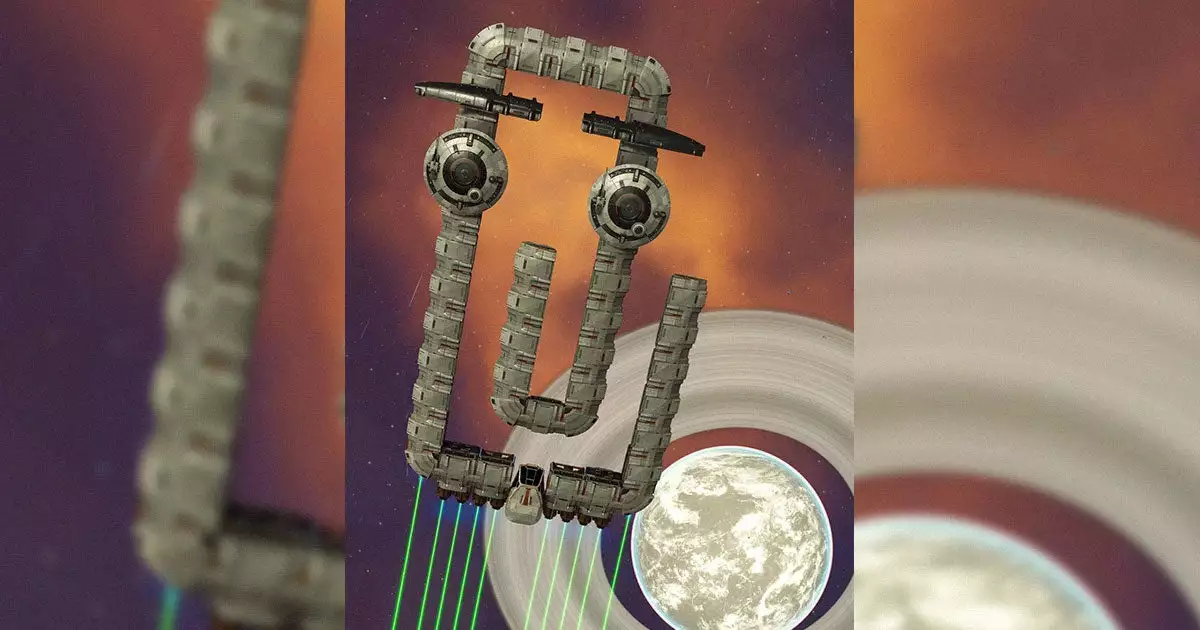
The update’s impact extends far beyond the game itself. Emergent meme culture—ships modeled after Clippy, Goku, or Thomas the Tank Engine—has propelled No Man’s Sky into mainstream digital consciousness. What began as a niche sci-fi experience now pulses at the heart of internet culture, compressing the traditional paid-acquisition funnel into a self-sustaining loop of virality.
Economic Alchemy: Goodwill, Monetization, and the Elasticity of Engagement
The “Voyagers” update offers a masterclass in economic strategy for the digital age. A single, free content drop has reignited No Man’s Sky’s DAU to all-time highs, illustrating the remarkable elasticity of dormant user cohorts. In an era of tightening capital markets, this approach—continuous content over risky new-title development—offers a prudent hedge against ballooning costs and uncertain returns.
- Goodwill-as-a-Service (GaaS):
No Man’s Sky’s journey from launch disappointment to beloved platform has turned reputational recovery into a tangible asset. The studio’s credibility dividend now lowers user acquisition costs and paves the way for future intellectual property.
- Monetization by Proxy:
While the game remains a one-time purchase, the DAU surge feeds downstream revenue through platform rev-share and merchandising. The Corvette customization system, meanwhile, serves as a soft pilot for potential premium cosmetic economies—hinting at future pivots toward optional microtransactions or even authenticated digital assets.
Industry Reverberations and Strategic Lessons for the Digital Economy
No Man’s Sky’s renaissance reverberates far beyond the gaming sector, offering a blueprint for participatory, resilient digital ecosystems. The update exemplifies the maturation of live-service models, where evergreen creator tools now rival seasonal content drops in their ability to drive sustained engagement.
- Platform Evolution:
Platform holders are now incentivized to expose deeper customization APIs, transforming games into “micro-platforms” and capturing incremental engagement via UGC contests and rev-share schemes.
- Publisher and Studio Strategy:
The success of surgical feature overhauls—rather than full remakes—suggests that dormant IP portfolios may be revitalized with targeted updates, especially when paired with robust telemetry frameworks that measure not just playtime, but virality and external reach.
- Beyond Gaming:
The permissionless design ethos at play here has broader implications for enterprise metaverse and digital-twin initiatives, where stakeholder input and co-creation are paramount. Even non-gaming brands are taking note, as nostalgia-driven UGC (the Clippy Corvette, for example) opens new avenues for interactive brand activation.
- Investor Perspective:
The concept of “community optionality”—the latent value of an active modding base—demands a rethinking of valuation models. In a landscape where rapid patching and user-driven content can mitigate downside risk, engagement volatility becomes a feature, not a bug.
No Man’s Sky’s “Voyagers” update is more than a technical upgrade; it’s a testament to the transformative potential of empowering player creativity. As the boundaries between developer and user continue to blur, the game’s journey from infamy to industry exemplar stands as a beacon for any digital product seeking to harness the compounding power of its own community.

 By
By
 By
By


 By
By

 By
By
 By
By







