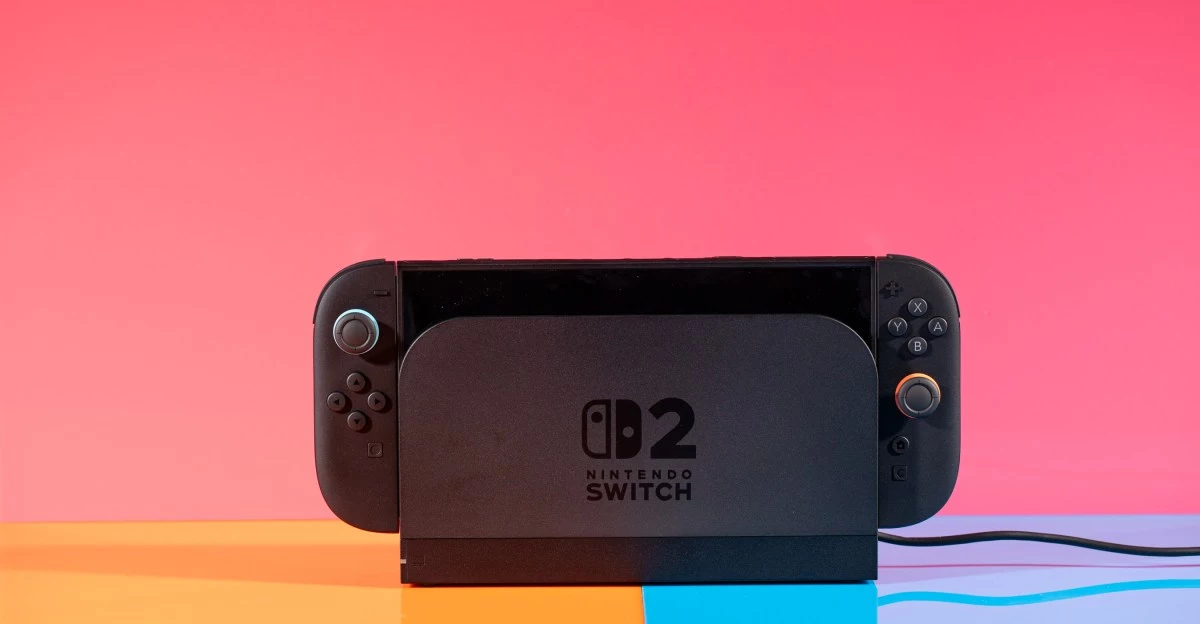

Nintendo’s Switch 2 Dock Lockdown: Engineering Precision Meets Market Power
Nintendo’s firmware update for the highly anticipated Switch 2, version 21.0.0, has sent a jolt through the global accessory ecosystem. In a single, calculated move, the Japanese gaming titan has rendered a swath of third-party docks inert—save for a select few, such as Viture’s Pro Mobile Dock and Antank’s S3 Max, which have survived the cull. The message is crystalline: the era of casual compatibility is over, replaced by a regime of cryptographic handshakes and silicon-level scrutiny.
The New Gatekeepers: Cryptography, Compliance, and the Cost of Entry
At the heart of this transformation lies a technical overhaul, one that echoes Apple’s storied approach to hardware authentication. Early teardown reports reveal that Nintendo has fundamentally altered the USB-C alt-mode negotiation, embedding a cryptographic seed exchange within the dock’s microcontroller. The result is a digital moat—docks lacking the requisite secure element are summarily rejected, their power-delivery renegotiation timing out, leaving users with little more than a soft-bricked accessory.
This is not merely a play for technical superiority. The Switch 2’s rumored leap to 4K upscaling, potentially powered by on-dock silicon such as a DLSS-equipped scaler or custom Tegra co-processor, demands rigorous oversight. Ensuring thermal safety, electromagnetic compliance, and digital rights management integrity requires more than pinout mimicry. Only those with proprietary casting chips and secure controller ICs—like Antank—can clear the new bar. For the rest, the cost of engineering compliance has just multiplied, squeezing out the long tail of low-margin, copycat suppliers.
- Protocol Tightening: Secure element authentication blocks unauthorized docks.
- Performance Safeguards: High-fidelity output and DRM require hardware-level trust.
- Fragmentation Barrier: Only silicon-compliant designs survive, raising R&D thresholds.
Economic Stakes: Channel Control and the Certification Horizon
Nintendo’s motives are as strategic as they are technical. First-party docks, often sold at 70–80% gross margins, represent a lucrative revenue pool. By tightening protocol controls, Nintendo is poised to convert leakage into royalty streams—should it unveil a certification program akin to Apple’s MFi. Such a move would not only preserve attach-rate economics in an era of rising bill-of-materials costs (AI-ready silicon, GDDR6 memory, inflationary logistics), but also reassert Nintendo’s grip on retail shelf space and digital search rankings.
Accessory makers, especially those planning 2024 launches, now face a fraught landscape. The absence of a clear certification pathway—Nintendo has yet to define what constitutes a “legal” accessory—injects uncertainty into product development cycles and go-to-market strategies. Meanwhile, the supply chain tightens: high-compatibility docks require custom controller ICs from a handful of suppliers (think Infineon, NXP, Renesas), creating a bottleneck that late entrants may find insurmountable as holiday demand approaches.
- Accessory Revenue Pool: Certification could transform leakage into royalties.
- Channel Power Play: Compatibility uncertainty drives consumers toward Nintendo SKUs.
- Supply-Chain Signal: Secure element reliance narrows the field, favoring early movers.
Regulatory Crosswinds and the Future of Peripheral Ecosystems
Nintendo’s gambit is not without risk. In the European Union, the Digital Markets Act and looming right-to-repair mandates cast a wary eye on ecosystem lock-in. The company’s refusal to clarify its definition of “legal” accessories could invite antitrust scrutiny, echoing the regulatory heat Apple faced over Lightning and NFC. Globally, the move stands at odds with pushes for USB-C standardization—by layering proprietary cryptography atop an ostensibly open spec, Nintendo may provoke policy intervention from standards bodies and watchdogs alike.
For consumers, the calculus is shifting. Persistently high inflation has made households more price-sensitive, and if Nintendo’s policy inflates the total cost of ownership, it may dampen the attach rates that have historically fueled the Switch’s travel-friendly appeal. Retailers, too, must adapt: non-certified inventory now carries reputational and financial risk, and planograms are likely to tilt toward Nintendo-approved stock by year’s end.
- Regulatory Gaze: EU and US regulators may challenge proprietary lock-in.
- USB-C Tensions: Proprietary handshakes undermine interoperability mandates.
- Consumer Impact: Higher costs threaten accessory adoption and platform stickiness.
Accessory makers and channel partners are already recalibrating. The probability of a formal certification program within the next year is high, with early advantage accruing to those already investing in secure silicon and compliance testing. The grey market for no-name docks will shrink, and strategic pivots—joint development agreements, NDA coverage, budget for compliance labs—are now prerequisites for survival.
The Switch 2’s dock lockdown isn’t just a technical update; it’s a signal flare for the future of hardware ecosystems. As Nintendo redraws the boundaries of trust and control, the entire value chain—from silicon foundries to retail shelves—must navigate a landscape where cryptography, compliance, and certification are the new keys to the kingdom.

 By
By
 By
By

 By
By

 By
By

 By
By