

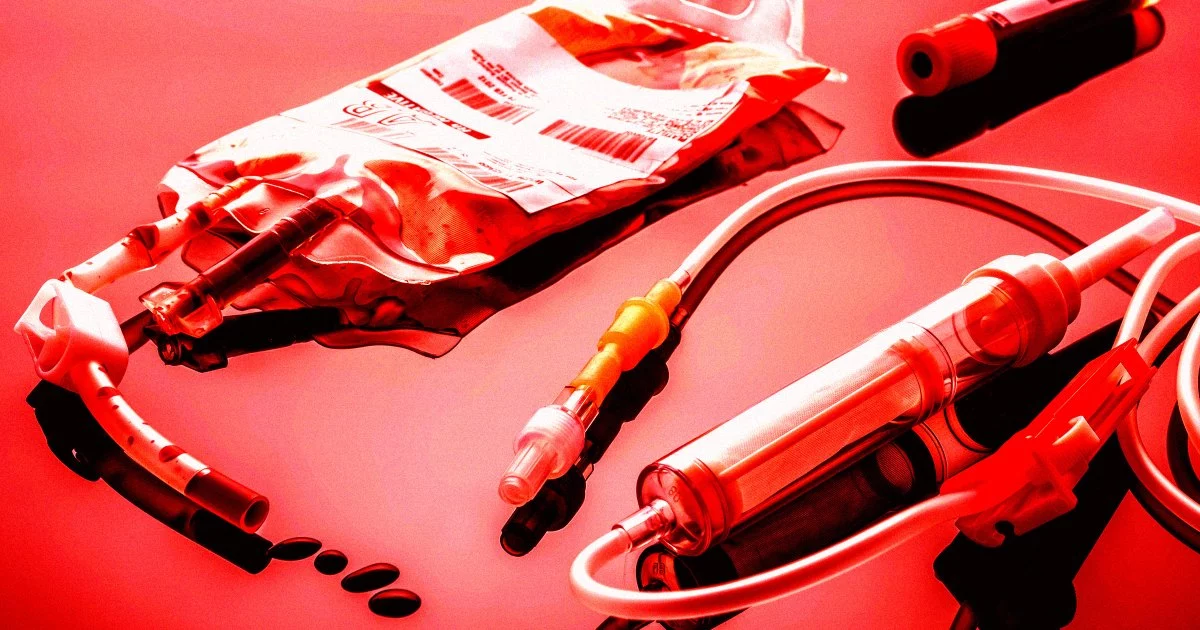

A rare “national blood supply crisis” signals a systemic stress test for U.S. healthcare logistics
The American Red Cross’ declaration of a “national blood supply crisis”—only the second in its history—lands as more than a seasonal warning. It is a high-signal indicator that the U.S. blood ecosystem, a critical yet often invisible layer of healthcare infrastructure, is operating with minimal shock absorption. Summer donations have fallen to a four-year low, and inventories of Type O positive—the workhorse blood type for emergencies—have dropped below a one-day national supply, tightening the margin for trauma care when a patient’s blood type is unknown.
The immediate trigger is stark: a 25% decline in June donations. The Red Cross’ operational math is equally stark: three additional donors per blood drive across the summer would materially stabilize reserves. That small number underscores the paradox of blood supply: it is both highly scalable in theory and fragile in practice, because it depends on consistent human participation, predictable mobility, and stable public health conditions—variables that are increasingly volatile.
For hospitals, blood is not a commodity that can be stockpiled like masks or medications. It is perishable, tightly regulated, and demand-inelastic in emergencies. When supply thins, the system doesn’t merely become more expensive—it becomes more constrained, forcing clinical trade-offs that ripple into elective procedures, oncology support, and trauma readiness.
Climate volatility and public health disruptions are reshaping the “seasonal slump” into a structural risk
Summer has long been the blood sector’s low season, but this year’s confluence of extreme heat, wildfire-driven air quality degradation, and a surge in foodborne and gastrointestinal illnesses has turned a predictable dip into a compounding disruption. Each factor suppresses donor turnout differently:
- Heat waves reduce willingness to travel, increase dehydration risk, and complicate mobile drive operations.
- Poor air quality discourages outdoor movement and can exacerbate respiratory conditions that defer donors.
- Illness spikes directly reduce eligibility and increase last-minute cancellations.
- Seasonal travel and school breaks remove the dependable cadence of workplace and campus drives.
This is where the story becomes less about a single summer and more about a new operating environment. The blood system is now exposed to the same climate-linked variability that has reshaped energy demand, insurance pricing, and agricultural yields. In effect, blood collection is becoming a climate-sensitive supply chain, and the old assumption—that shortages are episodic and solvable with short-term appeals—looks increasingly outdated.
The comparison to the January 2022 crisis is instructive. Then, COVID-19 disruptions were the dominant driver. Now, the stressors are more diffuse and arguably more persistent: environmental instability plus routine public health volatility, layered onto donor recruitment models that have not been redesigned for a world of frequent disruptions. The implication is uncomfortable but clear: the U.S. blood supply may be entering an era where “crisis” becomes a recurring operational mode unless the system is modernized.
Data platforms, predictive analytics, and traceability tools move from “nice-to-have” to mission-critical
The crisis also spotlights a technology gap. Blood collection has improved incrementally, but the next leap is about anticipation and orchestration, not just outreach. The most promising interventions are those that treat blood as a real-time, perishable inventory network—and manage it with the same rigor used in modern logistics.
Key technology levers gaining urgency include:
- Digital donor scheduling and retention platforms that reduce no-shows, personalize reminders, and dynamically reroute donors to high-need locations.
- Predictive analytics and machine learning that fuse historical donation patterns with:
– weather forecasts and heat indices,
– air-quality alerts,
– local epidemiological signals, and
– hospital utilization trends,
to forecast inventory gaps days or weeks ahead.
- Geo-targeted mobilization that shifts from broad appeals to precise, time-sensitive calls for specific blood types in specific regions.
- Blockchain-enabled traceability and credentialing—still early, but potentially valuable for streamlining eligibility verification and reducing administrative friction. In some pilot concepts, tokenized or points-based incentives could be layered on top, particularly to engage younger donors accustomed to digital loyalty ecosystems.
The strategic point is not that technology replaces altruism; it reduces friction around altruism. When the system is strained, the winning advantage is often operational: making donation easier, faster, more predictable, and more compatible with daily routines.
The business and policy implications: blood as critical infrastructure, not a charitable afterthought
For health systems, blood scarcity behaves like a supply-chain risk premium. When inventories tighten, hospitals may be pushed into scramble procurement, incur higher costs, and delay procedures—outcomes that can cascade into payer negotiations and capacity planning. It is not far-fetched to imagine more explicit financial mechanisms emerging, from contingency contracting to “scarcity pricing” dynamics that resemble other constrained essentials.
This is also where corporate strategy enters the frame. The Red Cross and peer organizations can expand capacity fastest by embedding donation into existing foot traffic and employee ecosystems. The most scalable partnerships are pragmatic rather than performative:
- Large employers integrating donation time into benefits and scheduling systems
- Retail and mall operators hosting micro-donation sites where people already go
- Universities and hospitality venues enabling recurring, low-friction drives
- Insurers and health systems co-designing contingency frameworks that treat blood availability as a resilience metric
The broader trend is a reframing: blood is a biological raw material with constraints similar to other strategic inputs. Like critical minerals in advanced manufacturing, it requires diversified sourcing, shared visibility, and dynamic allocation. And like other ESG-linked initiatives, facilitating donation can strengthen organizational credibility—yet the real value is operational: a more resilient community health backbone.
The Red Cross’ crisis declaration is, ultimately, a signal to modernize the blood economy around the realities of climate stress, public health volatility, and perishable-inventory logistics. The organizations that respond fastest—by blending community mobilization with predictive systems and embedded partnerships—will help determine whether future summers bring routine strain or durable resilience.

 By
By
 By
By
 By
By
 By
By

 By
By
 By
By







