
Interstellar Intrigue: 3I/ATLAS and the New Era of Deep Space Observation
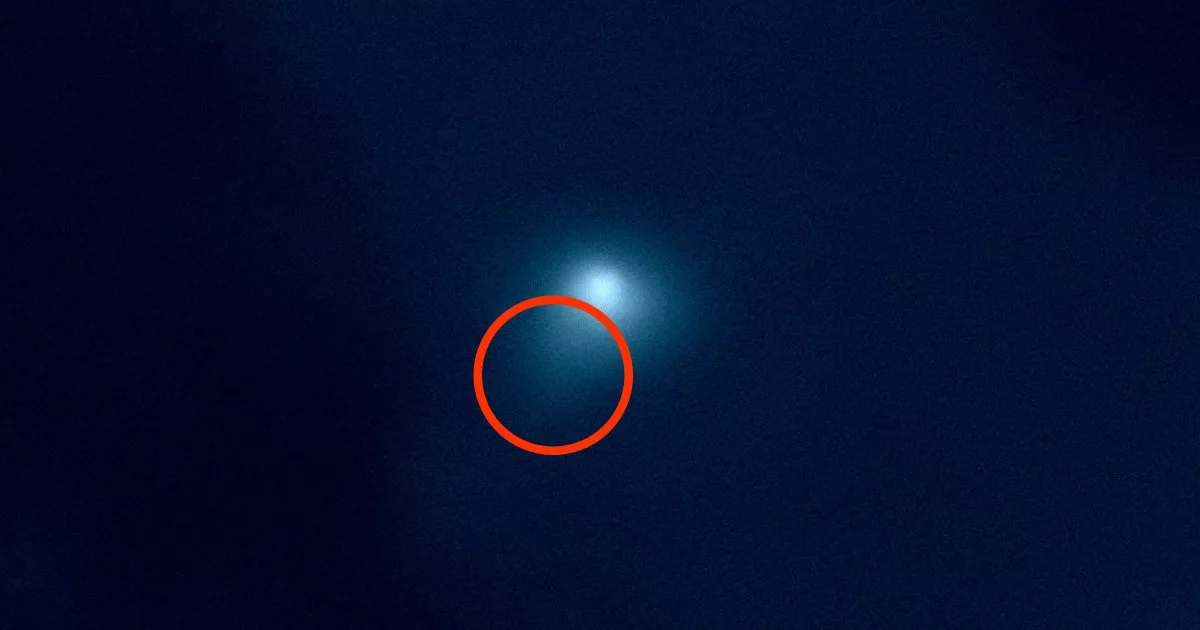
The arrival of 3I/ATLAS, the third confirmed interstellar object to grace our Solar System, has electrified both scientific and commercial communities. NASA’s recent release of high-resolution imagery, courtesy of the HiRISE camera aboard the Mars Reconnaissance Orbiter, offers a rare window into an object that defies easy categorization. The data reveal a jet structure oriented at a sharp, unexpected angle—an anomaly that has reignited debate over the nature of such visitors and the readiness of our technological and policy frameworks to respond.
Imaging Breakthroughs and the Challenge of Real-Time Data Fusion
HiRISE’s feat—resolving a 19-mile-wide pixel from a staggering 19 million miles away—underscores the relentless march of progress in deep-space optics and sensor technology. This leap is not merely a triumph of engineering; it is a harbinger of a new era in which autonomous, AI-driven data pipelines become indispensable. The divergent readings between HiRISE and the Hubble Space Telescope are more than a curiosity—they are a clarion call for real-time, cross-platform calibration.
- AI/ML Integration: Cloud-based artificial intelligence and machine learning models are rapidly becoming mission-critical, not just for data fusion but for anomaly detection and predictive analytics.
- Propulsion Insights: The peculiar, perpendicular plume of 3I/ATLAS offers a natural experiment in low-thrust propulsion physics. Spectral analysis of the jet’s mass-loading rates could inform both asteroid-redirect concepts and the development of next-generation electric or sublimation-based propulsion modules.
- Dual-Use Potential: Theories positing a “hazard-clearing” function for the jet echo emerging commercial efforts in active debris removal, hinting at a future where lessons from interstellar objects inform both planetary defense and satellite servicing industries.
Economic Ripples and the Race for Space Domain Awareness
The economic implications of 3I/ATLAS’s passage ripple through the entire space supply chain. Deep-space imaging now commands heightened attention, with demand surging for radiation-hardened sensors, advanced cryocoolers, and autonomous navigation software. The insurance sector, ever attuned to risk, is watching closely; successful demonstrations of jet-driven hazard mitigation could shave basis points off premiums for satellite constellations, translating into millions in savings at scale.
- Venture Capital Acceleration: Investment in “domain awareness” platforms—ranging from cislunar traffic management to off-Earth resource mapping—is accelerating, with 3I/ATLAS serving as a high-visibility proof point for the value of situational data beyond geosynchronous orbit.
- Policy and Geopolitics: Space-faring nations are quietly jockeying to establish norms for intercepting and sampling interstellar objects. Any hint of engineered technology, however remote, could trigger a cascade of policy responses, from rapid-response mission funding to the tightening of export controls and planetary protection protocols.
Non-Obvious Connections and the Expanding Strategic Horizon
The morphology of 3I/ATLAS’s plume is not just a curiosity for astronomers—it mirrors computational fluid dynamics models used in terrestrial gas-turbine optimization. This cross-pollination of algorithms between aerospace and space science is poised to accelerate, with both sectors harvesting insights from low-pressure, high-velocity environments.
The public debate around possible extraterrestrial technology—fueled by voices like Harvard’s Avi Loeb—serves as a rehearsal in crisis communication for organizations across the technology spectrum. The measured messaging from NASA stands in contrast to more speculative narratives, offering a blueprint for managing public perception in the face of paradigm-shifting discoveries.
Strategic Imperatives and the Road Ahead
The December close approach of 3I/ATLAS will sharpen models of interstellar object frequency, directly influencing funding for next-generation survey telescopes and rapid-response interceptor missions. Advances in large-baseline interferometry and foldable optics, once the domain of government labs, are poised to migrate into commercial Earth-observation markets, promising sub-10 cm resolution without proportional increases in aperture size.
In the longer term, the integration of plume-analysis data into AI-driven hazard-avoidance systems will shape architectures for lunar and asteroid mining, while the legal frameworks governing the interception and exploitation of non-solar objects will become a focal point of international negotiation.
For decision-makers, the message is clear:
- Align R&D portfolios toward sensor miniaturization, AI-powered data fusion, and low-thrust propulsion.
- Forge partnerships with space agencies to secure roles in rapid intercept missions.
- Update risk registers to include interstellar object scenarios, however improbable.
- Engage proactively in shaping emerging regulatory frameworks for deep-space governance.
The 3I/ATLAS encounter is not merely a scientific spectacle—it is a crucible for the technologies, policies, and business models that will define the next decade of the space economy. Those who recognize the strategic signals embedded in this fleeting plume of dust and ice will find themselves at the forefront of a market expanding rapidly beyond Earth’s orbit, and perhaps, beyond our current understanding of what is possible.

 By
By


 By
By
 By
By

 By
By
 By
By