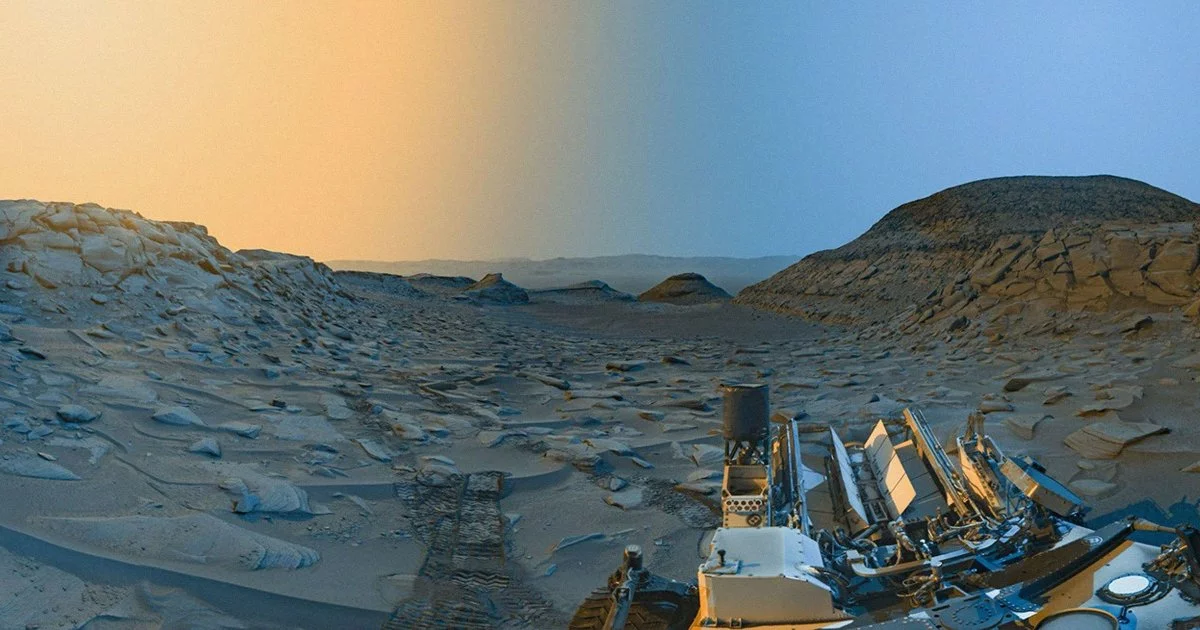

Martian Organics: A Catalyst for Scientific and Commercial Recalibration
NASA’s Curiosity rover, a tireless emissary of human curiosity, has delivered a scientific jolt from the ancient sediments of Gale Crater. The rover’s Sample Analysis at Mars (SAM) suite has detected long-chain organic molecules—specifically alkanes—at concentrations that defy the predictions of current non-biological models. This finding, while not a smoking gun for Martian life, elevates biology from a speculative afterthought to a plausible, even slightly favored, explanation for the presence of these molecules. The implications ripple far beyond planetary science, touching the very core of how business, technology, and policy will shape the next era of space exploration.
Organic Molecules and the Limits of Abiotic Explanations
Alkanes, the molecular backbone of cell membranes on Earth, are not easily preserved. Mars, with its relentless surface radiation over billions of years, should have been a graveyard for such fragile compounds. Yet, Curiosity’s instruments have found these molecules in abundance, suggesting either that they have been periodically shielded or that some process—potentially biological—continues to replenish them.
- Current Models Fall Short: Simulations that account for meteorite infall, atmospheric chemistry, and dust deposition consistently underestimate the alkane concentrations Curiosity has observed. The gap between model and measurement is not a mere rounding error; it is a chasm that non-biological explanations struggle to bridge.
- Biological Hypothesis Gains Ground: While definitive proof of life remains elusive, the data force a reconsideration of the biological hypothesis. The presence of long-chain alkanes, possibly derived from fatty-acid precursors, is most parsimoniously explained by processes akin to those that sustain life on Earth.
Technology Roadmaps and the New Frontier of In-Situ Analysis
Curiosity’s success is a testament to the power of miniaturized, resilient laboratory instrumentation. Its chromatograph-mass spectrometer has not only survived the journey to Mars but has performed laboratory-grade geochemical assays in the harshest of environments. The next generation of Mars missions must build on this foundation, pushing the frontier of in-situ analysis.
- Advanced Instrumentation: Future rovers will need to perform chiral separations (to distinguish between left- and right-handed molecules), isotopic fractionation, and perhaps even in-situ PCR-grade organic analysis. These advancements will blur the line between laboratory and fieldwork, enabling real-time hypothesis testing on another planet.
- Radiation Chemistry Insights: The survival of organics on Mars is rewriting models of material degradation, with direct applications for spacecraft coatings, nuclear-waste containment, and even semiconductor packaging here on Earth.
- AI and Data Analytics: The interpretive challenge—distinguishing between abiotic and biotic signatures—mirrors anomaly detection problems in enterprise AI. Algorithms honed on Martian data will find lucrative applications in fields as diverse as oil exploration and pharmaceutical quality control.
Strategic Investment and the Astrobiology Premium
The discovery of Martian organics is more than a scientific curiosity—it is a clarion call for strategic investment. Venture capital and corporate R&D, already flowing into lunar and cislunar ventures, are poised to pivot toward Martian sample-return missions and biosignature analytics.
- Capital Flows and ROI Narratives: The detection of organics strengthens the business case for Mars exploration, justifying investments not only in science but in dual-use technologies with terrestrial applications—autonomous robotics, advanced sensors, and life-support systems.
- Supply Chain and Talent: Markets for high-purity chemical standards, radiation-hardened electronics, and ultra-clean sampling equipment are primed for growth. The need for cross-disciplinary expertise—spanning astrobiology, synthetic biology, and materials science—will shape boardroom succession planning and workforce development.
- Regulatory and Policy Implications: Debates around planetary protection are setting precedents for biosecurity and gene-editing governance on Earth. Firms attuned to signals from bodies like COSPAR and the UN Committee on the Peaceful Uses of Outer Space will be better positioned to navigate emerging regulatory landscapes.
Converging Science, Commerce, and Policy in the Martian Era
The elevated likelihood—though not proof—of past life on Mars is a pivot point for the space economy. It is a moment when the boundaries between scientific inquiry and commercial ambition dissolve, replaced by a new paradigm where data rights, regulatory foresight, and portfolio diversification are as critical as the next discovery. Companies that align with this reality—by investing in radiation-resilient materials, negotiating early access to mission data, and forging cross-disciplinary partnerships—will not merely ride the wave of extraterrestrial curiosity; they will shape its direction. As the search for life on Mars intensifies, so too does the race to convert the unknown into enduring value back on Earth.

 By
By
 By
By
 By
By
 By
By


 By
By