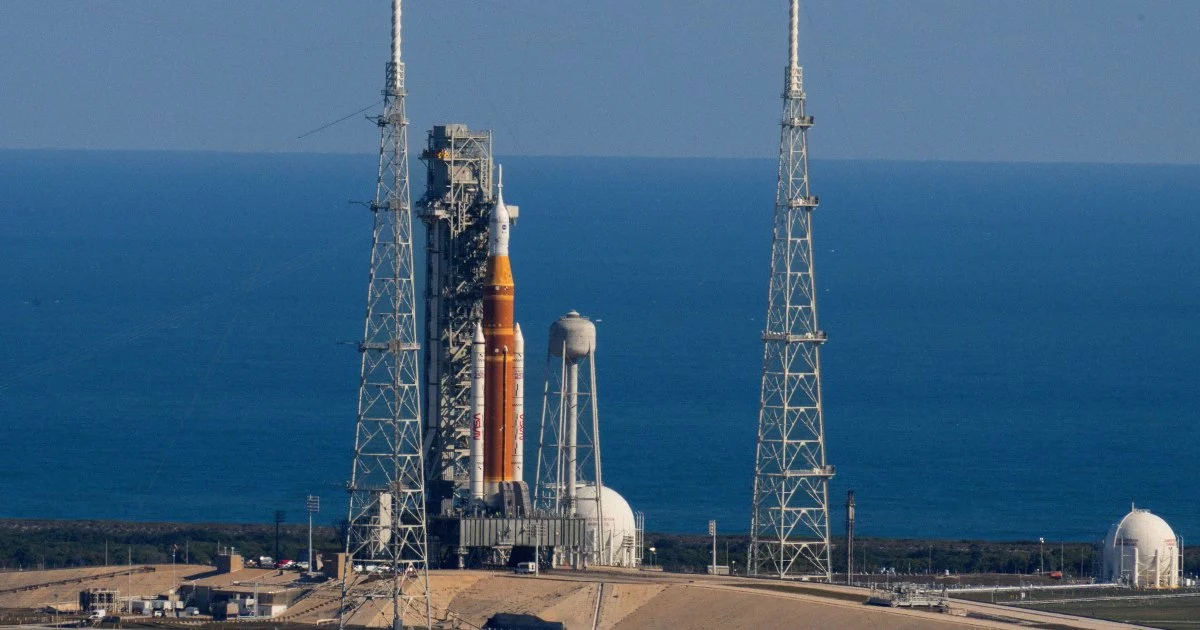

Cryogenic Fragility and the High Stakes of Artemis II
NASA’s Artemis II mission, envisioned as the vanguard of America’s return to the Moon, finds itself in a crucible of technical complexity and geopolitical urgency. The recent postponement—triggered by a critical liquid-hydrogen leak during the “wet dress rehearsal”—illuminates not just the delicate choreography of cryogenic operations, but also the intricate web of industrial, economic, and strategic interests now entwined with lunar exploration.
The incident, while not wholly unexpected in the high-wire act of spaceflight, serves as a powerful reminder: the path to the Moon is paved as much with material science and systems integration as with ambition. As the Artemis program slips from its early-February launch window to no earlier than March, the implications ripple far beyond the launchpad at Kennedy Space Center.
Engineering Setbacks and the Hidden Costs of Delay
At the heart of the delay lies a spike in hydrogen leakage—detected mere minutes before a simulated liftoff—breaching stringent safety thresholds. The failed attempts to reseat seals point to deeper issues, possibly rooted in material fatigue or tolerance mismatches within the ground-to-vehicle umbilical system. Florida’s sub-freezing winter temperatures, rare but consequential, further stressed the propellant-conditioning cycles, exposing vulnerabilities in hardware designed for more temperate launches.
These technical setbacks are not isolated. Intermittent audio communication failures during the rehearsal highlight the persistent risk parity between aging launch-control infrastructure and the flight hardware itself. Meanwhile, the crew quarantine timeline, now misaligned with vehicle readiness, adds a layer of logistical and financial complexity.
Yet, amid these challenges, there were partial victories: systems integration, avionics checkout, and countdown choreography all validated recent software patches, underscoring that Artemis II’s digital backbone remains robust. Still, each scrub exacts a steep price—US$10–15 million per incident—compounding labor, cryogenic propellant, and inspection costs. For NASA, these delays threaten to erode the fiscal narrative just as Congress weighs the merits of continued investment against competing national priorities.
Lunar Competition, Industrial Ecosystems, and the Space Economy
The Artemis program is more than a technical endeavor; it is a linchpin in the global contest for lunar primacy. China’s Chang’e program, in partnership with Russia’s International Lunar Research Station, is racing toward human lunar surface missions by 2030. Every delay in Artemis II compresses the timeline for Artemis III—the first planned crewed landing—narrowing the window for the U.S. to assert leadership in lunar exploration.
The industrial footprint of Artemis is vast, with over 1,100 suppliers across all 50 states. Protracted delays propagate idle capacity costs, particularly for Tier II providers of hydrogen valves, flight software, and thermal-protection tiles. Many of these suppliers are now hedging their bets, courting commercial space and defense contracts to buffer against the volatility of government-funded mega-programs. In the capital markets, investor skepticism around cost-plus models is mounting. The Artemis II scrub is likely to be cited in upcoming SPAC and IPO roadshows for reusable-launch startups, reshaping capital allocation across the space economy.
NASA’s reliance on SpaceX’s Starship as the Human Landing System further tightens the schedule. Delays in Artemis II compress integration testing windows between SLS-Orion and Starship, heightening both interface risk and the strategic interdependence of public and private sector ambitions. The SLS’s shared heritage with missile-defense programs adds a subtle layer of national security signaling—one that is undermined, however slightly, by launch cadence setbacks.
Cross-Sector Innovation and Strategic Opportunities
The technical tribulations of Artemis II are catalyzing a wave of cross-sector innovation. The expertise in cryogenic handling—so critical, and yet so fragile—has direct implications for the burgeoning hydrogen economy. Expect to see intensified R&D alliances focused on advanced seal materials, inline leak detection, and rapid off-gas recovery, with applications that span both civilian energy transition and defense.
Digital twin technology and AI-driven predictive maintenance are also gaining traction. As Artemis struggles, budget is flowing toward higher-fidelity cryo-fluid simulations and model-based systems engineering, offering vendors in industrial IoT and high-performance computing a rare opportunity to embed themselves in the next generation of aerospace troubleshooting.
Even the insurance sector is poised for disruption. Persistent Artemis delays expose actuarial blind spots in large-scale government programs, opening the door for insurtech firms to craft milestone-based risk products—potentially unlocking new streams of private capital for lunar exploration.
Finally, the workforce dimension cannot be ignored. High-profile launch delays threaten to sap the public excitement that fuels STEM pipelines. Private industry, from semiconductor fabrication to quantum computing, should anticipate—and perhaps welcome—renewed NASA outreach as the agency seeks to maintain the flow of talent into the broader innovation ecosystem.
The Artemis II delay, then, is more than a technical hiccup. It is a crucible in which the future of lunar exploration, industrial policy, and technological innovation are being forged. For decision-makers across sectors, the lesson is clear: those who treat setbacks as catalysts for resilience and cross-industry convergence will shape not just the next chapter of spaceflight, but the very architecture of tomorrow’s economy.

 By
By
 By
By

 By
By
 By
By

 By
By
 By
By