

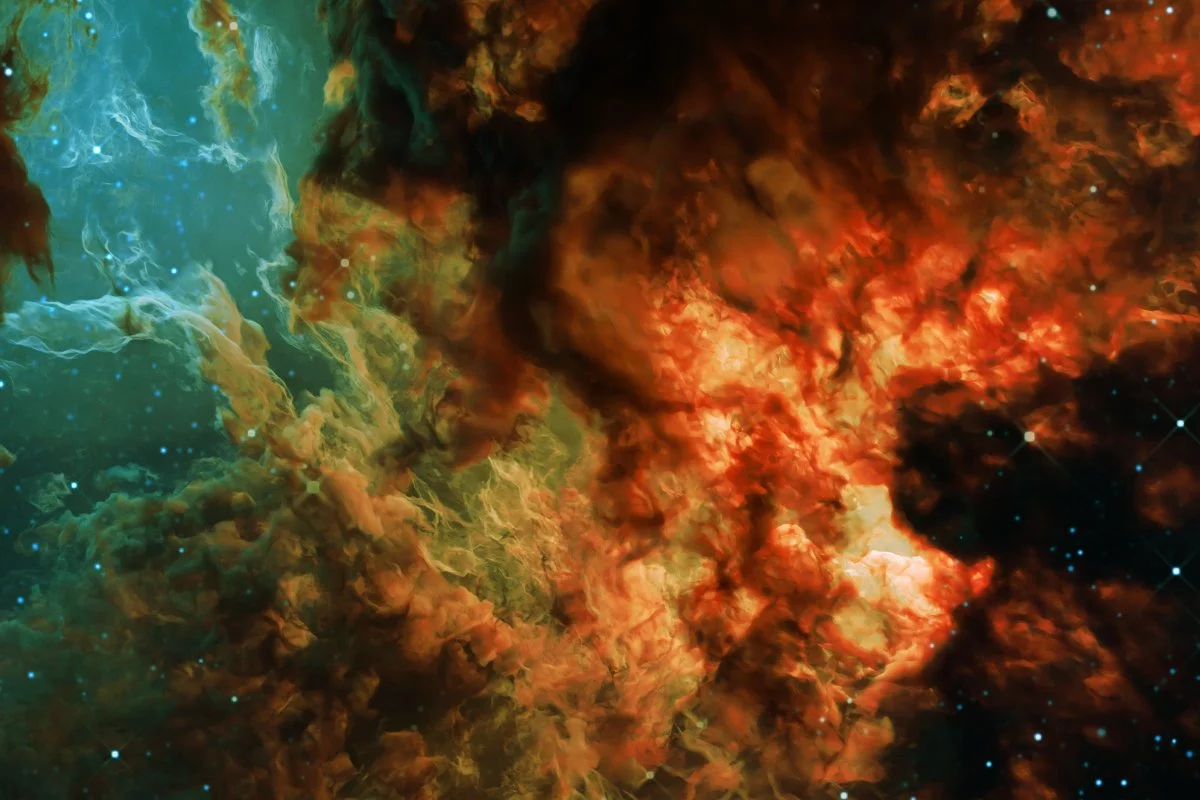

Mapping the Cosmic Voids: Roman Telescope as a Catalyst for Technology and Industry
NASA’s Nancy Grace Roman Space Telescope, poised for launch later this decade, is not simply another eye on the cosmos. It is a machine built for the voids—a 2.4-meter mirror and a 300-megapixel imager designed to chart the vast, silent gulfs between galactic filaments. These cosmic voids, some as small as 20 million light-years across, have long been the dark matter of cosmological theory: present, powerful, yet poorly understood. Roman’s mission is to illuminate these spaces, and in so doing, it will test the very scaffolding of our universe, from the nature of dark energy to the cosmological principle itself.
Yet the telescope’s significance extends far beyond the boundaries of astrophysics. In an era of fiscal uncertainty and global competition, Roman’s legacy may be written as much in code and silicon as in starlight. Its technological ambitions—wide-field optics, AI-driven analytics, and quantum-limited detectors—are already rippling through the industrial and strategic landscapes.
—
Technological Ambitions: From Reconnaissance to Quantum Horizons
Roman’s hardware is a study in repurposed precision. Its primary mirror, originally crafted for clandestine reconnaissance, now anchors a gigapixel near-infrared focal plane. The lessons learned in manufacturing ultra-stable, low-scatter surfaces are not confined to astronomy; they are directly transferable to next-generation Earth observation, defense payloads, and even the burgeoning world of AR optics.
The data challenge is formidable. Over five years, Roman will generate approximately 20 petabytes of raw data—an astronomical deluge demanding unsupervised clustering and topological analysis. These are not merely tools for astrophysicists; they echo the pattern recognition algorithms employed in cyber-threat intelligence and geospatial analytics. NASA’s edge-to-cloud pipeline, piloted by JPL and GSFC, is pioneering on-board preprocessing to minimize downlink loads—an architecture that mirrors emerging standards in commercial LEO constellations and industrial IoT.
Perhaps most quietly transformative is Roman’s role as a test-bed for quantum-limited detectors. The ultra-low-noise HgCdTe arrays required for the mission are accelerating U.S. capabilities in cryogenic detector fabrication, a foundational technology for quantum communications and next-generation 6G prototypes.
—
Economic Ripples: Supply Chains, Cloud Demand, and Talent
Roman’s impact on the industrial ecosystem is both diffuse and profound. The mission’s need for precision glass, advanced coatings, and radiation-hardened ASICs is catalyzing a network of tier-two suppliers whose expertise is increasingly relevant to sectors such as autonomous vehicles and augmented reality. As defense primes eye vertical integration, selective mergers and acquisitions are likely to follow.
On the computational front, Roman’s open-data policy will shift vast compute cycles to hyperscale cloud providers, driving demand for GPU and TPU clusters optimized for astrophysical simulations. These environments often serve as sandboxes for exascale architectures that later migrate into commercial AI workloads, accelerating the diffusion of high-performance computing innovations.
Workforce development is another, subtler dividend. The optics and data-science talent cultivated by Roman enhances the deep-tech labor pool at a moment when semiconductor incentives—such as those from the CHIPS Act—are creating parallel demand. While this mitigates skilled-labor shortages, it does not eliminate them, underscoring the importance of continued investment in STEM pipelines.
Budgetary volatility, meanwhile, remains a strategic variable. NASA’s experimentation with milestone-based payments to commercial partners signals a shift toward blended finance models—a trend that venture and private-equity players would do well to monitor.
—
Strategic Frontiers: Science, Security, and the Shape of Innovation
Roman’s mission unfolds within a fiercely competitive global landscape. China’s CSST and ESA’s Euclid missions are targeting similar dark-energy questions, and Roman’s schedule and data-release cadence will influence global rankings in citation impact and STEM prestige. These intangible assets—soft power, standards-setting influence—are increasingly vital in downstream technology sectors.
The convergence with national security interests is equally striking. Techniques developed for detecting subtle gravitational lensing signals are mathematically akin to anomaly detection in missile-tracking data. This opens the door to cross-agency collaboration and may prompt policymakers to consider dual-use controls on certain algorithms.
Roman’s compute-heavy pipelines also intersect with broader sustainability goals. Early adoption of energy-efficient data centers, including liquid cooling and renewable power purchase agreements, could become a reputational differentiator for contractors vying for future flagship missions.
Less obvious, but no less significant, are the cross-sector connections:
- Persistent-homology algorithms used to map voids are being tested for systemic-risk detection in high-frequency trading networks.
- Bayesian inference frameworks refined for Roman may soon underpin more accurate climate models, offering new tools for climate-tech startups.
- Wavefront-control techniques devised for Roman’s coronagraphic experiments are informing compact, high-contrast display engines, strengthening U.S. competitiveness in the spatial-computing market.
For technology executives, investors, and policy leaders, the Roman mission is a bellwether. Its edge-compute architectures, noise-reduction IP, and open-data ethos are setting precedents that will shape everything from medical imaging to quantum sensing. The telescope stands as a fulcrum—where cosmology, computation, and competition meet—offering early-mover advantages to those attuned to its technological and strategic vectors. In this sense, Roman is not merely a window to the universe, but a catalyst for innovation across the technology landscape.

 By
By


 By
By
 By
By

 By
By
 By
By







