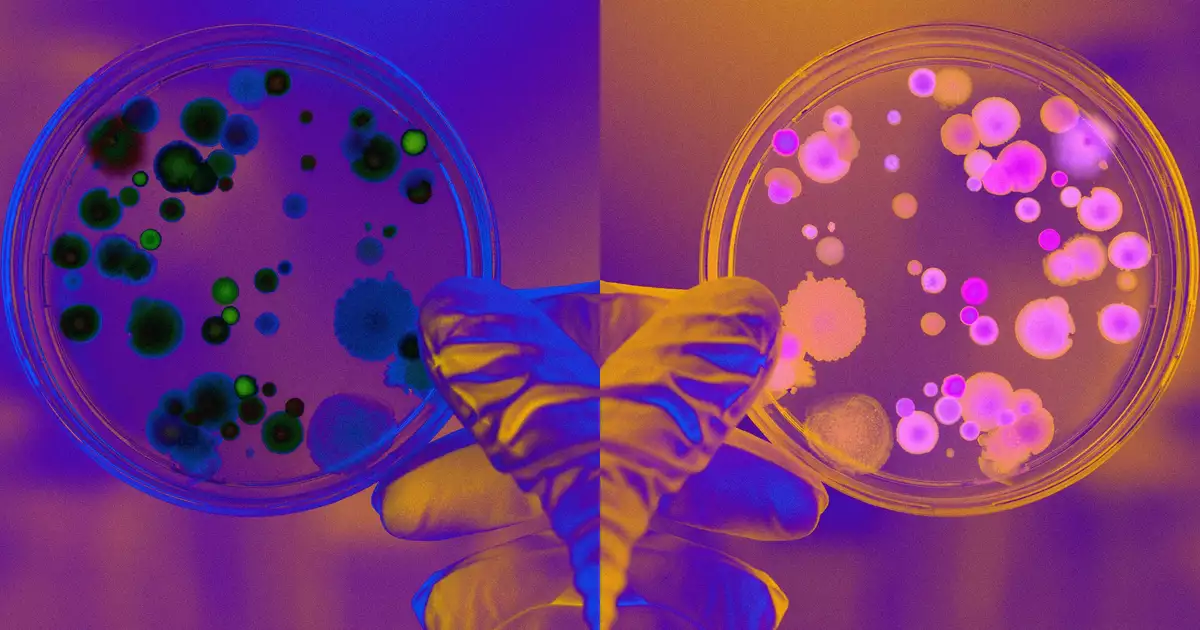

The Allure and Anxiety of Mirror Life: Synthetic Biology’s Next Frontier
In the grand halls of Manchester’s recent scientific conclave, a subject once relegated to speculative fiction—mirror life—emerged as a flashpoint for both promise and peril. The debate was not merely academic. At stake is the future of biotechnology itself: a world where molecules are their own reflections, where D-amino acids and L-sugars, the mirror images of life’s canonical building blocks, could upend our understanding of medicine, manufacturing, and even planetary risk.
This is not the stuff of distant possibility. The convergence of plummeting DNA synthesis costs, democratized genome editing via CRISPR, and the accelerating intelligence of AI-driven protein design has thrust reverse-chirality biology from the margins into the mainstream. As researchers at the conference noted, the technical barriers that once seemed insurmountable—assembling mirror DNA, synthesizing short oligomers—are eroding, albeit slowly. Yet, as the Stanford report and several high-profile scientists warned, the very properties that make mirror organisms invisible to natural enzymes and immune systems also render them potential bio-threats of unprecedented subtlety.
Synthetic Biology’s Dual-Edged Sword: Promise and Peril
The core tension animating the mirror life debate is its profound orthogonality. Mirror molecules are, by definition, unrecognizable to the enzymes and immune pathways that govern conventional biology. This duality offers:
- Therapeutic Resilience: Mirror peptides, for example, resist enzymatic degradation, potentially enabling longer-lasting, lower-dose drugs. Should mirror ribosomes become a reality, the prospect of wholly orthogonal genetic codes could insulate pharmaceutical production from viral contamination—a tantalizing vision for biologics manufacturers.
- Manufacturing Disruption: Scaling up mirror macro-biologics, however, is a formidable challenge. Current chiral-switch chemistry operates at gram to kilogram scales; true industrialization would require bespoke fermentation or cell-free systems, demanding capital investment reminiscent of early monoclonal antibody plants.
- Toolchain Spillover: The race to develop enantiomer-specific sensors and diagnostics could catalyze advances in quantum sensing and materials science, where chirality governs optical and electronic behaviors.
Yet, these same properties evoke unease. Mirror organisms could evade standard disinfectants and containment protocols, raising the specter of bio-escape scenarios that current biosafety levels (BSL 1–4) are ill-equipped to address. Insurance premiums for labs working with non-canonical biology have already risen by double digits, and actuaries now explicitly model for “bio-escape” events.
Navigating the Market and Regulatory Labyrinth
The economic signals are unmistakable. Venture funding in platform biology rebounded 27% through 2023, with investors hungry for “white-space” modalities that promise decades-long intellectual property moats. In pharma, a successful mirror therapeutic could command gross margins exceeding 85%, shielded from competition by its very orthogonality. In agriculture, mirror-encoded pesticides might evade microbial breakdown, but their environmental persistence echoes the regulatory backlash faced by neonicotinoids.
Regulatory frameworks, however, lag behind. Neither the U.S. Export Administration Regulations nor the Wassenaar Arrangement currently classify reverse-chirality reagents as dual-use technologies, though lobbying from both bio-defense and pharmaceutical quarters is intensifying. The ethical dimension is equally fraught: some researchers, recalling the exodus from gain-of-function virology, are already abandoning mirror biology, prompting boards to brace for potential talent and reputational churn.
Strategic Imperatives for the Next Decade
For leaders navigating this uncharted terrain, a few non-obvious connections merit attention:
- Cyber-Bio Convergence: The fusion of automated synthesis platforms with cloud-based design tools introduces cyber-physical breach risks, where mirror constructs could be produced remotely and undetected.
- Supply Chain Resilience: Mirror enzymes, capable of degrading specific plastics, may offer ESG-driven firms a strategic edge in circular-economy initiatives.
- Geopolitical Stakes: Mirror biology is poised to become both shield and spear in next-generation biothreat deterrence, echoing the research-procurement dynamics seen in hypersonics and advanced defense technologies.
Actionable steps are emerging. Forward-looking organizations are horizon-scanning grant pipelines for mirror-life research, establishing dual-use governance boards, and investing in containment innovations—from UV-induced racemization chambers to blockchain-logged synthesis. Insurers and reinsurers are scenario-planning for worst-case escapes, while talent strategies increasingly target chirality specialists from quantum chemistry and materials science.
Mirror life remains technically nascent, but the strategic calculus is shifting. As synthetic biology’s cost curves steepen and post-pandemic biosecurity vigilance intensifies, the field is poised to become a defining test of governance, innovation, and foresight. For those who can balance risk and reward, mirror biology may yet transform from a theoretical hazard into a controllable—and profoundly lucrative—platform.

 By
By


 By
By
 By
By

 By
By
 By
By