
The Quiet Power of Iconography: Microsoft’s Office Redesign as Strategic Signal
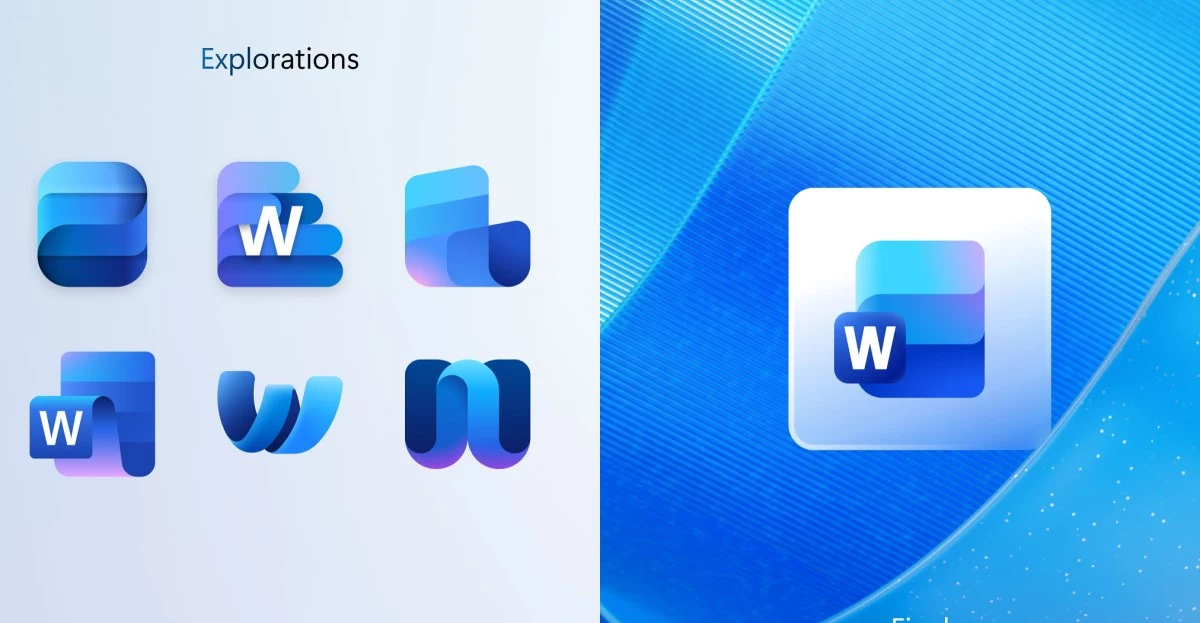
In a digital landscape where attention is fleeting and brand loyalty is hard-won, Microsoft’s sweeping redesign of its Office suite icons is far more than a cosmetic flourish. The global rollout—touching Word, Excel, PowerPoint, Teams, Outlook, OneNote, OneDrive, and beyond—arrives with a conspicuous transparency: the company has publicly shared not just the final, high-saturation, rounded-corner icons, but also a trove of discarded, experimental concepts. This rare glimpse into the design process signals a new era where visual language is wielded as strategic capital.
Iconography as a Lever of Experience and Brand Equity
Microsoft’s decision to treat iconography as a core layer of the product experience stack is a calculated move. The unveiling of the full design journey is not mere showmanship; it is a bid for authenticity in an age when both enterprise buyers and creative consumers demand substance behind the surface. Icons, once relegated to the realm of afterthought, now function as micro-logos—appearing hundreds of times per user, per day. In this context, consistency and clarity are not just aesthetic virtues but economic assets.
- Subscription Retention: In the SaaS economy, visual refreshes are a proven lever for user retention. A modernized look resets the perceived “age” of a product, supporting pricing resilience and renewal rates for Microsoft 365.
- Market Positioning: The emergence of two distinct icon sets—letter-centric on Windows, letter-free on iOS—signals a nuanced segmentation strategy. On mobile, where Office competes with consumer-first rivals like Google Workspace and Notion, the letterless icons subtly detach the suite from its desktop legacy, inviting a broader, global audience.
- Investor Confidence: For institutional investors, the intangible asset value of a unified, instantly recognizable visual system cannot be overstated. Brand equity accrues not just from logos, but from the everyday touchpoints that icons represent.
Engineering Icons for a Fractured, Multiplatform World
The technical underpinnings of Microsoft’s new iconography reveal a deep investment in platform neutrality and future-proofing. Built atop the Fluent Design System, the icons are optimized for variable pixel densities, dark and light modes, and animated states—a necessity in an era of foldables, ultra-wide monitors, and mixed-reality headsets.
- Vector-First Approach: By prioritizing vector graphics, Microsoft ensures icons remain crisp across the ever-expanding array of device form factors.
- Tokenization: Separating glyphs from letters allows for dynamic adaptation—regional alphabets, animated overlays for AI status, and more—without duplicating assets.
- Unified Experience: Fluent Design bridges legacy Win32, UWP, Web, and iOS codebases. This convergence reduces cognitive friction for users who move fluidly between native apps, PWAs, and Teams-embedded mini-apps.
The impact on accessibility and localization is equally profound. Letterless icons sidestep Latin-alphabet bias, declutter small screens, and facilitate global scaling. Color-coded clusters not only aid neurodiverse users but also align with WCAG contrast standards, meeting enterprise accessibility mandates. Even subtle tweaks—like reducing the Word icon’s bar count—reflect research-driven refinements that improve user way-finding and task-switching efficiency.
Strategic Implications for the Next Wave of Digital Transformation
For executive decision-makers, Microsoft’s icon overhaul offers a blueprint for the future of digital brand surfaces. Icons are poised to evolve from static identifiers to adaptive status beacons, capable of signaling live presence, AI-generated context, and more. Organizations must audit their own design systems for readiness—investing in design-ops tooling, version control, and tokenized assets to avoid fragmentation as device diversity accelerates.
- Design Infrastructure: Enterprises building customer-facing software should budget for cross-platform component libraries and design tokens, recognizing the rising ROI of robust design operations.
- Feature Velocity: Historically, Microsoft pairs UI refreshes with substantive capability rollouts. The current icon update likely foreshadows deeper AI integrations and document-format shifts—CIOs should scrutinize API roadmaps for potential integration or compliance impacts.
- Competitive Signaling: Microsoft’s visual narrative will not go unnoticed. Rivals like Google, Apple, and Adobe are likely to respond, potentially ushering in a new wave of brand simplification and ecosystem plays.
The Office icon redesign, then, is not merely fresh paint. It is a design-driven maneuver, tightly aligned with subscription economics, global reach, and the coming age of AI-centric workflows. For organizations navigating the crosscurrents of platform unification and user retention, the lesson is clear: visual system upgrades are strategic investments, not aesthetic indulgences. The future belongs to those who see design not as ornament, but as infrastructure.

 By
By
 By
By

 By
By
 By
By