
Agent Mode: Microsoft’s Calculated Leap Toward Poly-Model Productivity
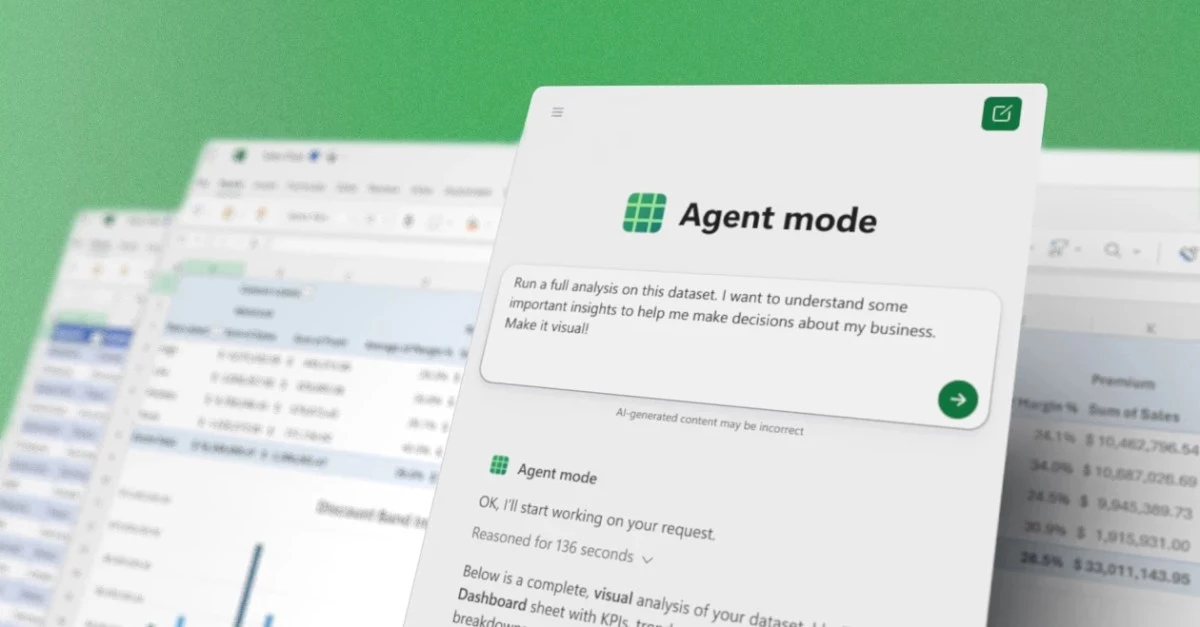
In a move that signals both technical ambition and strategic acumen, Microsoft has unveiled “Agent Mode” for Excel and Word as part of its expanding Microsoft 365 Copilot suite. This isn’t just another AI feature bolted onto legacy software; it’s a deliberate reimagining of how knowledge work is orchestrated, decomposed, and ultimately, executed. At the heart of Agent Mode is a poly-model architecture—primarily leveraging OpenAI’s GPT-5 for logic-intensive spreadsheet operations, while Anthropic’s models power the new Office Agent for conversational, cross-application tasks. The result is a nuanced, step-wise approach to automation that promises transparency and auditability, two qualities long absent from the generative AI landscape.
The Poly-Model Bet: Strategic Diversification in AI Workflows
Microsoft’s embrace of model heterogeneity is both a technical and regulatory hedge. By deploying GPT-5 for granular, formula-driven tasks in Excel and Anthropic’s models for summarization and narrative structuring, the company is signaling a future where productivity is not shackled to a single foundation model. This poly-model stance is more than an engineering curiosity—it’s a philosophical wedge against Google’s “Gemini for Workspace” monoculture, and a direct response to mounting regulatory scrutiny around AI vendor lock-in.
Key elements of this strategy include:
- Transparent Step Tracing: Agent Mode’s sidebar exposes each intermediate operation, narrowing the notorious “black-box” gap of generative AI. This transparency is not just a feature—it’s a compliance enabler, addressing the auditability mandates emerging from the EU AI Act and U.S. federal guidance.
- Model-Specific Task Allocation: By matching the right model to the right cognitive workload, Microsoft is optimizing both performance and reliability, a necessity as enterprise adoption of AI deepens.
- Regulatory Signaling: The inclusion of Anthropic’s models alongside OpenAI’s not only diversifies technical risk but also mitigates antitrust optics, a subtle but significant move as Microsoft’s AI alliances draw regulatory attention.
Performance, Productivity, and the Human-in-the-Loop Imperative
Early benchmarks position Agent Mode at 57.2% accuracy on the SpreadsheetBench test—an impressive leap over rival AI tools, yet still shy of human expertise. Microsoft’s own framing is refreshingly candid: Agent Mode is akin to a “first-year consultant”—fast, structured, but always in need of senior review. This sets a realistic ceiling for enterprise adoption, encouraging a workflow where AI drafts and human analysts validate, much as coding copilots have redefined software development.
Implications for enterprise workflows:
- Human-in-the-Loop Validation: Agent Mode drafts, analysts review—a pattern that will likely persist until accuracy reliably surpasses human baselines in mission-critical domains.
- Redefined Skills Matrices: Junior analysts will soon need fluency in prompt engineering and model critique, not just advanced Excel formulas. Upskilling budgets will need to pivot accordingly.
- Audit and Governance Readiness: With step-logs now available, organizations can integrate Agent Mode outputs into compliance frameworks, ensuring SOX and GDPR alignment as AI-generated content permeates downstream systems.
Economic Moats, Vendor Dynamics, and the Next Productivity Curve
Bundling advanced AI into the vast Microsoft 365 ecosystem is a textbook example of reinforcing the productivity moat. With 1.4 billion active licenses, Microsoft’s integration of Agent Mode raises switching costs for organizations contemplating neutral generative tools like Notion AI or Google Workspace Duet. The strategy is clear: differentiate not just on model horsepower, but on workflow depth and seamless orchestration.
Economic and strategic ramifications include:
- Subscription Elasticity: As Copilot’s feature density grows, Microsoft can justify premium pricing tiers—expect a bifurcation between core Copilot and a “Pro” tier with Agent Mode, driving ARPU expansion without disruptive headline price hikes.
- Cloud Capacity Signaling: Each Agent Mode session consumes dozens of GPT-5 or Anthropic calls, a tacit demonstration of Microsoft’s confidence in its AI-optimized Azure infrastructure and its ability to monetize GPU capacity internally.
- Vendor Negotiation Leverage: The rise of poly-model suites will empower CIOs to demand modular contracts, explicit SLAs on model substitution, and granular data residency guarantees.
The SaaS ecosystem will inevitably race to emulate these agentic UX patterns, but Microsoft’s proprietary access to deep Excel and Word object models remains an enduring advantage—one that’s unlikely to be replicated by upstarts or even established competitors.
Agent Mode is more than a technical upgrade; it’s an architectural pivot toward persistent, decomposed task execution—a shift that will define the next era of enterprise AI. For executives, the message is clear: those who proactively realign talent, governance, and vendor strategies around this agentic paradigm will not only capture early efficiency gains but also set the stage for more profound workflow reinvention as the technology matures.

 By
By
 By
By

 By
By
 By
By
 By
By

 By
By