

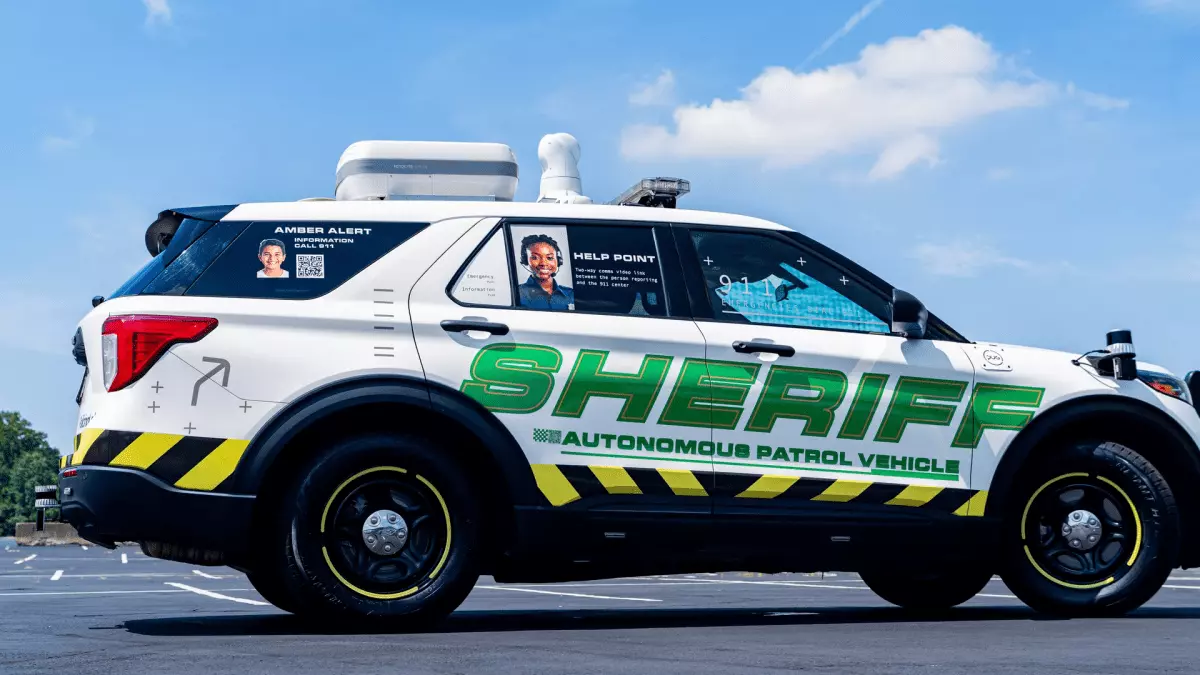

Miami-Dade’s Autonomous Patrol SUV: A New Chapter in Urban Policing
Miami-Dade County’s unveiling of the Police Unmanned Ground-vehicle Patrol Partner (PUG) marks a pivotal moment in the evolution of public safety technology. Positioned as the nation’s first autonomous patrol SUV, the PUG is not merely a feat of engineering—it is a live experiment at the intersection of advanced mobility, AI-driven surveillance, and the delicate social contract between law enforcement and the communities they serve.
The Anatomy of an Autonomous Patrol: Technology, Data, and Human Oversight
At its core, the PUG operates in a liminal space between SAE Level-3 and Level-4 autonomy. Unlike the urban robo-taxis now familiar in select American cities, the PUG’s operational domain is tightly geofenced, its routes pre-mapped, and its mission profile deliberately constrained to slow-speed perimeter patrols. This focus simplifies the technical challenge, yet the stakes are uniquely high: every decision, every detection, is freighted with legal and ethical implications.
The vehicle’s sensor suite—likely a fusion of lidar, radar, and high-resolution imaging—enables real-time AI vision, pushing analytics to the vehicle edge for immediate threat detection. The integration of thermal-equipped drones adds a vertical dimension to surveillance, but also broadens the system’s cyber-attack surface, raising the bar for CJIS compliance and evidentiary integrity.
Perhaps most consequential is the data architecture: continuous high-definition video streaming, biometric metadata tagging, and the specter of petabyte-scale annual storage per unit. Without disciplined data retention and privacy protocols, municipalities risk ballooning costs and exposure to regulatory liabilities, especially as biometric laws tighten in Illinois, California, the EU, and soon, at the federal level.
Economics, Labor, and the Business of Autonomous Policing
With a projected price tag of $150,000–$200,000 per unit, the PUG sits between the cost of a high-end police cruiser and a specialized bomb-disposal robot. Yet, the true cost of ownership extends well beyond the sticker price. LTE/5G data plans, cloud storage, and regular sensor recalibration add layers of recurring expense. At this pilot stage, labor substitution arguments are muted—the presence of a sworn officer in every vehicle is both a regulatory requirement and a social reassurance. Only when legal frameworks evolve to permit uncrewed patrols will the full economic calculus of automation come into play.
The broader market context is equally dynamic. Police robotics remains a nascent but fast-growing segment within the $4 billion global public-safety tech market, posting annual growth rates near 18%. A successful Miami deployment could validate the municipal business case, opening procurement channels for a new class of autonomous suppliers—many of whom currently focus on logistics or industrial automation.
Yet, fiscal pressures loom large. With municipal tax revenues sluggish and borrowing costs elevated, the initial philanthropic funding for the PUG pilot sidesteps immediate capital outlays, but any large-scale rollout will strain operating budgets unless offset by grants or asset forfeiture funds.
Societal Scrutiny, Policy Crossroads, and the Road Ahead
The PUG’s most profound challenges may not be technical but societal. Miami-Dade is, in effect, conducting a legitimacy A/B test on behalf of the nation’s 18,000 law enforcement agencies. Community trust, not engineering prowess, will determine the pace and scale of adoption. The specter of “surveillance capitalism”—already the subject of litigation and legislative scrutiny—casts a long shadow. As the EU’s AI Act and U.S. privacy frameworks evolve, the imperative for privacy-by-architecture and transparent governance grows ever more acute.
Labor relations add another layer of complexity. Police unions may see the PUG as both a safety enhancer and a potential threat to headcount, prompting negotiations focused on redeployment rather than outright displacement. Meanwhile, the absence of standardized auditing for AI false positives poses evidentiary risks, with prosecutions potentially vulnerable to legal challenge.
For municipal leaders and technology executives, the implications ripple outward:
- Insurance and Actuarial Modeling: Autonomous patrol data could reshape municipal risk profiles, potentially lowering liability premiums.
- Real Estate Economics: Enhanced perceptions of safety may buoy property values, creating tangible externalities that help justify investment.
- Inter-Agency Synergy: Data harvested by PUGs could inform urban planning, traffic management, and even public works, multiplying the return on investment.
Strategic Imperatives for an Autonomous Future
As Miami-Dade’s PUG pilot unfolds, several strategic imperatives emerge for decision-makers:
- Model Total Cost of Ownership: Data lifecycle costs often eclipse initial vehicle investment within three years.
- Negotiate Open-API Standards: Ensuring interoperability and avoiding vendor lock-in is critical as the ecosystem matures.
- Establish Ethics Oversight: Early engagement with civil society can inoculate deployments against backlash.
- Track Comprehensive KPIs: Beyond incident detection, metrics must include response times, false-alarm rates, and community sentiment.
The Miami-Dade PUG is not simply a technological moonshot—it is a crucible for the future of public safety, where the interplay of data stewardship, regulatory foresight, and public legitimacy will determine whether autonomous policing becomes a pillar of urban life or a cautionary tale. For those at the vanguard of mobility, AI, and civic infrastructure, the lessons emerging from this pilot will echo far beyond the streets of Miami.


 By
By
 By
By

 By
By

 By
By
 By
By







