
When a Wu-Tang Album Becomes a Trade Secret: The New Frontier of Intangible Asset Law
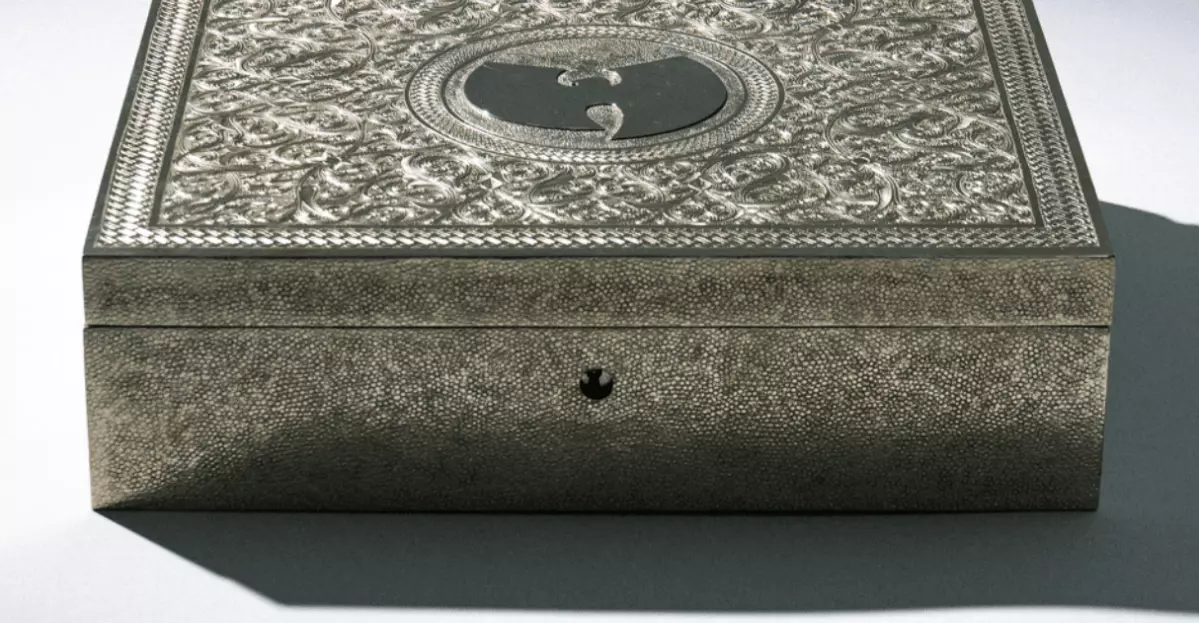
In a ruling that reverberates far beyond the rarefied air of hip-hop collectibles, a U.S. District Court has allowed PleasrDAO’s lawsuit against Martin Shkreli to proceed under a “misappropriation of trade secrets” theory. The Wu-Tang Clan’s *Once Upon a Time in Shaolin*—a singular artifact, notorious as much for its mythos as its music—has been deemed, at least for now, a trade secret. The court’s logic: meaningful efforts to restrict access, and a value proposition rooted in secrecy. This is not just a legal curiosity; it is a harbinger for how the world’s most valuable assets—intangible, digital, and infinitely reproducible—will be protected, monetized, and fought over in the years to come.
The Legal Alchemy of Scarcity and Secrecy
The decision to treat a musical work as a trade secret marks a profound expansion of the doctrine. Historically, trade secrets were the province of industrial formulas, source code, or business methods—assets whose value was presumed to vanish the moment they slipped into the public domain. By drawing *Shaolin* into this orbit, the court blurs the lines between copyright and trade secret, suggesting that any asset whose value is predicated on controlled access—whether it’s an unreleased album, a proprietary AI model, or a confidential marketing campaign—may now find shelter under trade-secret statutes, provided the right secrecy protocols are in place.
This jurisprudential shift brings with it a formidable enforcement toolkit. Trade-secret law offers not just the prospect of damages, but powerful injunctive relief and, crucially, extraterritorial reach. For technology firms, luxury brands, and decentralized collectives, this could mean a new era of legal leverage—one where the scarcity premium is not just a marketing flourish, but a balance-sheet line item subject to audit, insurance, and litigation.
- Scarcity as Asset Class: The $4 million paid by PleasrDAO for the Wu-Tang master was not just a bet on music, but on engineered exclusivity. As cultural and digital assets are increasingly fractionalized and tokenized, the ability to maintain secrecy—and thus the scarcity multiple—becomes a matter of financial engineering as much as artistic curation.
- Liquidity vs. Exclusivity: For DAOs and other decentralized entities, the leakage of a digital asset erodes both community trust and asset valuation, underscoring the need for professional-grade digital-rights management within governance protocols.
Technology, Governance, and the Limits of Blockchain
The paradox of blockchain is that while it can prove ownership, it cannot, on its own, prevent duplication. The Shkreli case exposes this fault line: provable provenance is only as valuable as the off-chain controls that prevent unauthorized copying. Expect a surge in investment around interoperable DRM layers—watermarking, secure enclaves, and zero-knowledge access gates—that can complement blockchain’s strengths. For DAOs, the challenge is existential: can a community-governed entity enforce secrecy with the rigor of a traditional corporation?
Regulators are watching. PleasrDAO’s legal posture is functionally equivalent to a special-purpose vehicle, and its ability to safeguard IP will serve as a litmus test for the legitimacy of decentralized governance. As intangible assets outpace tangibles in global GDP, the question of who can protect, collateralize, and securitize digital scarcity is no longer academic—it is foundational.
Strategic Playbook for the Intangible Economy
The implications of this ruling ripple across industries:
- Artists & Labels: Embed explicit trade-secret covenants in contracts for ultra-limited works or NFT launches. Invest in forensic monitoring to detect leaks early.
- Technology Providers: Prioritize secure enclave deployment, hardware-rooted DRM, and blockchain-agnostic verification. The total addressable market now includes cultural IP, not just software.
- Investors & Insurers: Move beyond chain-of-title to scrutinize chain-of-custody. Price in enforcement uncertainty and reputational risk; expect demand for new insurance products covering leakage-triggered business interruption.
- Policymakers: Prepare to update trade-secret statutes for the digital era and anticipate cross-border enforcement challenges as digital assets proliferate.
The court’s willingness to treat a music album as a trade secret is more than a curious footnote in the saga of Martin Shkreli—it is a signal that the legal, technological, and economic infrastructure for protecting digital scarcity is being built in real time. For those navigating the frontier of intangible assets, the mandate is clear: secrecy, governance, and provenance are no longer ancillary concerns—they are the core of value creation and preservation. The winners in this new landscape will be those who can orchestrate legal, technical, and economic levers with the precision of a master producer, turning ephemeral exclusivity into enduring advantage.

 By
By
 By
By

 By
By
 By
By

 By
By
 By
By