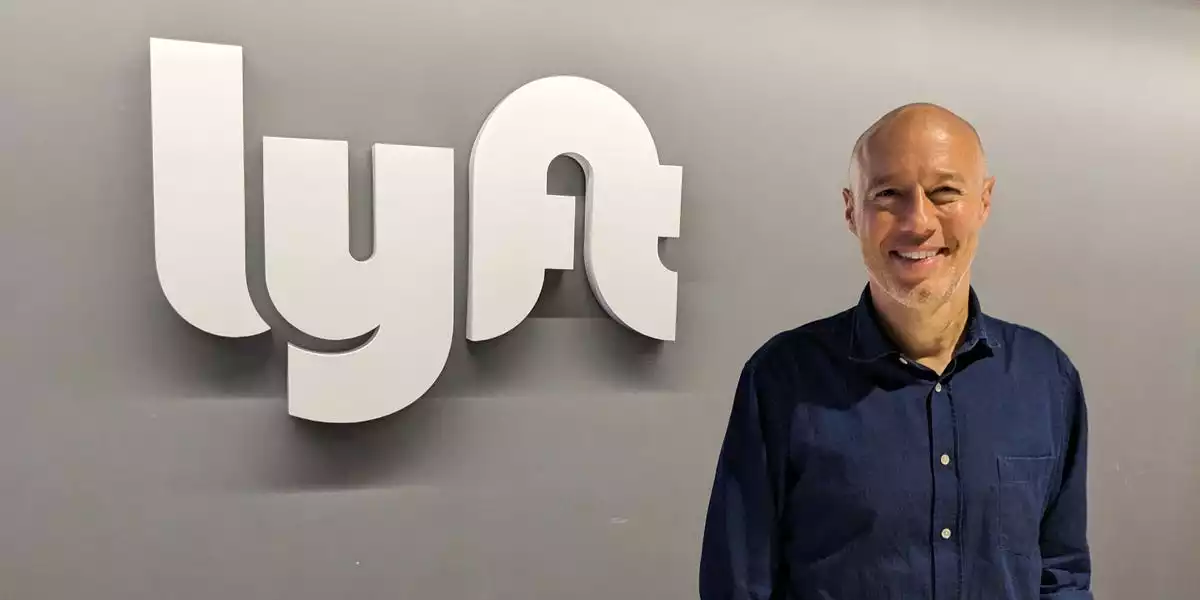

The CEO in the Driver’s Seat: Operational Intimacy as Lyft’s Competitive Edge
In the high-stakes world of ride-hailing, where regulatory headwinds and shifting consumer sentiment threaten to upend established models, Lyft’s CEO David Risher has inaugurated a new era of leadership intimacy. His so-called “Falcon Mode”—a practice of regularly driving for Lyft, personally chairing product reviews, and arbitrating pivotal decisions—compresses the distance between boardroom strategy and street-level reality. This approach is less a publicity stunt than a deliberate feedback mechanism, institutionalizing a living loop between customer experience and capital allocation. In an industry often accused of algorithmic detachment, Risher’s hands-on style signals a directional bet: that operational empathy can be engineered into competitive advantage.
Strategic Feedback Loops: Lessons from the Factory Floor
Risher’s model is not without precedent. Echoes of Amazon’s “single-threaded leader” concept and Toyota’s Genchi Genbutsu—“go and see”—resonate through Falcon Mode’s DNA. Yet, such managerial immersion is rare among public tech companies at Lyft’s scale. By personally presiding over tie-breaking decisions, Risher accelerates organizational velocity, reducing the friction and ambiguity that often paralyze large firms. This compression of the decision cycle, however, is a double-edged sword. Concentrated authority can catalyze innovation but also introduces the risk of single-point failure, necessitating robust governance frameworks to maintain checks and balances.
The cultural signaling is equally potent. When the CEO dons the driver’s jacket, it sends a message to regulators, labor advocates, and employees alike: Lyft’s leadership is not insulated from the platform’s daily realities. In an era where empathy is increasingly valued as a metric of executive performance, this low-cost, high-impact gesture reframes the narrative—suggesting that policy is guided by lived experience, not just by data science and spreadsheets.
Economic Realities and the Battle for Margin
Lyft’s operational intimacy is not merely symbolic. It is a calculated response to the economic and competitive pressures reshaping the ride-hailing landscape:
- Pricing Elasticity and Predictability: Features like Price Lock and recalibrated Prime Time surge pricing are designed to insulate riders from volatility, a hedge against churn as inflation compresses discretionary spending. Predictable fare bands may become a vital differentiator as consumer confidence wanes.
- Driver Retention Economics: First-hand exposure to the pain points of gig workers could translate into lower turnover—a significant lever, given that even a modest reduction in churn (10–15%) could recapture 40–60 basis points of margin otherwise lost to onboarding and incentive costs.
- Capital Allocation Discipline: A CEO steeped in product minutiae is more likely to steer R&D toward incremental, density-boosting features rather than speculative autonomy moonshots—a tacit admission of the capital constraints that define the post-ZIRP (zero interest rate policy) era.
This approach also sharpens Lyft’s technological edge. Direct observation enriches the platform’s data fidelity, providing qualitative nuance to complement quantitative telemetry. Such synthesis can improve machine-learning models for ETA accuracy and demand forecasting—domains where Lyft still trails its larger rival, Uber.
Navigating Regulatory Crosswinds and Shifting Expectations
The regulatory environment for gig platforms is tightening. As the U.S. Department of Labor moves to finalize rules that could reclassify gig workers, Risher’s field immersion humanizes Lyft’s stance, potentially softening the regulatory posture or buying goodwill at the negotiating table. The narrative of a CEO who experiences the platform’s challenges firsthand is a powerful counterweight to accusations of corporate detachment.
- Marketplace Liquidity: Regular driving embeds the CEO in the micro-markets where liquidity imbalances surface first, providing an early warning system that dashboards may miss.
- Insurance and Risk: CEO-level exposure to ride incidents can inform real-time actuarial adjustments, a subtle but potent lever for margin expansion under Lyft’s captive insurance structure.
- AI Ethics and Transparency: As dynamic pricing models become more opaque, empathetic leadership may preempt public backlash, reinforcing trust in an era of algorithmic complexity.
For investors and partners, the metrics to watch are clear: driver churn, repeat-ride frequency, and average basket size in high-commute corridors. For policymakers, Falcon Mode offers a living laboratory—an empirical sandbox for testing the real-world impacts of gig-economy regulation.
The Road Ahead: Scaling Empathy in a Data-Driven Age
Lyft’s Falcon Mode is more than a CEO anecdote; it is a strategic doctrine for an era where data science and human empathy must converge. If institutionalized—by rotating senior leaders through similar “ride-along sprints”—the approach could yield cost efficiencies, regulatory goodwill, and product differentiation. As capital becomes dear and regulatory scrutiny intensifies, the companies that survive will be those that can translate operational intimacy into measurable outcomes. In this volatile arena, the distance between the C-suite and the street may prove to be the most important metric of all.

 By
By
 By
By
 By
By
 By
By
 By
By


 By
By