
A newcomer’s lens on Puerto Rico’s lived reality—and its investable gaps
Jared Ranahan’s move from Massachusetts to Puerto Rico in September 2024 reads less like a relocation diary and more like a field report from a U.S. jurisdiction where quality of life, infrastructure reliability, and economic policy collide in real time. His account is notably balanced: deep appreciation for the island’s natural beauty, community warmth, and cultural vibrancy sits alongside repeated encounters with systemic friction—power outages (“apagones”), water interruptions, bureaucratic complexity, car dependence, and visible gentrification pressure.
For business and technology leaders, the significance is not the novelty of these issues—Puerto Rico’s grid fragility and post-hurricane recovery have been widely documented since Hurricane Maria (2017) and Hurricane Fiona (2022). The value is the specificity of how these constraints shape daily behavior and market demand. When households normalize backup power, when cisterns become standard household infrastructure, and when administrative processes require multi-office navigation, the island effectively becomes a living laboratory for decentralized resilience, GovTech modernization, and inclusive development.
This is the duality Ranahan captures: Puerto Rico is both a place of extraordinary cultural and ecological assets and a place where the “basic” assumptions of mainland living—always-on electricity, predictable water service, seamless government transactions—cannot be taken for granted.
Energy resilience after “apagones”: why decentralization is becoming the default
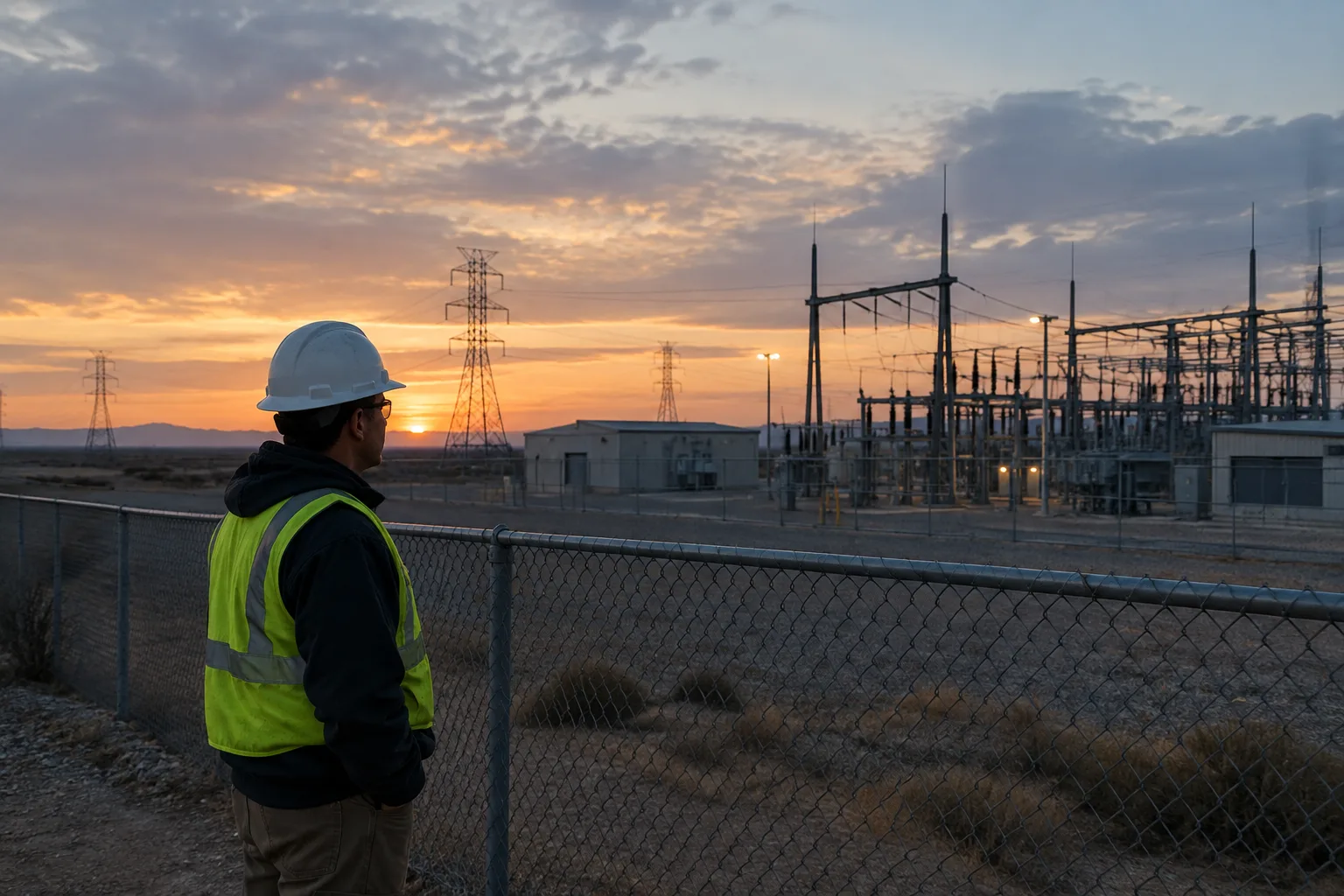
Chronic outages are not merely an inconvenience; they are a market signal. A grid that fails frequently creates demand for solutions that can operate independently of centralized infrastructure. In Puerto Rico, that demand is increasingly aligned with distributed energy resources (DERs), including solar PV, battery storage, and microgrids—systems that can island themselves during failures and restore power locally.
Several forces make this moment strategically important:
- Climate and disaster exposure: Hurricanes and extreme weather do not just damage assets; they amplify the cost of downtime for households, hospitals, retailers, and manufacturers.
- Deferred maintenance and underinvestment: Aging transmission and distribution systems create recurring reliability issues that are expensive to solve purely through traditional utility upgrades.
- Federal policy tailwinds: Incentives and funding pathways associated with the Infrastructure Investment and Jobs Act (IIJA) and Inflation Reduction Act (IRA) can improve project economics for resilience upgrades, storage deployment, and grid modernization.
For investors and operators, the most bankable near-term pathway is often not a single, island-wide overhaul, but modular deployments that prove performance quickly: microgrid pilots for critical facilities, neighborhood-scale solar-plus-storage, and resilience-as-a-service models that bundle hardware, financing, and monitoring. If early projects demonstrate measurable reductions in outage impact and operating costs, they can de-risk larger capital programs and attract blended finance.
Puerto Rico’s energy challenge, in other words, is also a platform: a place where distributed infrastructure can move from “alternative” to “mainstream” faster than in markets where the grid still feels invisible.
Water interruptions and the rise of “off-grid” household infrastructure
Ranahan’s mention of frequent water shutoffs—and the practical reliance on cisterns—highlights a parallel story: water security is being decentralized by necessity. Aging distribution networks and service interruptions push households and businesses toward self-managed storage, effectively creating a shadow layer of infrastructure outside the formal system.
That reality opens a technology and planning opportunity: turning isolated cisterns into a more intelligent, coordinated ecosystem. Practical building blocks include:
- IoT-enabled leak detection and pressure monitoring to reduce losses and identify weak points in distribution
- Smart pumps and usage analytics that help households manage supply while generating anonymized demand signals
- Rainwater harvesting integration to reduce dependence on intermittent municipal supply, particularly in suitable microclimates
For utilities and policymakers, the strategic shift is to treat decentralized storage not as a workaround to ignore, but as an asset class to integrate. A two-tier model—municipal supply plus networked household storage—could improve resilience while providing data for more targeted infrastructure investment. In capital-constrained environments, measurement and prioritization can be as valuable as new pipes.
Bureaucracy, mobility, and housing: the operational frictions shaping growth
Ranahan’s experience navigating resident identification and administrative processes points to a broader competitiveness issue: regulatory friction is an economic tax. Even within U.S. jurisdiction, fragmented workflows and in-person dependencies can slow onboarding for residents, entrepreneurs, and investors. This is where GovTech becomes more than modernization theater; it becomes a productivity lever.
A credible transformation agenda would emphasize:
- Unified digital identity and e-KYC to reduce repetitive verification across agencies
- End-to-end online licensing and permitting with clear status tracking
- Secure records and interoperability (potentially including tamper-evident registries) to reduce disputes and delays
Mobility constraints form the other half of daily operational reality. Heavy reliance on private cars, combined with deteriorating roads and limited transit outside metro corridors, constrains labor access and raises logistics costs. This creates room for microtransit, ride pooling, and mobility-as-a-service models designed for rural and peri-urban conditions—solutions that can expand connectivity without waiting for capital-intensive road expansion.
Then there is the most politically sensitive vector: real estate. Ranahan’s caution about gentrification aligns with broader concerns tied to tax incentive-driven inflows (often associated with Acts 20/22) and rising demand in coastal and historic neighborhoods. Without credible affordability mechanisms, price inflation can translate into displacement risk, cultural erosion, and backlash that ultimately increases regulatory uncertainty.
Policy and market tools that can balance growth with inclusion include:
- Mixed-income housing requirements in high-demand zones
- Community land trusts to preserve long-term affordability
- Targeted support for local ownership and small businesses to keep value creation anchored in communities
Puerto Rico’s long-term investability will depend not only on returns, but on whether growth is perceived as legitimate by residents who carry the daily burden of infrastructure instability.
Culture as economic infrastructure: turning authenticity into durable advantage
Ranahan’s enthusiasm for chinchorros, Cabo Rojo birdwatching, and local food culture underscores a final point often underestimated in infrastructure-heavy narratives: culture is an economic engine when it is productized responsibly. Experiential tourism and eco-tourism can capture higher-value travelers, distribute spending beyond the most saturated corridors, and reinforce local entrepreneurship—if digital discovery and booking tools make these experiences accessible without commoditizing them into sameness.
The most durable strategy is not mass replication but curation: hyperlocal itineraries, locally guided experiences, and storytelling that differentiates Puerto Rico from other Caribbean destinations. Done well, this becomes a form of soft infrastructure—one that compounds value while preserving identity.
Ranahan’s account ultimately frames Puerto Rico as a place where patience is not just a personal virtue but an operational requirement. For technology providers, investors, and policymakers, the island’s challenges are not abstract—they are daily, measurable, and solvable. The next chapter will be written by those who can modernize energy, water, and government services while treating social cohesion and cultural heritage not as externalities, but as core inputs to sustainable growth.

 By
By
 By
By
 By
By
 By
By
 By
By


 By
By