

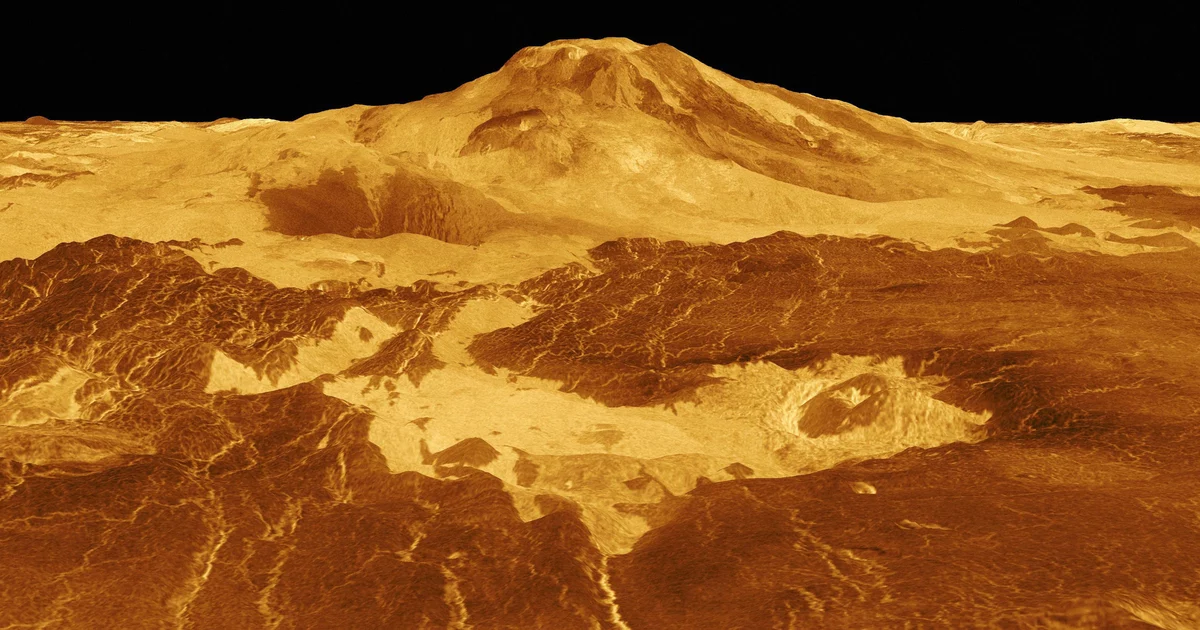

Venusian Lava Tubes: A New Frontier for Planetary Science and Industrial Innovation
The recent confirmation of vast lava-tube systems beneath the Venusian surface, as unveiled by University of Padova researchers at the Europlanet Science Congress, marks a profound turning point in planetary geology and the broader technological landscape. These subterranean conduits, whose volumes may eclipse those of the Moon, challenge long-held assumptions about the interplay between gravity and volcanic architecture. The revelation that Venus—despite its Earth-like gravity—hosts such colossal voids compels a re-examination of the geologic forces sculpting not only our planetary neighbors but also the early Earth and distant exoplanets.
Rethinking Planetary Geology: Beyond Gravity’s Dominion
Traditional models have long posited a direct relationship between gravity and the maximum size of lava tubes. Yet, Venus’s extreme surface conditions—temperatures exceeding 450 °C and atmospheric pressures over 90 times Earth’s—rewrite this narrative. The new findings suggest that thermodynamic and rheological factors, rather than gravity alone, are the primary architects of these underground cathedrals. Venus thus emerges as a natural laboratory for studying basaltic volcanism under conditions unattainable on Earth, offering rare empirical data for reconstructing the geologic past of our own planet and informing the search for life-sustaining environments on rocky exoplanets.
The scientific case for ESA’s EnVision orbiter, set for a 2031 launch, is now stronger than ever. Its Sub-surface Radar Sounder, designed to peer through Venus’s dense atmosphere and map its hidden geology, will confront formidable engineering challenges. Operating at Venusian surface conditions demands breakthroughs in high-temperature electronics—silicon carbide (SiC) and gallium nitride (GaN) semiconductors—as well as robust heat-shield composites. The mission’s success will hinge on AI-assisted synthetic aperture radar (SAR) data fusion, a technological leap with far-reaching implications for edge computing and autonomous systems on Earth.
Industrial and Economic Ripples: From Space to the Factory Floor
The technological demands of Venusian exploration are already catalyzing innovation across multiple sectors:
- Component Hardening and Dual-Use Electronics:
The quest for electronics that can survive Venus’s inferno is accelerating the development of ruggedized components for geothermal, deep-well, and defense applications. These advances are projected to unlock adjacent markets valued at $3–5 billion over the coming decade.
- European Industrial Integration:
While aerospace giants such as Airbus and Thales Alenia Space will anchor the EnVision mission, the push toward extreme-environment sensors is distributing procurement across a vibrant ecosystem of European SMEs, fostering resilience and agility within the EU’s industrial base.
- Venture Capital and “Extreme Space”:
The focus on Venusian subsurface exploration is expanding investor appetite for subsurface robotics, metallurgical 3-D printing, and autonomous maintenance systems. ESA’s commitment to de-risking these technologies is drawing in blended finance models—public grants paired with ESG-oriented private capital—mirroring the surge in climate-tech investments.
Strategic Stakes and the Race for Extraterrestrial Leadership
Europe’s bold foray into Venusian science is not merely a technical endeavor; it is a calculated act of geopolitical signaling. By staking a claim on Venus, the European Space Agency positions itself as a counterweight to NASA’s Artemis lunar program and China’s lunar ambitions. This differentiation enhances Europe’s leverage in negotiating international mission partnerships and intellectual property arrangements.
The discovery of structurally stable, kilometer-scale voids on Venus also reopens debates on off-world property rights and safety protocols. The EU, with its regulatory acumen, is poised to shape the legal frameworks governing extraterrestrial subsurface usage—potentially setting precedents before private actors assert their own norms.
Earthly Benefits: Climate, Mining, and the Future of Infrastructure
The spillover effects of Venusian research extend well beyond the confines of planetary science:
- Climate-Tech Synergies:
Venus, as the archetype of a runaway greenhouse world, offers a cautionary tale for Earth. Detailed subsurface data will refine climate models, especially those concerning basalt-carbonate cycles, and inform policy on decarbonization. High-temperature robotics developed for Venus will directly benefit maintenance operations in solar-thermal plants and geothermal wells, enhancing the economics of renewable energy.
- Mining and Construction Analogues:
The algorithms honed for mapping Venusian lava tubes will improve automated ore-body detection and underground construction on Earth, potentially slashing exploratory drilling costs by up to 20%. Moreover, the study of naturally shielded cavities bolsters the case for subsurface habitats—knowledge that will be vital for future lunar and Martian outposts.
For decision-makers, these developments demand a recalibration of R&D portfolios toward advanced materials and high-temperature electronics, strategic engagement with ESA’s open-call programs, and proactive monitoring of emerging legal regimes. Upskilling analysts in AI-enabled SAR interpretation will yield dividends not only for planetary science but also for critical infrastructure and disaster monitoring on Earth.
The confirmation of Venusian lava tubes is not a mere scientific footnote; it is a clarion call for cross-sector innovation, a strategic lever in the evolving space race, and a timely prompt for industries and policymakers to recognize that the technologies forged for other worlds may well define the future of our own.

 By
By
 By
By

 By
By
 By
By

 By
By
 By
By







