


A New Era in Neutrino Science: JUNO’s Technological Mastery and Its Far-Reaching Ripples
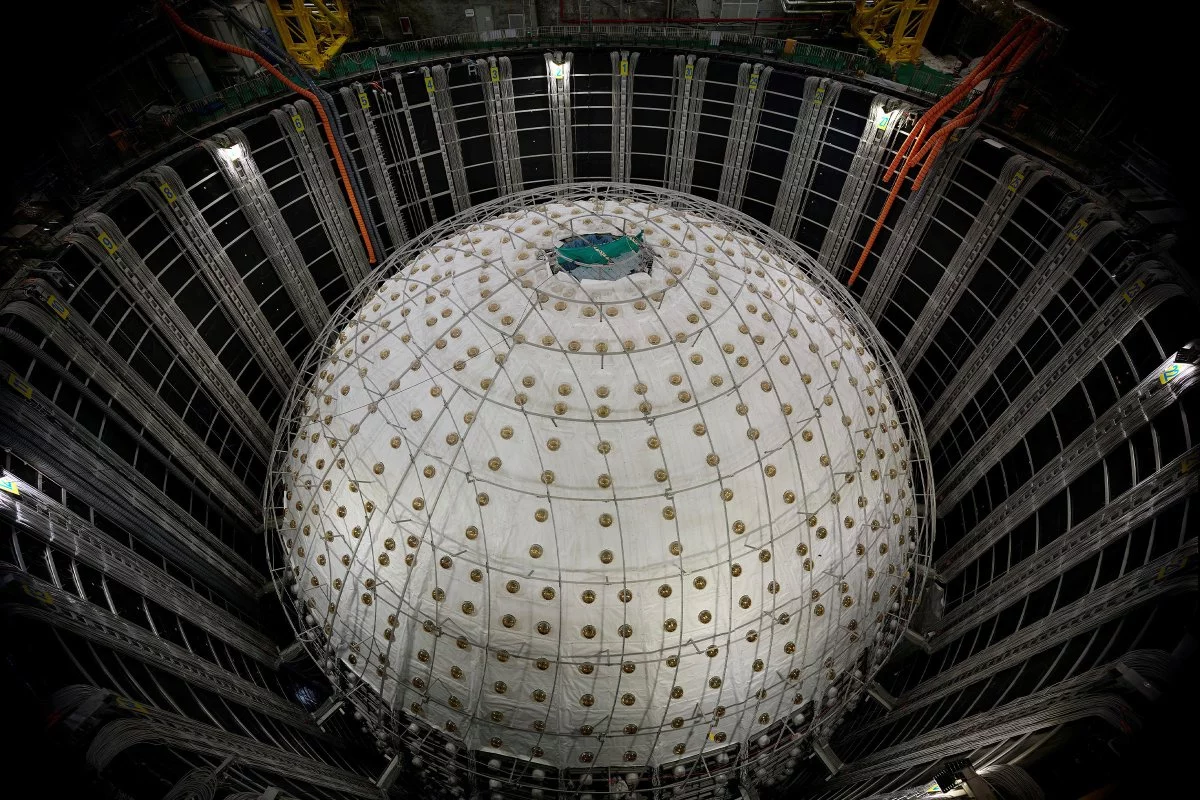
China’s Jiangmen Underground Neutrino Observatory (JUNO) has, in a matter of months, transformed itself from a decade-long engineering odyssey into a beacon of scientific achievement. With its 20,000-tonne liquid scintillator sphere and a lattice of over 43,000 photomultiplier tubes (PMTs), JUNO is not merely a testament to human ingenuity—it is a harbinger of how mega-science infrastructure can reshape technology, industry, and global power dynamics.
Deep-Tech Instrumentation: Pushing the Boundaries of the Possible
JUNO’s core is a marvel of precision and scale. The observatory’s ultra-large photodetection array, with quantum efficiencies surpassing 30%, sets a new benchmark for the industry. This leap is not confined to the realm of particle physics:
- Medical Imaging: The advanced PMTs developed for JUNO are poised to elevate the performance of PET scanners, promising sharper diagnostics and earlier disease detection.
- Satellite Optics and LIDAR: The manufacturing breakthroughs in alignment and sensitivity will ripple into aerospace and autonomous vehicle sectors, where signal fidelity is paramount.
The observatory’s data operations are equally audacious. Handling a staggering petabyte of raw data annually, JUNO’s real-time noise rejection and GPU-accelerated reconstruction pipelines offer a glimpse into the future of edge analytics. Industries grappling with low signal-to-noise environments—autonomous systems, industrial IoT, even financial anomaly detection—will find a blueprint in JUNO’s approach.
Materials science, too, finds itself transformed. The demand for ultra-pure acrylic and low-radioactivity dopants has forced supply chains to adopt standards rivaling those of semiconductor fabrication. The implications are profound: faster development cycles for battery electrolytes, more reliable photonic substrates, and a new class of high-purity industrial chemicals.
Calibration at the quantum scale—using laser-driven light diffusers and embedded radioactive sources—has yielded sub-percent energy resolution. These innovations are already being eyed by developers of quantum computing cryostats and advanced lithography, where precision metrology is the linchpin of progress.
Economic Reverberations: From Capex Efficiency to Industrial Spin-Offs
JUNO’s construction, achieved at a cost of approximately $350 million, sets a new global standard for cost-performance in scientific infrastructure. This figure undercuts Western equivalents by up to 40%, establishing a new baseline for future mega-science projects and forcing funding agencies to recalibrate their expectations for return on investment.
The industrial aftershocks are already being felt:
- Optoelectronics Supply Chains: Chinese PMT manufacturers now rival, and in some cases surpass, their Japanese counterparts in quality. This shift complicates procurement strategies for sectors as diverse as defense, aerospace, and telecommunications.
- Data Infrastructure: The necessity of on-site, high-performance computing has catalyzed the growth of regional digital-economy parks. These installations, subsidized by local governments, are laying the groundwork for future hyperscale cloud deployments.
- Commercialization Pathways: Techniques honed in neutrino detection are migrating into fields such as remote reactor monitoring (with implications for nuclear non-proliferation), subterranean resource mapping, and even deep-space communication. Each represents a market opportunity measured in billions.
Geopolitical and Strategic Dimensions: Science as a New Arena of Influence
JUNO’s success is not merely a scientific milestone; it is a strategic statement. By investing heavily in marquee laboratories, Beijing signals its ambition to set the global research agenda, mirroring its Belt-and-Road strategy but in the intellectual domain. This raises the specter of scientific “decoupling,” as Western institutions grapple with questions of access and reciprocity.
Yet, the project’s multinational author list—spanning 700 researchers across 17 countries—demonstrates that, at least for now, the pursuit of fundamental knowledge can bridge geopolitical divides. The mobility of talent, however, remains a live issue, with shifting visa regimes threatening to repatriate critical skills and disrupt collaborative networks.
Perhaps most consequential is the question of standards leadership. The precision data emerging from JUNO will feed directly into global particle physics models, shaping everything from astrophysics to satellite navigation and climate simulation. Whoever controls these foundational datasets wields disproportionate influence over the scientific and technological future.
Strategic Takeaways for Industry and Policy Leaders
For executives and policymakers, JUNO’s early triumphs are a clarion call:
- Monitor Component Breakthroughs: Firms in imaging, sensing, or quantum technologies should track JUNO-driven advances—high-QE PMTs, low-noise amplifiers—as prime acquisition or licensing targets.
- Rethink Data Infrastructure: JUNO’s co-location of compute and data generation offers a model for industries wrestling with edge-heavy deployments, promising significant reductions in data backhaul costs.
- Diversify Supply Chains: The geopolitical volatility surrounding critical materials demands proactive risk management and engagement with standards bodies to ensure cross-jurisdictional interoperability.
- Champion Innovation Diplomacy: Supporting multinational science initiatives is not only a hedge against political risk but a pathway to privileged access to pre-commercial intellectual property.
As the race to resolve the neutrino mass hierarchy accelerates, and as commercial applications of neutrino detection edge closer to market, the lessons of JUNO will echo far beyond the confines of underground laboratories. The convergence of mega-scale instrumentation, advanced manufacturing, and data-centric architectures is forging a new competitive landscape—one in which those who adapt swiftly will define the next era of technological and economic leadership.

 By
By
 By
By

 By
By
 By
By

 By
By
 By
By







