

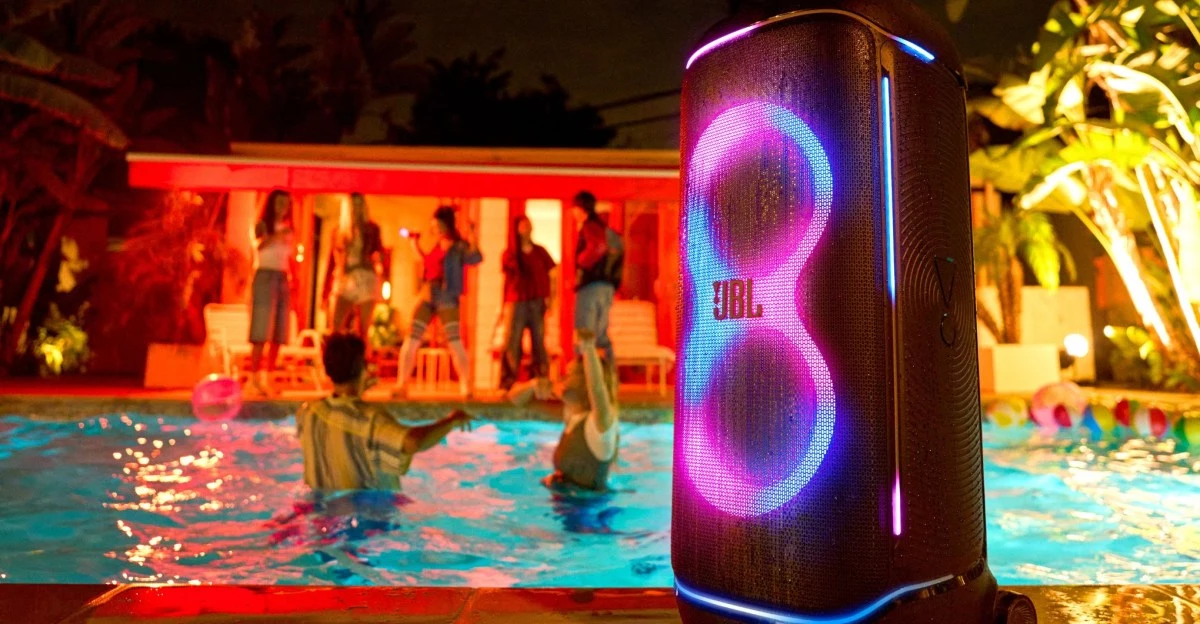

JBL’s High-Wattage Leap: Battery Power Redefines Portable Audio
The launch of JBL’s latest battery-powered Bluetooth speakers—the PartyBox 720, Boombox 4, and the new Grip—marks a decisive inflection point for the audio industry. No longer content with the limitations of wall outlets or the incremental advances of previous generations, JBL’s new lineup signals a bold migration toward energy autonomy, durability, and immersive user experiences. This is not merely a refresh of familiar form factors; it is a recalibration of what portable sound can mean in a world increasingly defined by mobility and outdoor living.
Engineering a New Standard: Battery Density and Acoustic Ambition
At the heart of this transformation is the PartyBox 720, a $1,099 powerhouse that abandons the AC tether of its predecessor in favor of dual 600 Wh battery packs—an aggregate capacity that encroaches on the territory of entry-level e-bikes. This leap in battery architecture is more than a technical flourish; it is a strategic statement. By leveraging higher-density lithium-ion modules, JBL positions itself at the vanguard of portable power, hinting at platform convergence across Harman’s broader ecosystem.
The engineering demands of sustaining an 800-watt output on battery alone are formidable. To maintain such muscle, the PartyBox 720 likely employs gallium nitride (GaN) Class-D amplifiers with efficiency north of 90 percent, paired with advanced thermal management. The inclusion of larger 9-inch drivers closes the gap with prosumer PA systems, effectively inviting mobile DJs and event organizers to reconsider the need for generator-powered rigs. Here, JBL is not just competing with consumer audio brands—it is encroaching on the territory of Bose, Electro-Voice, and Yamaha, whose rental PA systems have long dominated mobile events.
Meanwhile, the Boombox 4 and Grip models, priced at $550 and $100 respectively, debut with IP68 ingress protection—an achievement made possible by encapsulated system-on-package electronics and conformal-coated PCBs. These are not just waterproof speakers; they are ruggedized devices borrowing from the playbook of industrial IoT, signaling JBL’s intent to deliver products that endure both the elements and the test of time.
Market Dynamics: From Gen-Z to Prosumer, and the New Experiential Economy
JBL’s pricing strategy, spanning $100 to $1,100, is a masterclass in market segmentation. The Grip targets Gen-Z impulse buyers, while the Boombox 4 and PartyBox 720 court the prosumer and professional event markets. The 37 percent price premium of the 720 over its predecessor is justified not only by its technical prowess but by its alignment with post-pandemic shifts in consumer behavior. As outdoor gatherings surge and access to grid power becomes less certain, the value proposition of energy autonomy grows ever more compelling.
Harman’s integration within the Samsung supply chain confers a distinct advantage, particularly in battery and Bluetooth chipset sourcing. This verticality helps insulate JBL from the volatility of global lithium markets, even as it exposes the company to the broader geopolitical risks inherent in battery procurement. With supply-chain resilience now a boardroom imperative, JBL’s ability to pivot toward Korean or North American cell manufacturing—leveraging Samsung SDI—may soon become a critical differentiator.
The timing of this launch is no accident. As the Q4 holiday cycle approaches, demand for experiential goods—products that enable social connection and outdoor adventure—tends to outpace other discretionary categories. JBL’s cadence is finely tuned to this rhythm, positioning its new speakers as the centerpiece of the season’s gatherings, from backyard parties to remote festivals.
Strategic Horizons: Mobility, Durability, and the Next Competitive Frontier
The implications of JBL’s battery-powered offensive ripple far beyond the audio aisle. The PartyBox 720’s off-grid stamina and the ruggedized design of its siblings dovetail with macro trends: the outdoor recreation boom, a rising appetite for grid-independent electronics, and the regulatory drumbeat of sustainability. As climate events strain infrastructure and consumers demand more resilient technology, the line between home, adventure, and professional use continues to blur.
For operators and investors, the path forward is clear. Expect Harman to iterate a modular battery ecosystem, unlocking accessory revenue and cross-selling opportunities—from spare packs to solar chargers. The companion PartyBox app, with its lighting customization and potential for event-centric monetization, hints at a future where software and services become as integral as hardware. Partnerships with event promoters and hospitality brands could further entrench JBL as the mobile stage of choice, expanding its reach without channel conflict.
Competitors should take heed: the race is on to adopt GaN amplifiers, develop battery-swappable architectures, and differentiate through connectivity—particularly in the smart-venue segment that JBL has yet to fully address. For policymakers and sustainability leads, JBL’s foray into high-capacity consumer batteries presents both a regulatory challenge and an opportunity to set new standards for recycling and repairability.
JBL’s latest portfolio is not just a suite of new products—it is a harbinger of a portable-power paradigm that redefines the boundaries of audio, mobility, and experience. As the industry recalibrates, the companies that thrive will be those that embrace durability, autonomy, and the seamless fusion of hardware and software in service of the next great gathering.

 By
By
 By
By

 By
By

 By
By




 By
By
 By
By







