
Jay, Maine’s data-center gamble: when a mill town courts the cloud
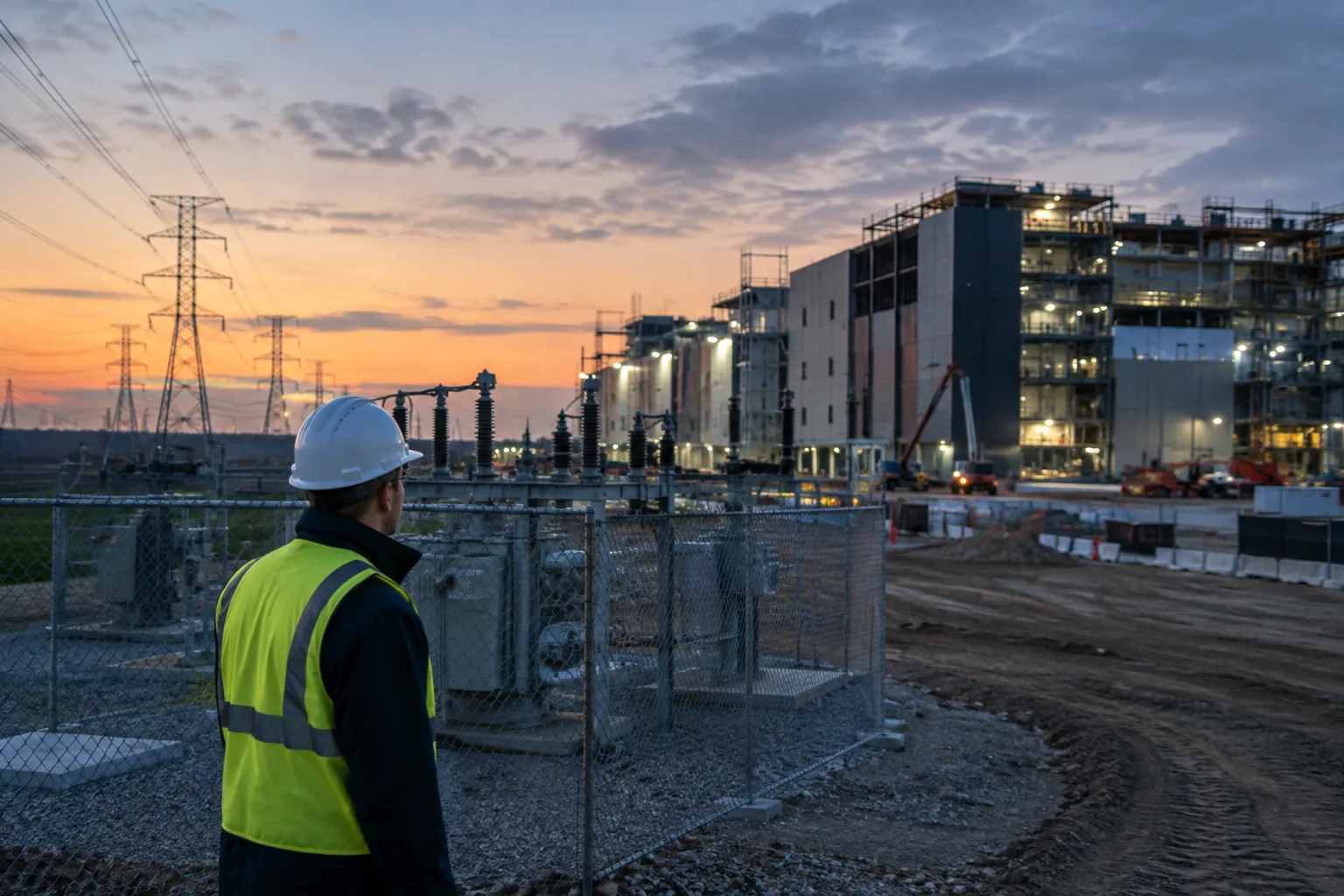
Jay, Maine—population roughly 4,600—has become an instructive counterpoint to the growing national backlash against large data centers. Where many municipalities have slowed or blocked projects over energy demand, water use, noise, and perceived low job creation, Jay moved in the opposite direction: it actively recruited a developer to transform the former Androscoggin Mill site into a 1,000-acre, water-cooled data-center campus.
The context matters. The mill’s 2020 demolition erased what had long been Jay’s economic anchor—an employer that once supported around 1,500 jobs directly and indirectly. In that vacuum, the promise of a new “industrial” tenant—especially one framed as modern, clean, and tax-generative—carried understandable political and emotional weight. Governor Janet Mills’ decision to veto a blanket moratorium on new data centers further signaled that, at least at the state executive level, Maine was not prepared to foreclose on projects that might revive towns like Jay.
Yet the story’s most revealing moment may be procedural rather than economic: the town’s five-member board reportedly moved from limited awareness to unanimous support in minutes, a speed that raises questions about governance rigor at precisely the point when communities need the most clarity. And then, on June 11, the project’s momentum faltered when Sentinel, the data-center operator, withdrew, leaving the initiative in limbo and underscoring how quickly a single counterparty can reshape a town’s future.
The technology reality behind “wholesale” data centers and brownfield reuse
Jay’s proposal sits squarely in the wholesale data-center category: large, centralized capacity designed for hyperscalers or major enterprise tenants. That model remains dominant, but it is evolving. Many cloud and AI players are simultaneously experimenting with edge and micro-data centers to reduce latency and distribute compute closer to users. This does not make wholesale campuses obsolete, but it does introduce a strategic question for rural sites: will the facility’s scale and location align with future demand patterns, or will utilization risk rise if procurement cycles shift?
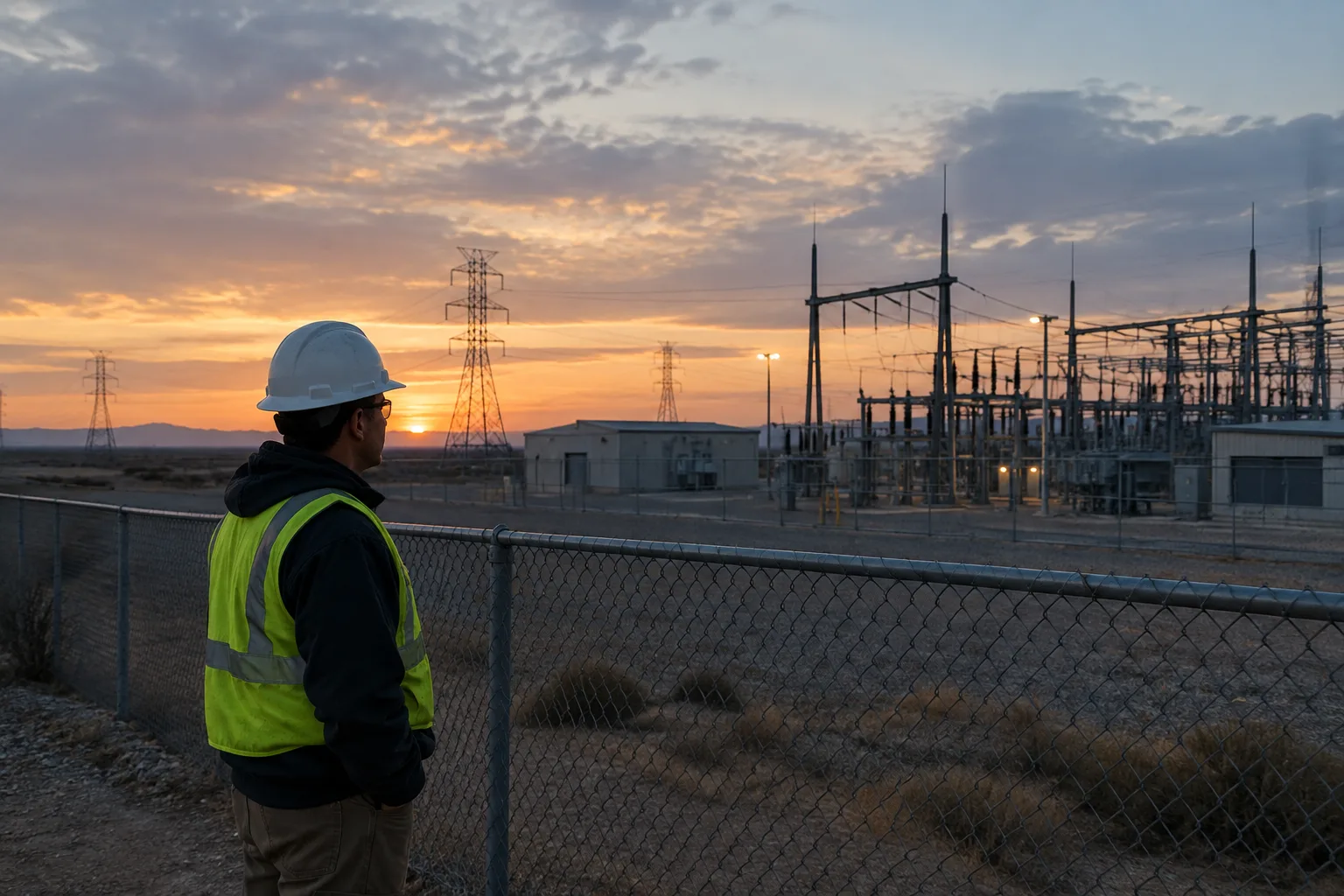
The project also highlights a major trend in digital infrastructure development: brownfield reuse. Converting a former industrial site into a data center can be a sustainability win, especially when legacy parcels already have:
- Transmission access and substations, reducing timelines versus greenfield builds
- Established industrial zoning and permitting pathways
- A community expectation of “working land,” lowering land-use conflict
But brownfields come with their own technical constraints. Legacy power infrastructure built for a paper mill does not automatically map cleanly onto the dynamic, high-density loads of AI-accelerated servers. Data centers increasingly require sophisticated interconnection studies, redundancy planning, and sometimes significant upgrades to substations and transmission lines. The headline promise—“operate within existing power permits”—may be politically reassuring, yet it can obscure the more important question: what is the marginal grid impact once the campus is fully utilized, and who pays for the upgrades?
Jobs, taxes, and the hard math of rural revitalization
Data centers are often pitched as 21st-century industrial anchors, but their labor profile is fundamentally different from manufacturing. Jay’s projected 125–150 full-time jobs—while meaningful in a small town—cannot replicate the employment footprint of a large mill. This is not a critique of data centers so much as a reality check: these facilities are capital-intensive, automation-heavy, and operationally lean.
Their economic value typically arrives through a different channel: property tax base expansion and construction-phase spending. Communities may see:
- Short-term construction employment and contracting opportunities
- Ongoing roles in facilities management, security, and electrical/mechanical maintenance
- Increased demand for local services (limited, but real)
- A potentially significant uplift in municipal revenues if assessed values are high and stable
The risk is that towns treat a data center as a one-stop replacement for a lost industrial ecosystem. Without deliberate planning, the benefits can become narrowly financial—strong for municipal balance sheets, thinner for household incomes. For rural communities, the more durable upside comes when a data center is leveraged as an enabling platform for fiber expansion, workforce training, and adjacent business formation. That requires intentional design, not hope.
A particularly telling signal is Sentinel’s withdrawal. It illustrates a structural vulnerability in rural economic development: single-project dependency. When one operator exits—whether due to capital markets, tenant uncertainty, interconnection costs, or strategic reprioritization—the community can be left holding a vision without a counterparty.
Governance, ESG, and the emerging “civic infrastructure” playbook
Jay’s experience also exposes a widening gap between municipal urgency and the complexity of modern infrastructure. Fast approvals can be attractive to developers and can help towns compete for investment, but speed can also compress due diligence on the issues that later trigger backlash or litigation: grid reliability, water rights, noise, land-use compatibility, and enforceable community benefits.
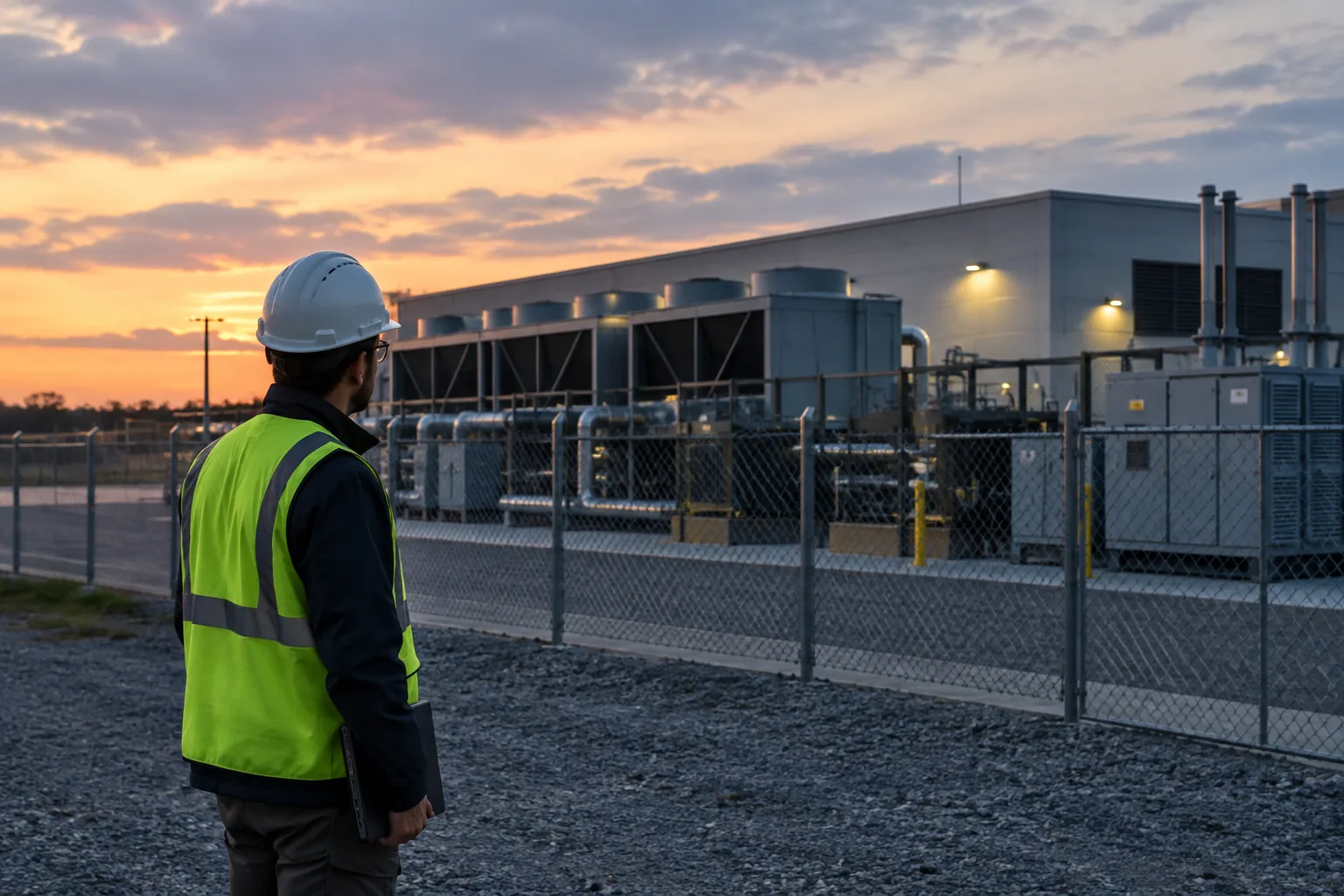
Environmental and ESG considerations are similarly nuanced. It is plausible that a modern data center uses far less water than a pulp-and-paper mill in absolute terms. Still, “less than the mill” is not the same as “negligible,” particularly if cooling systems involve evaporative processes or if wastewater handling becomes a local concern. On carbon, operating within existing permits does not resolve the central accounting question: what generation serves the incremental load at the margin? Without binding renewable procurement—such as power purchase agreements—or credible on-site generation, additional demand can default to the region’s fossil-heavy dispatch, complicating state decarbonization goals.
For towns like Jay, the next iteration of negotiation is likely to look less like traditional industrial recruitment and more like a civic infrastructure compact, where communities seek measurable, enforceable commitments such as:
- Community benefit agreements tied to local hiring, training funds, and scholarships
- Public transparency on energy use, water metrics, and emissions factors
- Investments in public-access fiber or regional connectivity partnerships
- Phased approvals linked to milestones (interconnection studies, tenant commitments, environmental monitoring)
Jay’s pivot toward digital infrastructure is neither a cautionary tale nor a success story—yet. It is a live case study in how rural America is attempting to convert stranded industrial land into relevance in the AI economy. Whether that conversion becomes a durable renaissance or a fragile bet will depend less on the symbolism of “bringing tech to town” and more on the unglamorous details: enforceable governance, grid and water realism, and a development model that treats data centers not as a replacement for a mill, but as a platform for a broader regional economy.

 By
By
 By
By
 By
By
 By
By



 By
By