

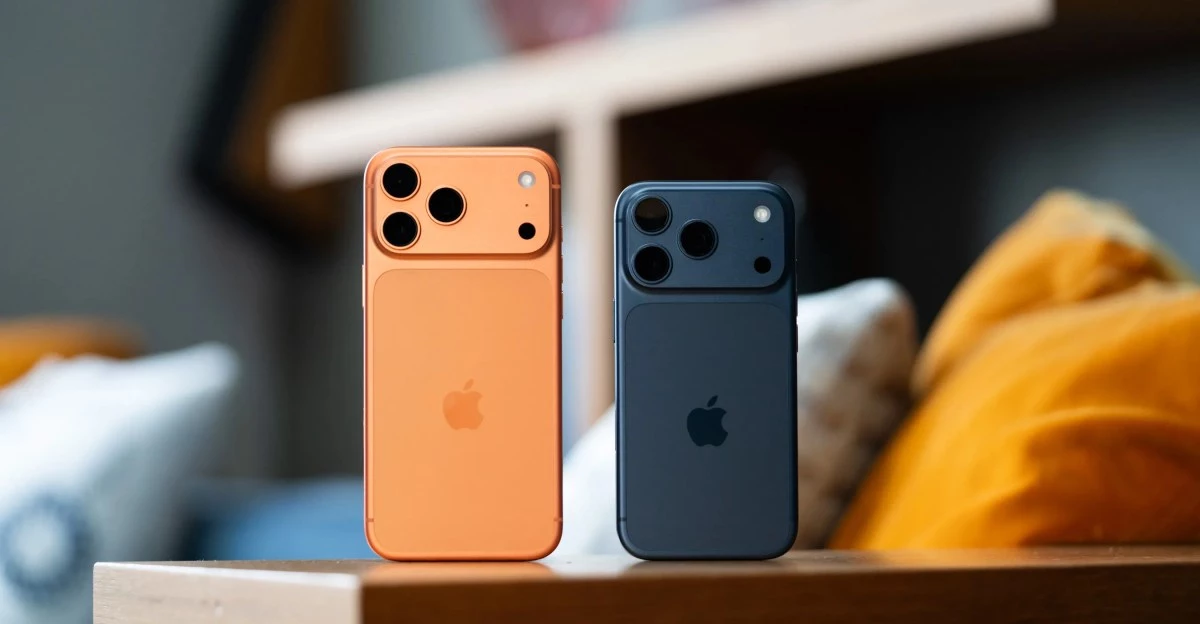

When Silicon Outpaces Software: The Project Indigo–iPhone 17 Pro Collision
In the ever-accelerating world of mobile imaging, the recent standoff between Adobe’s Project Indigo camera app and Apple’s iPhone 17 Pro front camera is more than a fleeting technical hiccup—it’s a revealing microcosm of the new physics governing the digital creator economy. The issue, rooted in Apple’s leap to an 18-megapixel front sensor and a reimagined Center Stage auto-framing system, has left Project Indigo’s much-lauded “natural” rendering temporarily sidelined on the latest devices. While a corrective patch is already on the horizon, the episode exposes the fragile choreography between hardware innovation, software agility, and the economic machinery now dependent on both.
The Friction of Progress: API Volatility Meets Hardware Velocity
Apple’s imaging stack, always a showcase for the company’s silicon ambitions, has evolved at a breakneck pace to accommodate the iPhone 17 Pro’s new sensor and its native portrait/landscape orientation. The result: a reshuffling of camera framework APIs that third-party developers like Adobe must navigate, often without the benefit of extended lead times or transparent documentation. This year, the speed of hardware advancement has outstripped the ability of even the most sophisticated developers to regression-test their software, exposing a critical integration gap.
- API Instability: The Center Stage auto-framing and sensor-handling changes have rendered Project Indigo’s front-camera features unreliable—an outcome that, while narrow in scope, highlights the precariousness of building on closed, rapidly evolving platforms.
- Cross-Platform Paradox: On Android, the Project Indigo team—helmed by computational photography pioneer Marc Levoy—faces a different challenge: hardware fragmentation and inconsistent sensor capabilities. Yet the iOS experience, with its uniform hardware, now presents the opposite risk: sudden, opaque changes that can break even flagship apps overnight.
This tension is not just technical; it’s existential. As computational photography becomes a platform layer rather than a mere feature, the value proposition of third-party imaging apps is increasingly defined by their ability to out-innovate, rather than simply out-optimize, the defaults provided by Apple’s own Deep Fusion and Photonic Engine.
Economic Reverberations: Monetization Windows and Creator-Economy Fragility
The impact of this compatibility fault ripples outward, touching every node in the mobile value chain. For photo-centric prosumers and creators—often the earliest adopters of new hardware—the inability to use Project Indigo’s front camera during a critical launch window translates directly into lost subscription conversions and diminished Net Promoter Scores. In a market where discretionary spending on premium apps is already under pressure, even a brief outage can have outsized effects.
- Monetization at Risk: A one-month disruption during the iPhone 17 Pro’s launch quarter impacts not just Adobe’s bottom line, but the broader ecosystem of filters, editing suites, and sponsored content schedules that depend on seamless camera access.
- Regulatory Undercurrents: Apple’s need to demonstrate that silicon-grade camera improvements benefit the third-party ecosystem is growing, especially as EU regulators scrutinize API access under the Digital Markets Act. Any perception of “vendor lockout” could accelerate calls for standardized abstraction layers or fairer platform stewardship.
- Creator Dependency: For influencers and social sellers, the smartphone camera is not just a tool—it’s the linchpin of their business. Downtime for flagship devices reverberates through ancillary markets, tightening the link between firmware release cycles and income streams.
Strategic Shifts: Platform Power, Vertical Integration, and the AI Imaging Horizon
The Project Indigo–iPhone 17 Pro impasse spotlights deeper strategic currents shaping the future of mobile imaging.
- Platform Stewardship vs. Moat Maintenance: Apple’s total-stack control has long been its competitive edge, but visible integration failures provide ammunition for software giants to lobby for more open “camera-kit” APIs. Sustained incidents could erode Apple’s differentiation, opening the door to standardized interfaces that dilute its platform power.
- Software Giants Eye Hardware: Frustration among leading software vendors could accelerate the pursuit of hardware partnerships or even proprietary capture modules—a move reminiscent of Microsoft’s Surface play in the PC market.
- AI-Native Imaging Futures: As generative fill, auto-re-lighting, and spatial video for XR become mainstream, the battle for control intensifies. The question is no longer just who owns the sensor, but who commands the last millisecond before photons become data for AI pipelines.
For device makers, the lesson is clear: harden developer-preview programs and modularize computational photography features to minimize day-one incompatibilities. For software leaders, diversify testing and consider cloud-based offloading to buffer against hardware churn. And for the creators and investors who animate this ecosystem, redundancy and regulatory vigilance are now as essential as creative vision.
The Project Indigo episode, then, is not merely a technical footnote—it is a signal flare for the next era of mobile imaging, where the pace of innovation, the complexity of integration, and the stakes for the creator economy have never been higher.

 By
By
 By
By

 By
By
 By
By
 By
By

 By
By







