
Reimagining Orthopedic Surgery: The Glue Gun That Prints New Bone
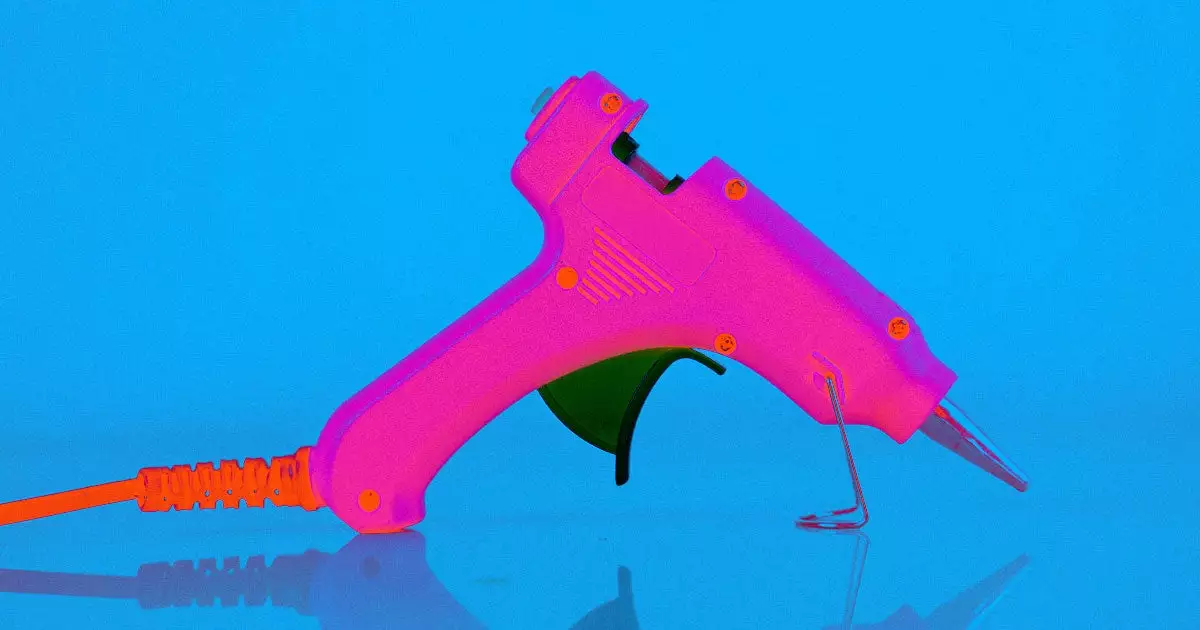
In a modest laboratory in South Korea, a familiar tool—the humble glue gun—has been transformed into a harbinger of surgical innovation. Researchers have re-engineered this off-the-shelf device into a hand-held, in-situ 3-D bioprinter, capable of extruding a composite material that mimics bone itself. The implications for orthopedic surgery are profound: what once required elaborate imaging, custom manufacturing, and complex logistics can now be accomplished in real time, directly at the patient’s bedside.
From Factory Floor to Operating Room: A Workflow Revolution
Traditional orthopedic grafting is an exercise in logistical choreography. Surgeons rely on a multi-step process—CT scans, digital modeling, off-site 3-D printing, sterilization, and eventual implantation. Each stage introduces delays, costs, and opportunities for contamination. The new hand-held bioprinter collapses this entire workflow into a single, intraoperative gesture. Surgeons, wielding the device much like a pen, can “write” new bone directly onto complex fractures, adjusting direction, angle, and depth with the intuitive dexterity of a craftsman.
- Material Innovation: The composite—hydroxyapatite for osteoconductivity, polycaprolactone for flexibility and controlled degradation—can be fine-tuned to balance strength and resorption, a crucial consideration for load-bearing applications.
- Human-Machine Synergy: This device blurs the boundary between surgical skill and digital fabrication, foreshadowing a new era of augmented surgical tools that respond in real time to the surgeon’s intent.
- Infection Control: By eliminating pre-fabrication and reducing operative time, the technology addresses a critical vector for infection, aligning with global priorities to curb antimicrobial resistance.
In rabbit trials, the device not only accelerated bone regeneration but also demonstrated a pristine safety profile—no infections after 12 weeks, outperforming conventional bone cement. Larger-animal studies are now underway, with the promise of reshaping the standard of care in orthopedic grafting.
Economic Disruption and Market Realignment
The hand-held bioprinter’s impact extends far beyond the operating room. It signals a tectonic shift in the economics of orthopedic care:
- Cost Compression: With commercial bone graft substitutes commanding $3,000–$5,000 per case—much of it tied to imaging, custom milling, and logistics—a point-of-care model could slash total procedure costs by 20–30%. In a global market projected to reach $7 billion by 2028, such savings are not merely incremental—they are transformative.
- Capital Expenditure Reimagined: Hospitals currently invest heavily in industrial 3-D printers and sterile facilities. In contrast, a modified glue-gun platform, with a bill of materials under $2,000, pivots the model toward disposable devices and high-margin bio-ink cartridges, echoing the razor-and-blade strategy that has propelled other med-tech giants.
- Reimbursement Dynamics: Insurers are increasingly attuned to episode-of-care savings. Technologies that demonstrably reduce operative time—each minute in the OR valued at $30–$80—are poised for accelerated reimbursement, especially when paired with lower infection rates.
- Resilient Supply Chains: The COVID-19 pandemic exposed vulnerabilities in global implant logistics. In-situ printing localizes production, dovetailing with broader trends in near-shoring and supply-chain resilience.
Strategic Stakes and the Coming Competitive Frontier
The orthobiologics landscape is dominated by established players—Stryker, Zimmer Biomet, Johnson & Johnson—whose business models are optimized for centralized, factory-based production. Should hand-held bioprinting prove clinically viable, these incumbents may find their intellectual property in graft materials a defensive moat, but their equipment lines vulnerable to disruption.
- New Entrants and Partnerships: Startups specializing in point-of-care printing and printer-agnostic bio-ink suppliers are natural acquirers or collaborators. The business model is clear: control the consumable, not just the device.
- Regulatory Navigation: The device straddles FDA categories, challenging traditional pathways. Its real-time, surgeon-determined geometry will likely nudge regulators toward performance-based frameworks, akin to those emerging for AI-driven medical software.
- Broader Industry Currents: Integration with surgical robotics could further reduce operator variability, while live data capture during printing opens the door to machine learning models that personalize material ratios for each patient. The use of hydroxyapatite sourced from agricultural waste also aligns with circular-economy mandates and reduces reliance on geopolitically sensitive titanium supply chains.
The Road Ahead: Opportunity and Responsibility
For hospital systems, the imperative is clear: pilot this technology in trauma centers where fracture heterogeneity is high, and negotiate risk-sharing agreements that tie cartridge pricing to infection-rate reductions. Med-tech manufacturers should invest in adaptive extrusion nozzles and engage regulators early, while insurers craft reimbursement codes that reward demonstrated savings and improved outcomes. Investors would do well to monitor preclinical milestones, as success in large-animal studies could trigger a wave of capital aimed at scaling bio-ink production and analytics.
As surgical tooling evolves, so too must the training of the next generation of orthopedic specialists—shifting from hardware fixation to a nuanced understanding of material science and human-machine interfaces. The transformation underway is not merely technological, but cultural—a redefinition of what it means to heal bone.
Hand-held, in-situ bone bioprinting compresses the orthopedic supply chain and collapses surgical workflows, opening a new competitive front where material science and device engineering converge at the bedside. For those willing to embrace regulatory ambiguity and invest in surgeon-centric design, the rewards are poised to be both clinical and commercial—a rare alignment that often signals the dawn of a new era in medical technology.

 By
By
 By
By

 By
By



 By
By