

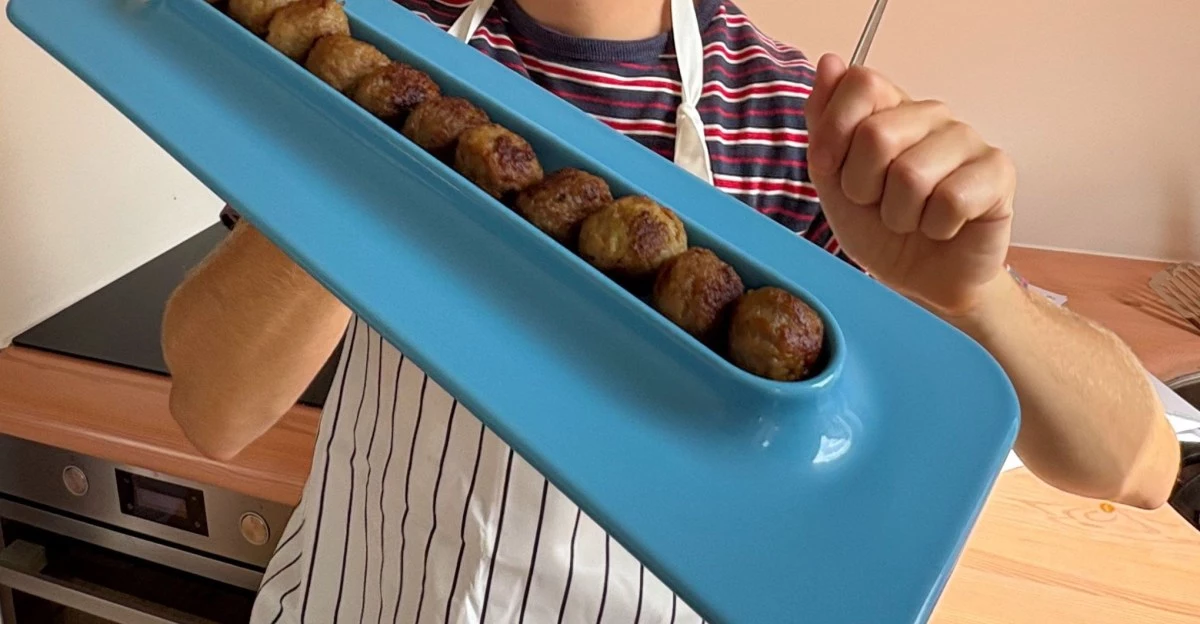

Meatballs, Memory, and Micro-Icons: Ikea’s Playful Leap Into Tabletop Storytelling
When Ikea unveiled its latest collaboration—a twelve-piece homeware line with the Swedish designer Gustaf Westman, set to launch this September—few anticipated that the collection’s hero would be a cobalt-blue plate engineered to cradle precisely eleven Swedish meatballs. Yet, in this singular object, Ikea has distilled a potent blend of nostalgia, functionality, and cultural wit. The so-called “meatball plate” is more than a vessel; it is a mnemonic device, a collector’s artifact, and a case study in how brands can weaponize their own iconography to deepen emotional resonance and drive new demand.
The Strategic Alchemy of Limited-Edition Design
Ikea’s decision to spotlight the humble meatball—a staple of its in-store cafeterias—signals a shrewd pivot from mere food service to a broader narrative platform. By translating a core culinary icon into a tangible, display-worthy product, the company achieves several strategic objectives:
- Brand Differentiation Through Storytelling: The plate’s design is not arbitrary. Its eleven-cavity layout and chunky, geometric form evoke both playful minimalism and the precise, modular thinking that underpins Ikea’s ethos. This physical manifestation of Swedish heritage transforms a simple meal into a ritual, reinforcing brand memory at the dinner table.
- Scarcity as Social Currency: The limited-edition run, amplified by Gustaf Westman’s considerable social following, injects a sense of urgency and exclusivity. Scarcity—long the province of sneaker drops and luxury handbags—now finds a home in the mass-market kitchen, driving foot traffic and digital buzz in equal measure.
- Retail Theatre and Experiential Content: Ikea’s five-step “assembly manual” for plating meatballs on the dish is a masterstroke in experiential retail. It transforms a low-cost item into shareable content, tailor-made for TikTok and in-store demonstrations, and recaptures the magic of discovery that has always been central to the Ikea experience.
Engineering Whimsy: The Technology and Design Behind the Plate
Beneath its playful exterior, the meatball plate is a testament to advanced design and manufacturing agility. The “exactly eleven” cavity configuration is no accident; it reflects the influence of digital twin modeling and parametric design, allowing for data-driven iteration that balances ergonomics with production efficiency.
- Modular Aesthetics and Automated Production: The plate’s bold, primary finish and robust geometry are not just stylistic choices—they enable automated glazing and reduce breakage risk, supporting Ikea’s global logistics network and last-mile delivery.
- Micro-Factory Flexibility: By leveraging small-batch slip-casting in agile ceramic facilities, Ikea demonstrates its ability to toggle between mass-market and niche production. This flexibility is increasingly vital as consumer demand fragments and novelty becomes a competitive necessity.
- Sustainability by Design: While the plate’s function may seem singular, Ikea is poised to extend its lifecycle through digital augmentation—think AR recipe suggestions or dish-pairing algorithms accessed post-purchase. Such initiatives not only boost utilization rates but also align with emerging circular-economy metrics and ESG reporting standards.
From Edible IP to Platform Play: Macro Trends and Industry Signals
The meatball plate is not an isolated experiment; it is emblematic of broader currents reshaping the consumer landscape.
- Monetizing Culinary Equity: Just as Starbucks parlayed pumpkin spice into a multi-category juggernaut, Ikea is leveraging its edible IP to drive sales of non-food SKUs. This platformization of food culture is blurring the lines between kitchenware, furniture, and lifestyle branding.
- The Rise of Humorous Minimalism: Gen Z’s appetite for objects that are both meme-able and functional is unmistakable. The meatball plate sits comfortably alongside the likes of Alessi’s Plissé appliances and Our Place’s Always Pan—products that thrive on social virality as much as utility.
- Competitive Implications: Rivals such as West Elm, Muji, and Zara Home are also experimenting with capsule kitchenware collections, but Ikea’s deft integration of cultural specificity and influencer cachet raises the stakes for the entire sector.
Executive Takeaways: Turning Brand DNA Into Experiential Revenue
For business leaders, the lesson is clear: dormant brand icons—whether mascots, logos, or signature products—can be reimagined as high-margin, emotionally resonant SKUs. Investing in agile supply chains and embedding digital storytelling into physical goods will be essential as the pace of consumer novelty accelerates.
Yet, this strategy is not without risks. Hyper-shareable designs invite counterfeiting, necessitating robust traceability solutions. Pricing elasticity must be monitored as initial hype gives way to market saturation. And as brands scale these concepts globally, adaptive storytelling will be crucial to avoid cultural missteps.
In the end, Ikea’s meatball plate is more than a quirky collectible—it is a blueprint for how mass-market titans can harness micro-scale design, influencer collaboration, and cultural symbolism to create fresh revenue streams and reinforce brand DNA in an attention-scarce economy. For those charting the future of consumer products, the message is unmistakable: the smallest icons can yield the largest returns.

 By
By
 By
By

 By
By


 By
By
 By
By







